00:00 / 05:03
00:00 / 05:03

Brad's Tics Drive His Family Crazy, Explained

Front of the Class · 2008

Chapter 2 of 17 · 5'03"

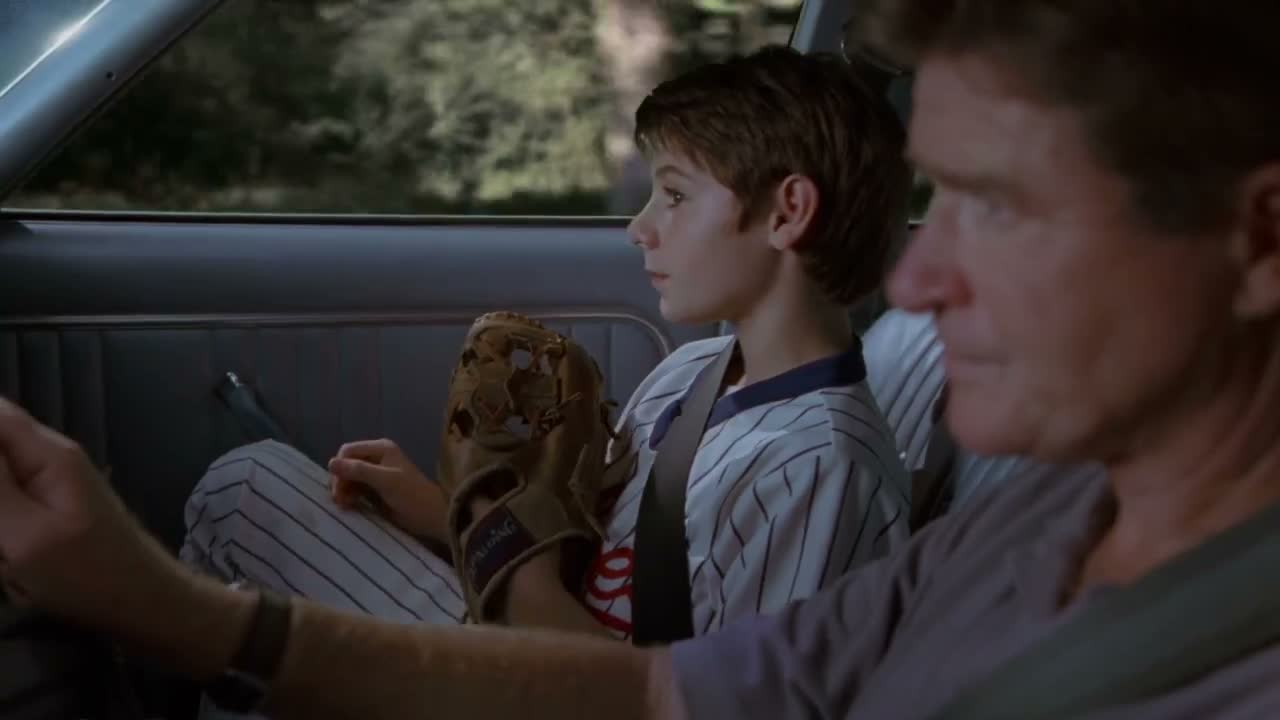
His family reads Brad's tics as bad behavior. His father insists that there's "nothing wrong with you that a little self-control wouldn't fix," while a doctor pins the trouble on the divorce. On the baseball field, though, everyone is loud and twitchy, and Brad finally fits in.

Parents & kidsAt the doctorComplainingWarningParent & childB1mediumamericanClean

Key moments

Start here, then watch the full scene
  1. ❝ Monologue · 7 lines Brad's Family Says He Just Needs Self-Control

    0:06–0:31
    25s
  2. Where Brad Finally Fits In

    3:17–3:39
    22s
  1. ❝ MonologueThe father's parting lecture7 linesPractice page ↗

Brad's Tics Drive His Family Crazy, explained

What happens

Young Brad has Tourette syndrome, and his tics — noises, twitches, barking — look like deliberate misbehavior to everyone around him. His father lectures him about self-control before leaving; his mother takes him to a doctor who blames the divorce. Only on the baseball field, where everyone shouts and fidgets, does he feel he fits in.

What's really going on

The scene is built on a quiet cruelty: the adults keep describing a neurological condition as a bad habit. Brad cannot help the noises, but the people around him hear defiance, so the cure they offer is discipline — "There's nothing wrong with you that a little self-control wouldn't fix." Even the doctor, who should know better, files the tics under denial and boundaries and tells his mother it is her job to fix him. What the scene does with real force is show where Brad is not asked to change: on the ball field, where everyone yells and twitches and no one is singled out. "I mean, everybody makes funny noises and has strange tics at a baseball game." he explains, and in that one line the film states its whole case. The problem was never the tics; it was being watched.

Key lines & what they mean

“Yes, you can. There's nothing wrong with you that a little self-control wouldn't fix.”
The line that names the scene: the adults assume Brad's tics are a discipline problem, not a medical one.
“I tried as best as I could for her.”
Brad's voiceover confession that his hardest struggle was the burden his condition put on his mother.
“On the ball field, I fit right in.”
His one place of belonging: on the diamond, loud and twitchy like everyone else, he is not the odd one out.
“They're not going to hold that plane for you.”
The father's parting reminder that the world will not wait for him, delivered as matter-of-fact advice rather than comfort.
“The hardest part was knowing how tough I made things for Mom.”
He measures his real pain not by his own tics but by what they cost his mother.

Theme

  • Identity — Brad's tics are treated as a character flaw, and he is only accepted where his difference is normal.
  • Parenthood — His mother refuses the easy blame while his father and a doctor keep prescribing discipline instead of understanding.

What this chapter teaches

Teaching points

Review right after watching
My level7/8

A1–C2 is the CEFR scale. Cards above the level you pick fade, and playback will not auto-pause on them.

Front of the Class: your progress

Chapter 2 of 17 · about 68 min to go

← Previous
Up next · 03at the end of one's ropeThe scene: Brad's Childhood with Tourette's

Takeaways

What you walk away with
  1. The father's self-control line hides a deep misreading.
  2. Baseball is the only place Brad is not the odd one out.
  3. The doctor turns a condition into a parenting failure.
  4. Even the clothing sale shows how freely people judge him.

People also search

Questions, then the lines
Why does everyone say Brad just needs self-control?

Because his tics look like bad behavior. His father and a psychologist both treat it as a discipline problem, telling him there is nothing wrong that a little self-control would not fix.

Does the doctor help Brad?

Not really. Instead of identifying Tourette syndrome, the psychologist focuses on the divorce, talks about denial and boundaries, and tells his mother that controlling him is her job.

Why does Brad feel at home on the baseball field?

Because everyone there is noisy and twitchy. His tics do not stand out, so for once he is not the one being watched and corrected.

What does "drive someone nuts" mean?

It means to make someone crazy with annoyance. Brad's constant noises are described as driving his mother nuts, meaning they push her to her limit.