00:00 / 02:54
00:00 / 02:54

Diane Tells Brad He Has the Gift, Explained

Front of the Class · 2008

Chapter 8 of 17 · 2'54"

Brad is ready to hear that he will never be normal. His stepmother refuses the framing: "Well, maybe that's not his idea, Brad. Maybe that's yours." Then she gives him the line the film is built on — "You have the gift... to teach" — and insists the Tourette's is part of it, not despite it.

Parents & kidsComfortingExplainingParent & childB1fastamericanClean

Key moments

Start here, then watch the full scene
  1. Diane Tells Brad He Has the Gift

    2:08–2:44
    37s

Diane Tells Brad He Has the Gift, explained

What happens

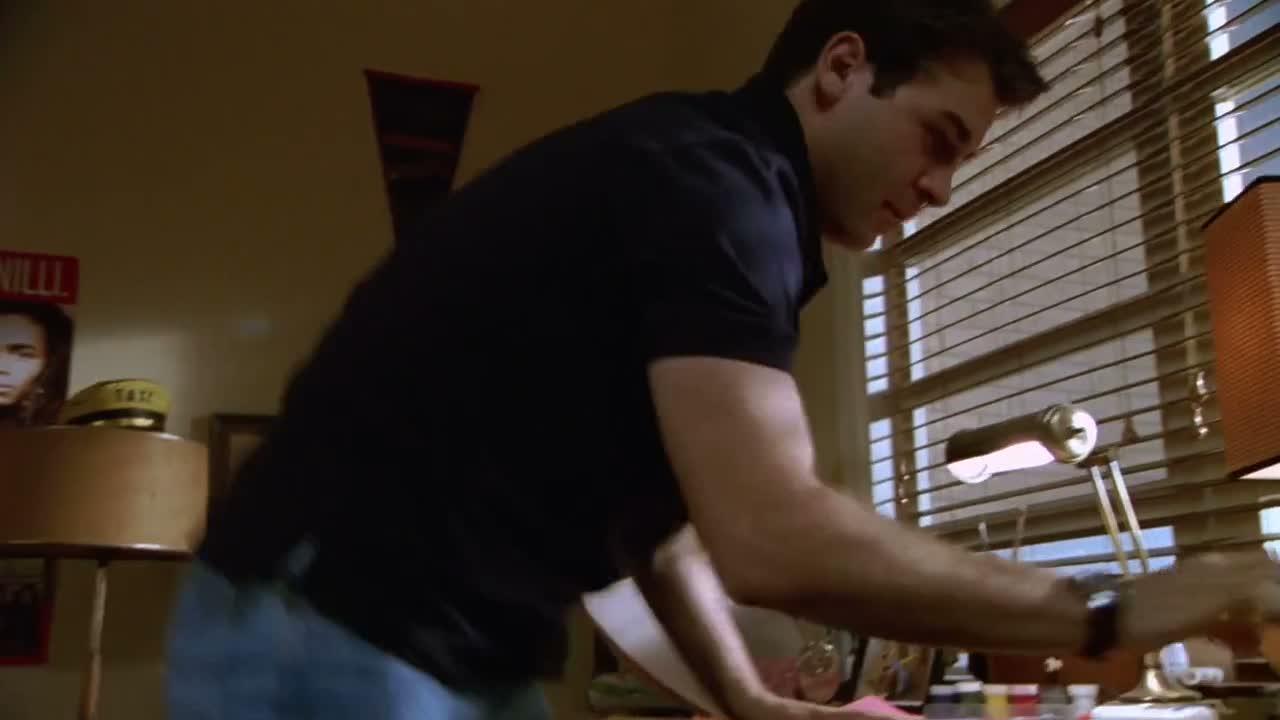
Brad is working a bottom-rung job while waiting for a teaching offer, but the hiring season ends and the interviews dry up. His stepmother Diane shows up at his apartment with bagels, argues his father's case, and tells him he is not normal — he has the gift to teach.

What's really going on

Brad has been treating his life as a race against a closing door: resumes left with janitors, a part-time job, and a countdown of "time and money... and hope." The visit from Diane shifts the scene from job hunting to self-definition. She does not argue that he is ordinary; she argues that the version of normal he is measuring himself against may not even be his father's. "And you're right. You are not normal," she says, and then reframes the very thing he is ashamed of: "You have the gift... to teach," a gift that is "not in spite of your Tourette's" but because of it. The scene's real argument is that Brad's condition is not an obstacle to his calling — it is the source of his empathy, and therefore of his talent.

Key lines & what they mean

“The only thing that hurts is the fact that he has never accepted who I am.”
Brad's real wound: it is not his tics that hurt but his father's refusal to accept the son he actually is.
“You have the gift... to teach.”
Diane's turning-point line: she names his talent plainly and insists it is his to claim.
“I gave up on you ever coming to me, so I just came to you.”
Diane's explanation for showing up: she stopped waiting for Brad to reach out and came to him first.
“Well, I'm never going to be normal.”
Brad's flat self-verdict, spoken as a fact; the exchange that follows is Diane refusing to let that word do the defining.

Theme

  • Family love — Diane comes uninvited with bagels to defend Brad's father and reassure Brad, doing the emotional work the family avoids.
  • Identity — She tells Brad his difference is not a flaw but the source of his gift, reshaping how he sees himself.

What this chapter teaches

Teaching points

Review right after watching
My level2/5

A1–C2 is the CEFR scale. Cards above the level you pick fade, and playback will not auto-pause on them.

Front of the Class: your progress

Chapter 8 of 17 · about 42 min to go

← Previous
Up next · 09color outside the linesThe scene: Brad Cohen's Best Interview

Takeaways

What you walk away with
  1. A bagel can be an apology, and everyone in the room knows it.
  2. His condition is framed as the source of the gift, not its obstacle.
  3. Family love often arrives sideways, through someone else's words.
  4. The pause before 'to teach' does more than the compliment itself.

People also search

Questions, then the lines
Why does Diane visit Brad?

She says she gave up waiting for him to come to her, so she came to him. She brings bagels and tries to repair relations, arguing that his father loves him but cannot accept his Tourette's.

Why does Brad say he will never be normal?

He believes his father wants a normal son who does normal things, and since his tics will not go away he assumes he can never be that. Diane challenges that assumption.

What does "tools of the trade" mean?

It means the tools or equipment used in a particular job. The manager hands Brad cleaning supplies and calls them his tools of the trade.

What is the conflict between Brad and his father?

His father wants him to join the family business and worries he will get hurt; Brad hears these as signs that his father has never accepted who he is.

Why does Diane tell Brad he is not normal?

She means it as praise, not an insult: his difference is exactly what gives him the gift to teach, and she wants him to stop seeing it as a flaw.