
“What if he's telling the truth? Hmm?!”
Why it's great
One challenge turns the accusation around: what if the boy is not lying after all?
Register
Informal
Use it yourself
What if she's telling the truth and nobody listened?
Chapter 3 of 17 · 5'01"
At dinner, Dad announces he's been seeing someone, and Brad's tics interrupt him until Dad snaps. School is worse: a teacher calls Brad the class clown while his mother learns the teachers are at their wits' end. "I know you think you're the class clown, but I've had it with you!" is what Brad hears from that teacher.
The Teacher Humiliates Brad in Class
❝ Monologue · 8 lines Brad's Mother Hits Her Limit
What happens: young Brad, who has Tourette's, keeps making noises he cannot control. At dinner his dad announces he is seeing a woman named Diane and wants the boys to accept a stepmom, and Brad's tics make his dad lose his temper. At school a teacher shames him in front of the class, and his mother takes him to a library to look for answers.
The chapter stays inside Brad's point of view, and what it shows is a boy being punished for something he cannot control. Every adult around him reads his tics as behavior: at the dinner table his father pleads, "Brad, please! Stop doing that!" and later a teacher insists, "I don't want to hear any more excuses." The one person who refuses that reading is his mother. When the principal says the teachers are at their wits' end, she asks, "What if he's telling the truth? Hmm?!" Her line about being at the end of her rope is not surrender; it is the sound of a parent who has run out of people to ask and is starting to look for the answer herself. The scene's real subject is the gap between what Brad is and how he is seen.
A1–C2 is the CEFR scale. Cards above the level you pick fade, and playback will not auto-pause on them.
“What if he's telling the truth? Hmm?!”
One challenge turns the accusation around: what if the boy is not lying after all?
Informal
“He is out of control, and I am at the end of my rope.”
Two idioms back to back, and a mother's exhaustion is laid completely bare.
Neutral
“I don't care if they expel me.”
A boy shrugs off the worst outcome, and the defiance hides how much it hurts.
Informal
“I know you think you're the class clown, but I've had it with you!”
It names the pose, then drops the limit: patience has finally run out.
Informal
Listen, you know, those teachers and that doctor, to them it's all about bad parenting which, of course, comes down to me because I'm the only one here. No, I'm not blaming you, Norman. In fact I'm going to stop blaming myself. I was talking to a friend, and she thinks that the doctors are missing something. I got this stack of medical books from the library and I've been doing a little bit of research. Stop saying he just needs more discipline, Norman! Nothing I do helps. He is out of control, and I am at the end of my rope.
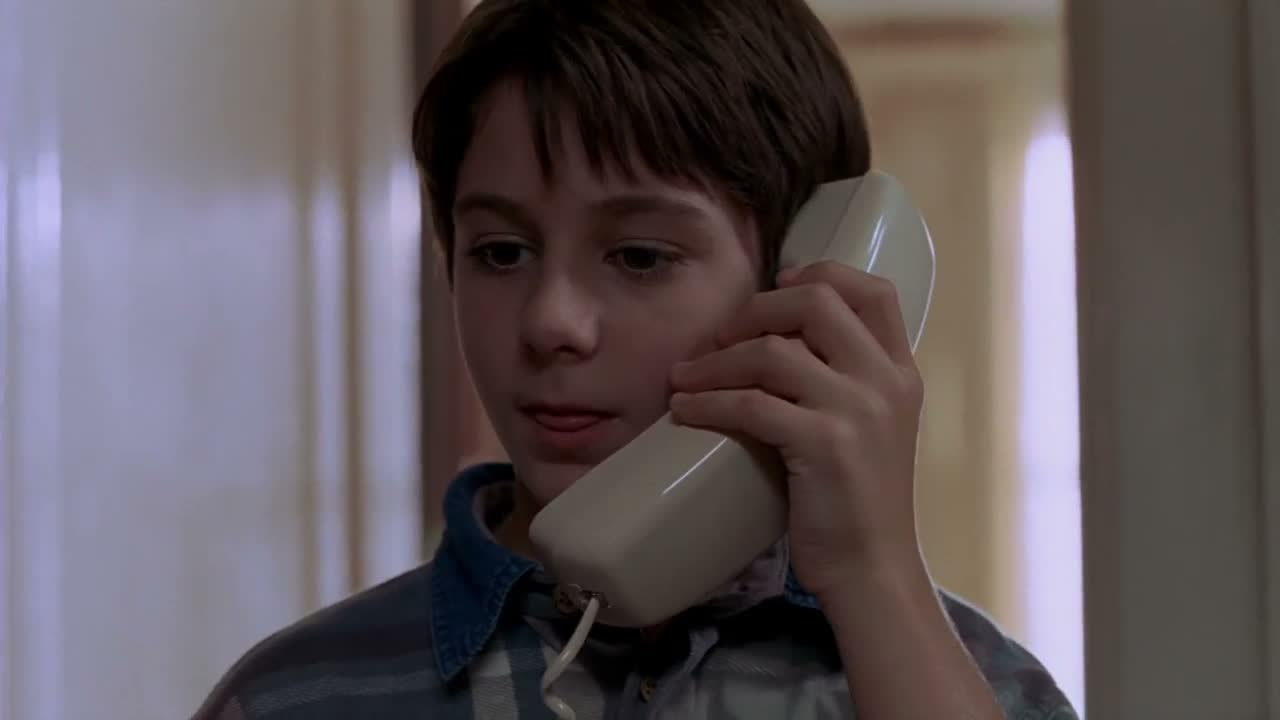 Up next · 04live withThe scene: Brad Learns He Has Tourette's
Brad's tics make noises while his dad is announcing he is seeing a woman named Diane. His dad reads the interruptions as bad behavior, so he snaps instead of understanding that Brad cannot stop.
She believes Brad makes his noises on purpose to be funny, so she calls him the class clown and forces him to promise, in front of everyone, never to make the sounds again.
It means being completely out of patience and strength, with nothing left to try. Brad's mother uses it on the phone to say the situation has worn her down.
She has decided the teachers and doctors are missing something and goes looking for the answer herself, reading medical books to try to name what is wrong with her son.
After being publicly shamed, he is defiant: he hates the school and would rather be thrown out than keep being treated as a deliberate troublemaker.