
“He said war was too important to be left to the generals.”
Why it's great
A borrowed line from a statesman gives the argument instant authority.
Register
Formal
Use it yourself
Health is too important to be left to the market alone.
Chapter 4 of 20 · 2'41"
Mandrake demands the recall code so the bombers can be brought back, but General Ripper refuses to hand it over. "I'm the only person who knows the three-letter code group," he says, and he defends his decision as too important to be left to politicians.
Ripper Refuses to Give Up the Code
❝ Monologue · 10 lines Ripper Rants About War and Communists
At Burpelson Air Force Base, General Ripper has ordered a nuclear attack and will not give up the recall code. Group Captain Mandrake asks for the key and the code, but Ripper refuses, insisting he alone knows the three-letter code group. He lectures Mandrake on why war is too important to leave to the generals.
The scene works because Ripper sounds calm while doing something insane. Mandrake arrives as the voice of duty—"as an officer in her majesty's air force, It is my clear duty"—but Ripper will not be moved: "I'm the only person who knows the three-letter code group," he says, turning a military chain of command into one man's private decision. His excuse is a mangled quotation. Clemenceau's line was that war is "too important to be left to the generals"; Ripper flips it, arguing that today it is too important to be left to politicians, because they lack "the inclination for strategic thought." The speech slides from strategy into obsession, from the Joint Chiefs to communist infiltration, ending with the phrase "precious bodily fluids." The comedy is that he is articulate, even reasonable-sounding, as he dismantles the very system meant to restrain him.
A1–C2 is the CEFR scale. Cards above the level you pick fade, and playback will not auto-pause on them.
“He said war was too important to be left to the generals.”
A borrowed line from a statesman gives the argument instant authority.
Formal
“But, today, war is too important to be left to politicians.”
Changing one word from the previous line flips the whole argument, and the knife never shows.
Formal
“There's nothing anybody can do about this thing now.”
It states helplessness as a plain fact, which makes it sound like a verdict.
Neutral
“I'm the only person who knows the three-letter code group.”
He lays his whole hand on the table and bets it on being the only one who knows.
Neutral
“Do I take it, sir, that you are threatening a brother officer with a gun?”
The most formal military courtesy delivers the heaviest accusation.
Formal
“Mandrake, do you recall what clemenceau once said about war?”
He steers a coup toward a famous quotation, sincere and absurd at once.
Formal
Mandrake, do you recall what clemenceau once said about war? Uh, no, I don't think I do, sir. No. He said war was too important to be left to the generals. But, today, war is too important to be left to politicians. They have neither the time, the training... Nor the inclination for strategic thought. I can no longer sit back and allow... Communist infiltration, communist indoctrination, Communist subversion... And the international communist conspiracy... To sap and impurify all of our precious bodily fluids.
Dr. Strangelove or: How I Learned to Stop Worrying and Love the Bomb: your progress
Chapter 4 of 20 · about 48 min to go
← Previous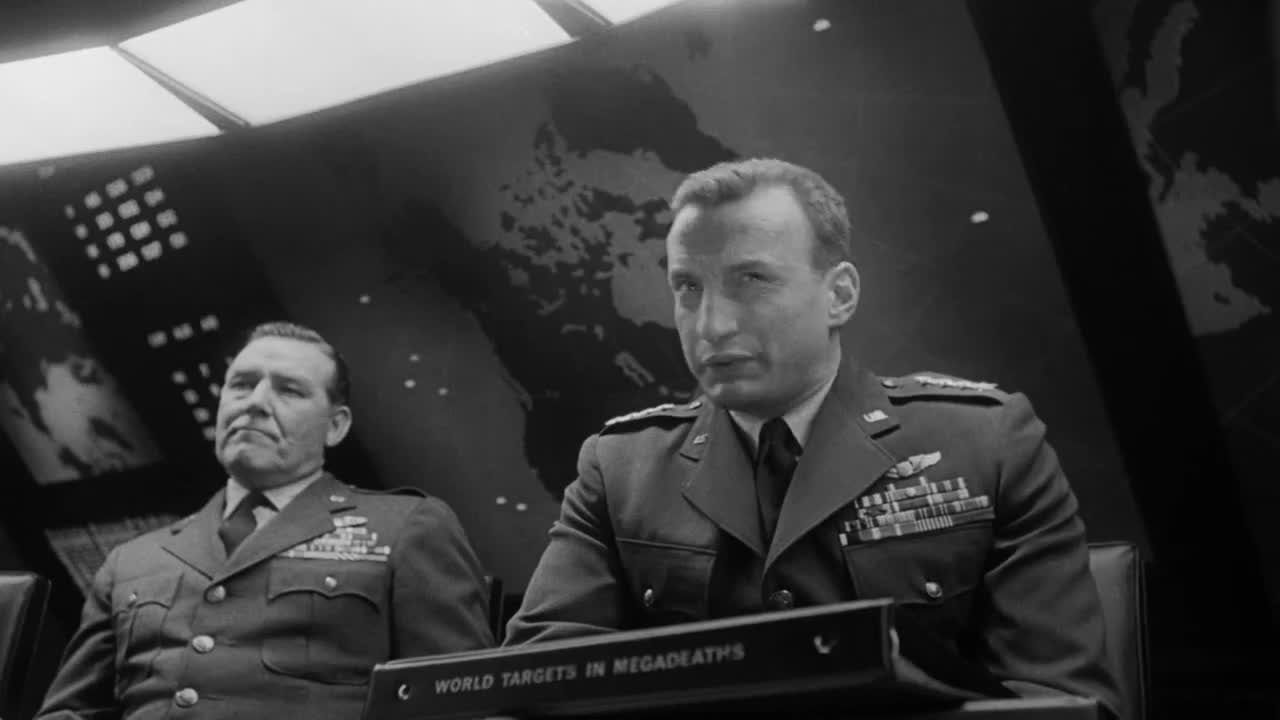 Up next · 05exceed one's authorityThe scene: The President Learns About Plan R
He is the only one who knows the three-letter code group, and he refuses to turn back the bombers because he believes the attack is necessary and unstoppable.
He uses a famous line about war being too important for generals, then twists it to argue that it should not be left to politicians either—justifying his own action.
It is Ripper's paranoid theory that communists are secretly sapping and polluting Americans' bodily fluids; the phrase has become a byword for absurd conspiracy talk.
The scene suggests not: he sounds calm and articulate while sliding from strategy into communist conspiracy, and he has already launched an attack no one can stop.
As a British officer he believes his clear duty is to issue the recall and bring the wing home, so he wants the key and the three-letter code from Ripper.