
“- But what about my husband? - I'm sorry. Women and children first.”
Why it's great
An apology softens a rule that no one on the deck can argue with.
Register
Formal
Use it yourself
I'm sorry, members first, I'm afraid.
Chapter 8 of 14 · 4'22"
On the surface, the lifeboats are being filled in an orderly way. Underneath, every family is being divided: an officer repeats "Women and children first," and wives refuse to leave without their husbands. Andrews tells one father the truth — "The ship has about an hour to live" — and two men joke about being in the same boat.
Women and Children First
Andrews Tells a Father the Truth
Titanic's lifeboats are being filled. An officer calls for women and children first and passes children across, while some wives refuse to leave their husbands behind. Below the deck, Andrews gives a worried father the truth: the ship has about an hour left, and he should get his family into a boat.
The scene is the film's moral centre, and it is built on refusals as much as orders. The officer keeps saying "Women and children first," but the women on deck do not simply obey: one asks what will happen to her husband, another says she will not go without him, and a third jokes she will 'catch my death of cold.' The rules that are supposed to save lives keep running into love and fear. Andrews, meanwhile, is the one man with no comfort to offer. To a father who says he has a wife and three children aboard, he answers plainly: "The ship has about an hour to live." Then he softens it into advice — get them into the boats. The final exchange, two men wondering if they will be 'in the same boat later,' turns the idiom into a fact.
A1–C2 is the CEFR scale. Cards above the level you pick fade, and playback will not auto-pause on them.
“- But what about my husband? - I'm sorry. Women and children first.”
An apology softens a rule that no one on the deck can argue with.
Formal
“And catch my death of cold? Certainly not!”
A rhetorical question and flat refusal make her fear sound like plain common sense.
Informal
“The ship has about an hour to live.”
It gives a sinking ship a lifespan, turning a report into a death sentence.
Neutral
“I take it you and I may both be in the same boat later.”
He hides his own trapped fate inside a joke about the very boats below.
Neutral
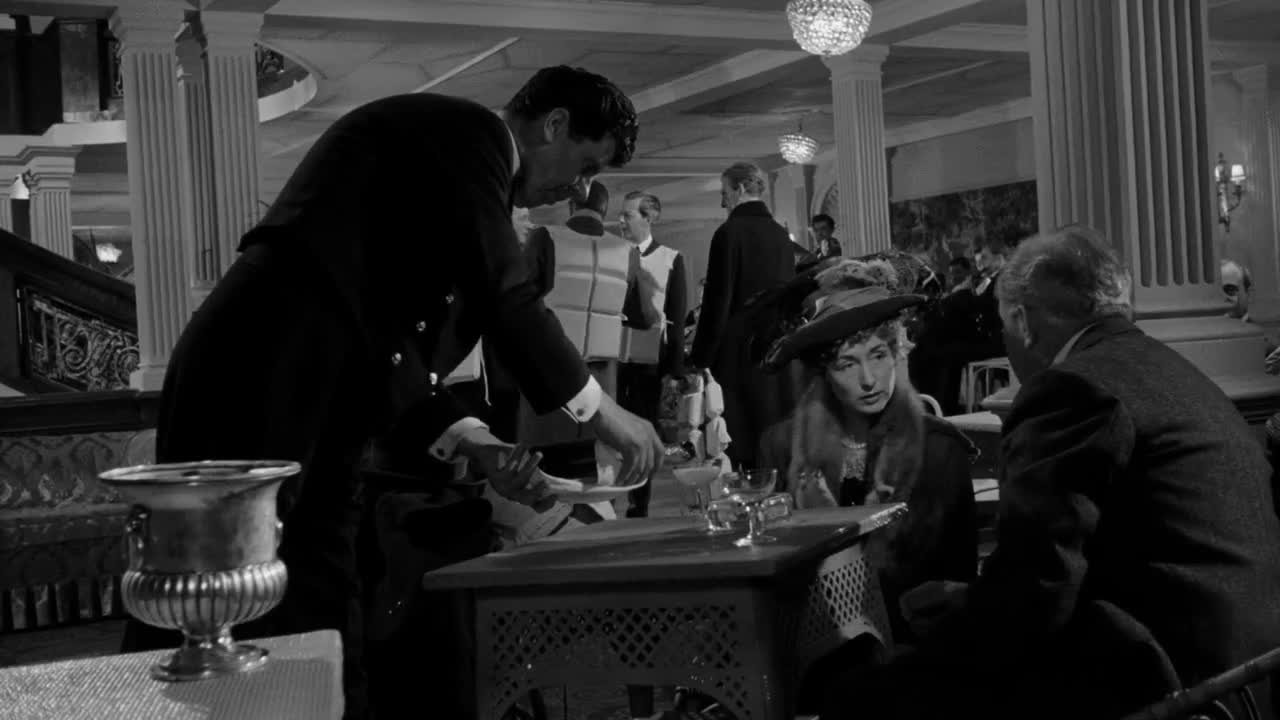 Up next · 09the latest thingThe scene: Life Jackets Become the Latest Thing
They do not want to leave their husbands behind. Wives argue that they cannot go without their husbands, which slows the loading even as the ship is sinking.
Asked how serious it is, Andrews says the ship has about an hour to live, maybe a little more if some upper bulkheads hold. He tells the man to get his wife and children into the boats.
It normally means sharing the same difficult situation, but here it is also literal: the two men may soon be in the same lifeboat. The joke turns a common idiom into a real plan.
He knows Belfast's pumps cannot keep the water out, but every extra minute the ship floats means more lives can be saved, so he tells the crew to put their backs into it.
It is oddly calm and divided: some insist the ship cannot sink, others notice the list, and some families are being separated while others still complain about the inconvenience.