
“He didn't have a conscience.”
Por qué es buena
Five plain words, and yet the harshest possible verdict on a person.
Registro
Neutral
Úsala tú
He took the credit and didn't have a conscience about it.
Capítulo 9 de 20 · 4'57"
The Vidor establishment explains itself without meaning to: David Harris, sixteen, admits to robberies and burglaries, yet gets off scot-free and becomes the prosecution's witness. Defense lawyers press the D.A. on it and get only, "We don't feel that way in Vidor, Texas." Meanwhile the case against Randall Adams turns on how neatly his age fits the death penalty.
❝ Monólogo · 4 frases David Harris Admits His Vidor Crimes
The 2 A.M. Call From David
❝ Monólogo · 11 frases The FBI father
Family teaching gives way to a night in Chicago, softening the whole testimony.
Several voices build the chapter's case. David Harris says he robbed stores and burglarized homes in Vidor while on juvenile probation, then turned himself in. A friend says nobody believed his bragging, and defense lawyers ask the Vidor D.A. why David walks away while Randall Adams faces a death penalty case.
The chapter is about a double standard, and it lets the people of Vidor explain it themselves. David Harris, according to his own account and a friend's, spent his probation robbing stores and burglarizing houses; the friend even gave him a hat and joked about drawing him a mustache so "nobody'll know who you are." When David called at 2 a.m. to confess — "I did it. Will you come and get me?" — the friend's verdict is blunt: "He didn't have a conscience." Yet it is Randall Adams, twenty-eight and from out of state, who is charged with the killing. The defense pushes the D.A. on the contradiction: the pistol and the car belonged to David, who "got off scot-free" and became a witness for the prosecution. The answer is the chapter title in disguise: "We don't feel that way in Vidor, Texas. We're not that keen on ruining a young man's life." Randall was chosen because he was 'a convenient age' — old enough for the death penalty.
A1–C2 es la escala MCER. Las tarjetas por encima del nivel elegido se atenúan y la reproducción no se pausa en ellas.
“He didn't have a conscience.”
Five plain words, and yet the harshest possible verdict on a person.
Neutral
“But it didn't bother him. Didn't bother him at all.”
The repetition with at all drives the indifference home harder than any adjective.
Informal
“Not that they had him so dead to rights.”
The concession sets up the doubt, and the idiom says the proof was never that strong.
Informal
“But just that he was a convenient age.”
One word, convenient, turns a capital case into a matter of picking the right age.
Neutral
“Eventually I turned myself in for this stuff in Vidor.”
The casual this stuff makes turning himself in sound routine, which is the point.
Neutral
“My father was an FBI man.”
A plain introduction that quietly explains where all his respect for the law comes from.
Neutral
All this time I was on probation. Juvenile probation. Eventually I turned myself in for this stuff in Vidor. I think I made a confession. I can't even remember exactly. So I'm told I did.
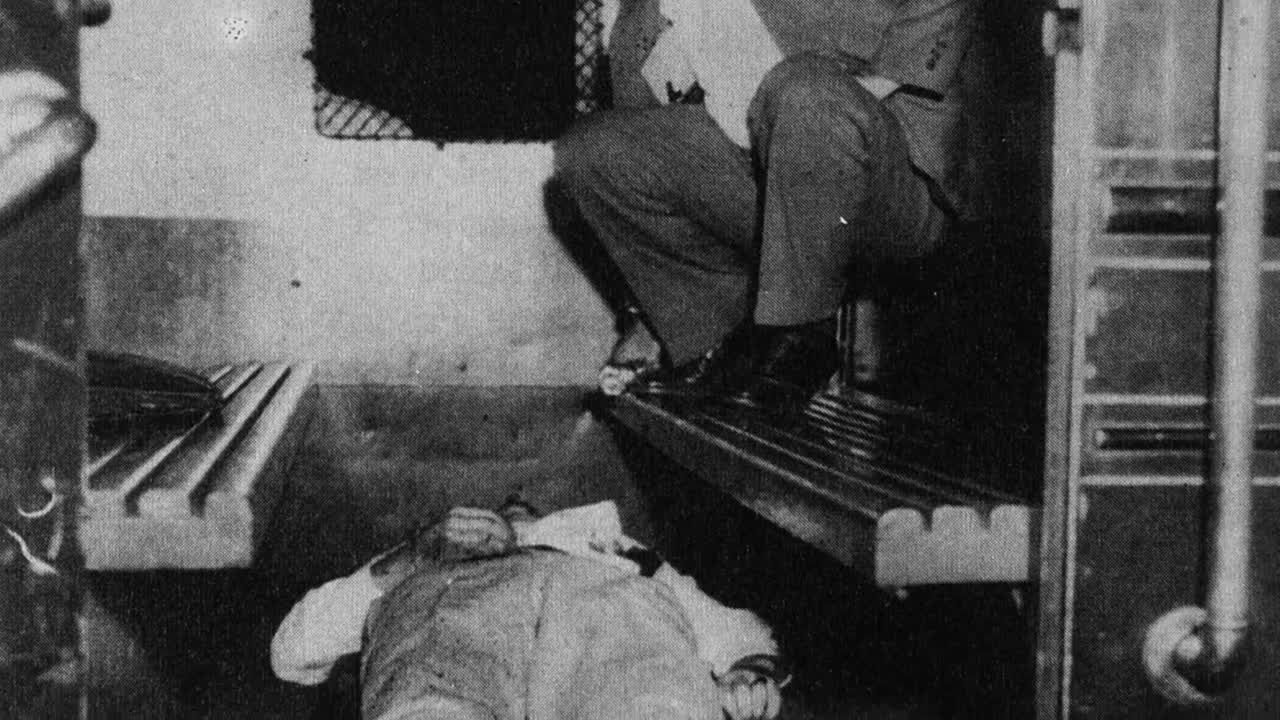
I grew up in a family... where I was taught a great respect for law enforcement. I became acutely aware of the dangers... that police officers go through, law enforcement officials go through... that I think much of the public is not really sensitive to. My father was an FBI man. Probably at the worst possible time to be in the FBI. It was from 1932 to 1935 in Chicago. He was at the Biograph Theater the night that Dillinger was killed. It was a hot summer evening. Little air conditioning in Chicago... and people were out for a walk.
 Siguiente · 10cover forLa escena: Why the Story Was Two Hours Late
He is sixteen and from Vidor, and the county does not want to "ruin a young man's life." Instead of prosecuting him, officials use him as a witness, even though the pistol and car in the case were his.
The Vidor district attorney, asked why the same evidence sends the older, out-of-state Randall Adams to trial while David Harris walks free. It is the chapter's clearest statement of a local double standard.
The argument that David Harris committed a series of crimes both before and after the officer's killing, and was therefore the likelier killer. The judge refused to let the jury hear it.
Because he was twenty-eight. Texas law did not allow the death penalty for a sixteen-year-old, so prosecutors pursued the older defendant — a point the defense calls the case's real motive: he was just "a convenient age."
It is the prosecutor, describing a family devoted to law enforcement. He notes his father was at the Biograph Theater in Chicago the night John Dillinger was killed, tying his own career to that era.