
“"It takes a great prosecutor to convict an innocent man."”
Por qué es buena
The line is built as praise, which is exactly why it indicts the whole system.
Registro
literary
Úsala tú
It takes a great chef to burn water twice.
Capítulo 18 de 20 · 4'11"
A woman survives an attack with a rolling pin and identifies David Harris, who admits it and explains, "something just came over me." Then another account turns on the trial itself: a young witness says his testimony was rehearsed, which is what you call "coaching the witness."
❝ Monólogo · 16 frases Harris Confesses to the Rolling Pin Attack
❝ Monólogo · 10 frases How a timeline gets built
He shows how a witness guesses toward the police timeline, exposing how shaky it is.
A woman in Vidor is hit over the head with a rolling pin; the attacker thinks she is unconscious, but she isn't, and she identifies David Harris. Harris turns himself in, admits the attack, blames marijuana and drinking — 'something just came over me' — and posts bond before leaving for Germany. Later, a witness describes how investigators fed him the timeline and rehearsed his answers: 'coaching the witness.'
The chapter is about repetition: the same man keeps surfacing in crimes with the same methods. 'We had a crime with basically the same M.O. as his,' the narrator says, and each time he checks, David Harris is in another prison — first Texas, then California. 'So I realized again that unfortunately, he hadn't straightened up.' The other half turns on how testimony gets made. A man who was sixteen when he testified describes being told the time of the crime in advance and asked leading questions, then having his answers drilled: "That's what you call 'coaching the witness.'" Looking back, he says the prosecutor 'was deceiving the jury. He wanted to deceive justice.'
A1–C2 es la escala MCER. Las tarjetas por encima del nivel elegido se atenúan y la reproducción no se pausa en ellas.
“"It takes a great prosecutor to convict an innocent man."”
The line is built as praise, which is exactly why it indicts the whole system.
literary
“"You know I know the truth this time."”
Repeating know turns a quiet line into pressure the suspect cannot dodge.
Informal
“"I don't know what got over me but something just came over me."”
It names no cause at all, which is precisely how real excuses sound.
Informal
“That's what you call "coaching the witness."”
He does not rant; he just gives the practice its name.
Neutral
“but he was deceiving the jury. He wanted to deceive justice.”
It scales one courtroom lie up into a charge against justice itself.
Formal
“So I realized again that unfortunately, he hadn't straightened up.”
One adverb carries the detective's weariness without a single complaint.
Neutral
I got a call one morning, a lady here in Vidor... had been hit over the head with a rolling pin... and the attacker thought she'd been knocked unconscious... when, in reality, she wasn't. And she recognized the attacker to be David Harris. He voluntarily came to the police station. I told him, "David, this girl knows who you are. "I don't even have to tell you I know the truth. "You know I know the truth this time." He said, "I was wrong. I smoked marijuana, I was drinking. "I don't know what got over me but something just came over me." But he forgot to mention one thing, that he was only wearing underwear. I felt as though the attack was sexually oriented. He never wanted to admit that... and, as I recall, he never really finally admitted it. He'd just get to where he wouldn't deny it.
Police give you the time of this and the time this happened... and you just correlate from those events. You just estimate from that event what time it was. You don't know. You're taking a guess. Police tell you, "It was 12:30 when this crime happened. "What time did you leave the movie?" "I know it was somewhere around midnight. "It might have been before then. I don't know. "I didn't have a watch on."
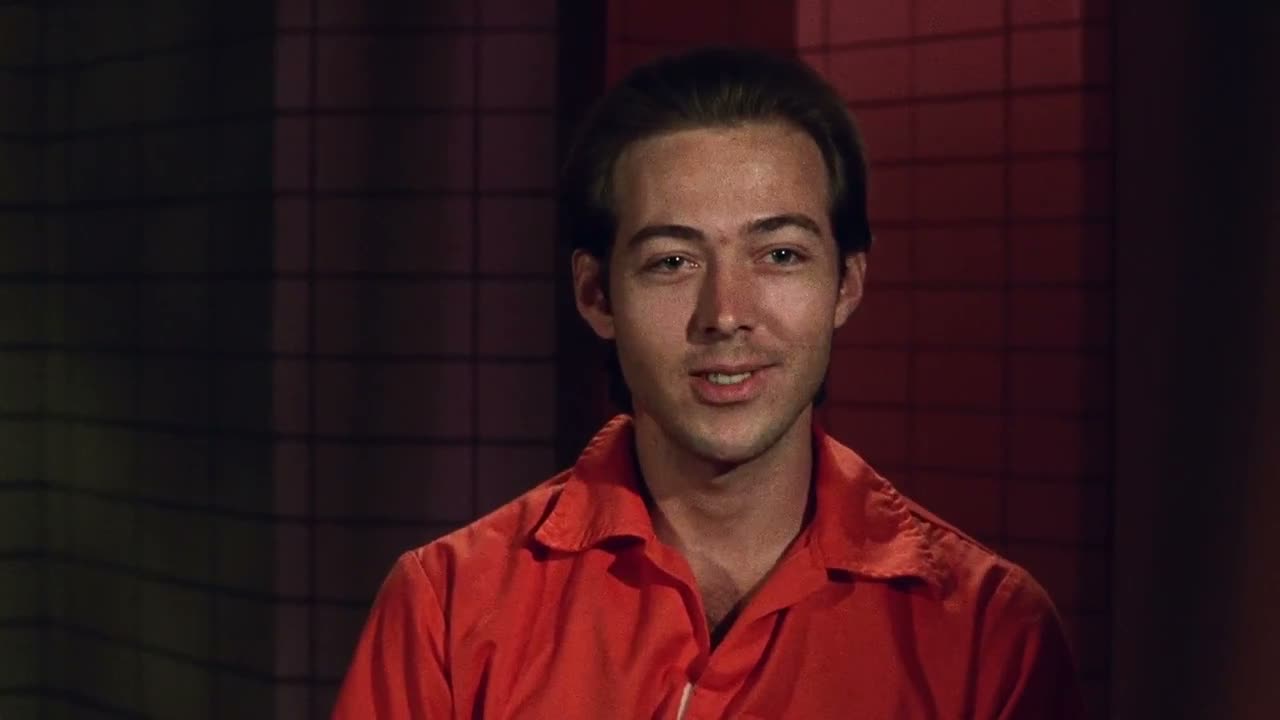 Siguiente · 19tore my head offLa escena: The Scales Are Not Balanced
Modus operandi — a criminal's usual method or pattern. The film uses it to link separate crimes to David Harris, noting later crimes had 'basically the same M.O. as his.'
The attacker used a rolling pin and assumed he had knocked her unconscious, but she never lost consciousness — so she was able to identify David Harris afterward.
He was sixteen with charges pending and afraid of being tried as an adult. He says the D.A. told him not to worry and coached his answers, so he said what was wanted — and only later called it deceiving the jury.
After admitting the attack he posts bond and goes to Germany. When the investigator later links a new crime to his M.O., he has to track Harris down — and finds him in a California prison.
He posted bond and left the country, and the film never shows it going to trial. Instead it follows his later crimes, which is the point: the same pattern keeps repeating.