
“We'd never gone that long in Dallas without clearing a murder of an officer.”
Por qué es buena
A quiet line of shop talk that admits the whole department is failing.
Registro
Informal
Úsala tú
We'd never gone that long without shipping a release.
Capítulo 4 de 20 · 4'46"
David Harris tells anyone who will listen that he shot the Dallas officer — at a friend's house he "starts swearing up and down" that he is the killer. Friends wave it off with "Sure you did, David. Sure." Only later, facing the case against him, does the story change and the bragging stop.
David Brags in Front of the TV
David Hands Over the Murder Weapon
A month after a Dallas officer is killed, police get a break in Vidor, Texas, and trace David Harris to a stolen car. Meanwhile, friends say David kept bragging that he had shot the officer, swearing up and down until everyone dismissed it as another story. Facing prison, he changes his account and admits he was there.
The bragging is the whole case in miniature. David tells a friend, in front of the TV, that he killed the officer: "I'm the one that killed him." His friends treat it as noise — the room answers with "Sure you did, David. Sure." — because David was always claiming things, and the truth usually came out only when he felt cornered. That is exactly the pattern here: asked whether he had been to Dallas or involved in a shooting, "he denied that to the end," then, sensing he was in over his head, he changed his story, led someone to a pistol and a sock hidden in a swamp, and admitted he was present. The police take the lesson quietly: what David knew "was the facts of the case, and it matched with what we knew." The kid who would not stop bragging turns out to be the most reliable witness in the room — as long as someone listens.
A1–C2 es la escala MCER. Las tarjetas por encima del nivel elegido se atenúan y la reproducción no se pausa en ellas.
“We'd never gone that long in Dallas without clearing a murder of an officer.”
A quiet line of shop talk that admits the whole department is failing.
Informal
“He says, "I swear to God, I shot that fucking pig."”
An oath wrapped in a slur shows how badly he wants to be believed.
Informal
“And everybody said, "Sure you did, David. Sure."”
The repeated sure is not agreement; it is the sound of being dismissed.
Informal
“We felt as though David had committed that crime.”
The careful we felt hints at how thin the evidence really was.
Neutral
“"I didn't do it, but I was there, and I know who did do it."”
One sentence moves the blame and decides whose life is ruined.
Neutral
“He just seemed like a friendly kid.”
The mildest description of the killer is the film's quietest, coldest irony.
Neutral
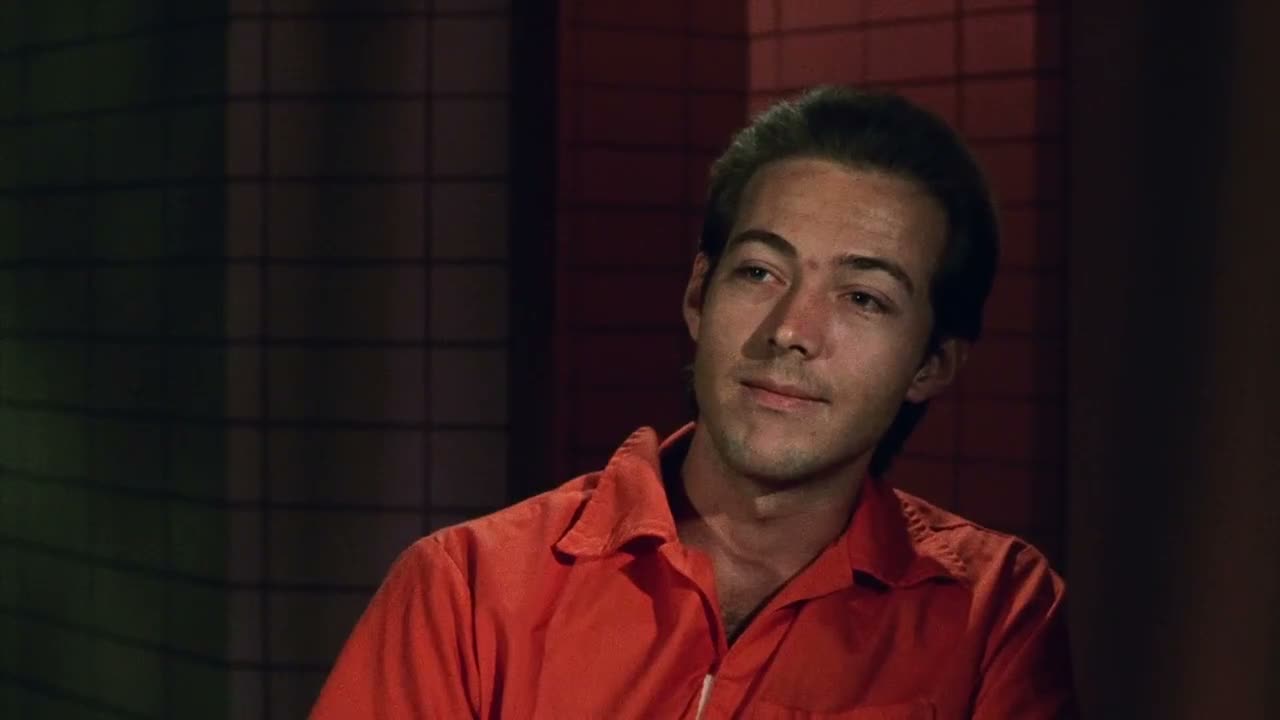 Siguiente · 05come to find outLa escena: Recounting the Night of the Shooting
He told the same story over and over, and his friends had heard him brag before: "We thought he was just bragging." The details were real, but the delivery made it sound like more of his usual talk.
First he swears he shot the officer himself. Later, facing a long sentence, he says, "I didn't do it, but I was there, and I know who did do it," and leads someone to a pistol hidden in a swamp.
A burglary and a stolen car in Vidor, Texas, point police to David Harris. Once they find him, the rumors he had been spreading about the Dallas shooting turn into evidence.
It is what makes him hard to read: he talks to police calmly, chats for fifteen or twenty minutes, and seems ordinary. The unsettling part is that this friendly kid is describing a killing in detail and knows facts that match the case.
Only in his own terms. He admits he was present and identifies the shooter, and the police find his account matches what they know, but he still denies firing the shot himself.