
“There's no use waiting now. Believe me.”
Por qué es buena
A blunt kindness: stop waiting, it will not change anything.
Registro
Informal
Úsala tú
There's no use waiting now; the decision is made.
Capítulo 5 de 19 · 3'24"
The box plays a tune every time you lift the lid, and the shop has to sell it. One customer calls the song unbearable; the clerk agrees, then turns it into a habit warning. "There's no denying that we all have a weakness for candy," he says, and the box is sold.
Matuschek Asks a Woman What She Thinks
❝ Monólogo · 19 frases The Clerk Turns an Annoying Song into a Sale
Matuschek and Company is marketing a candy box that plays a tune when opened. The boss asks a job applicant, Miss Novak, what she thinks; she calls it romantic. Then a lady customer complains about the same song, and a salesman talks her into buying the box anyway.
The scene is a lesson in selling, and its method is agreement. When the customer says the tune is too silly, the clerk does not argue: "I know just what you mean, madam," and only then mentions that other customers like it for that very reason. The pitch works by letting her keep her taste while he reframes the flaw as a feature. His line "There's no denying that we all have a weakness for candy" moves the objection from the box to human nature, where no one can disagree. The little tune becomes a diet reminder, and the price, reduced from $6.95 to $5.50, sounds like a favor. Earlier, the same box was called romantic by Miss Novak, so the film quietly pairs the shop's two ways of seeing it: romance and salesmanship are the same object.
A1–C2 es la escala MCER. Las tarjetas por encima del nivel elegido se atenúan y la reproducción no se pausa en ellas.
“There's no use waiting now. Believe me.”
A blunt kindness: stop waiting, it will not change anything.
Informal
“There's no denying that we all have a weakness for candy.”
A sales line that sounds like a shared truth: we all have a soft spot.
Informal
“Before we know it, we've gained a couple of pounds.”
How quietly consequences arrive: before we notice, the weight is already there.
Neutral
“There's the woman's point of view.”
A shorthand for a whole way of seeing: that is the woman's point of view.
Informal
I know just what you mean, madam. And yet, do you know that some of our customers like it for the very thing you object to. We've sold quite a few especially to ladies. - Really? - Yes, madam. There's no denying that we all have a weakness for candy. And when I say weakness I don't mean to say anything against candy. Oh, no. I only mean that uh, sometimes we are inclined to overdo it a little. I suppose so. For instance, madam, have you any idea how many pieces of candy you eat a day? No, I never gave it a thought. That's just it. We pick up a piece of candy absent-mindedly, then we take another piece. Before we know it, we've gained a couple of pounds. And that's when our troubles begin. Massages, electric cabinets. Oh, don't I know it. Now, this little box makes you candy-conscious. That's what "Matuschek and Company" designed it for. Every time you open it, this little tinkling song is a message to you. "Too much candy, now be careful."
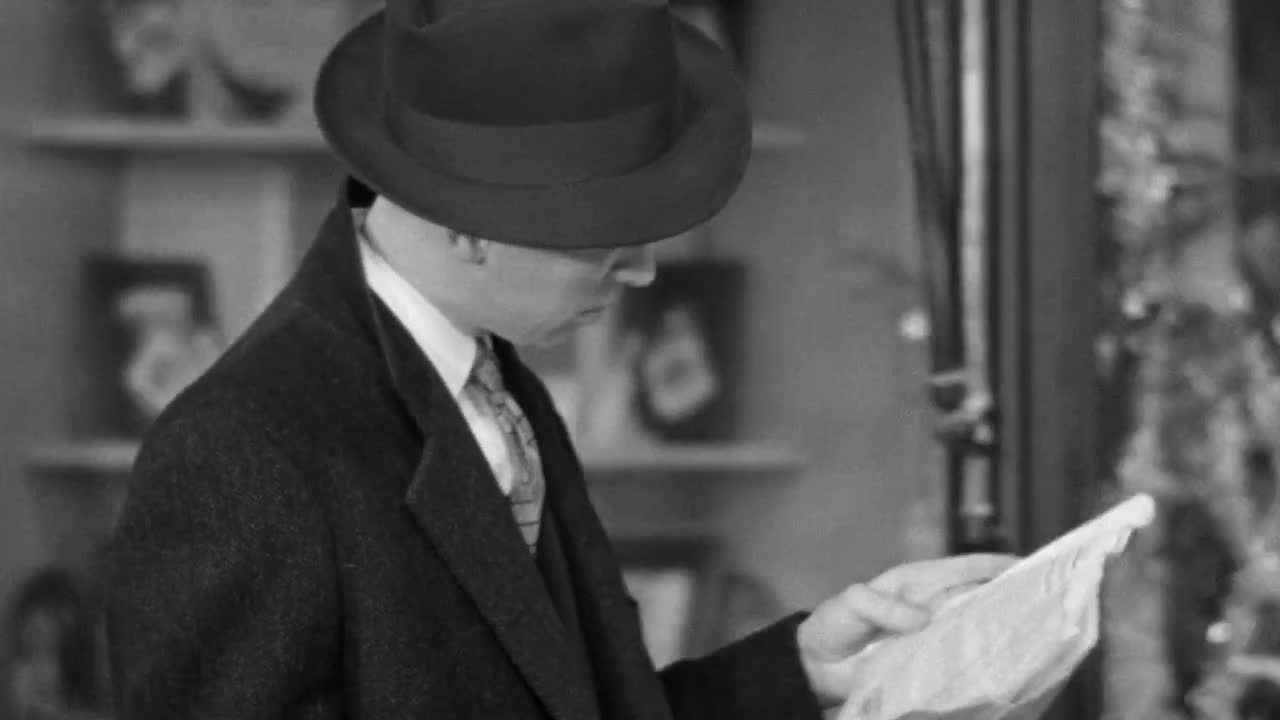 Siguiente · 06knock on woodLa escena: Kralik Reveals His Pen Pal
She is asked for an honest opinion, not a sales figure, and she answers from feeling rather than price. Her reply prompts the boss to note that this is the woman's point of view.
The salesman never argues. He agrees that the tune is odd, then says other customers like it for that very reason, and recasts the music as a reminder not to overeat. She is persuaded without being told she is wrong.
He is polishing the truth rather than inventing it. The song really does play each time the box opens, and people really do overdo candy; he simply chooses to present the annoyance as a kindness.
A co-worker mocks the gimmick by swapping verbs and objects: people who like to smoke candy and listen to cigarettes. It parodies any sales pitch that claims a strange feature is what everybody secretly wants.