00:00 / 03:46
00:00 / 03:46

Matuschek Returns on Christmas Eve, Explained

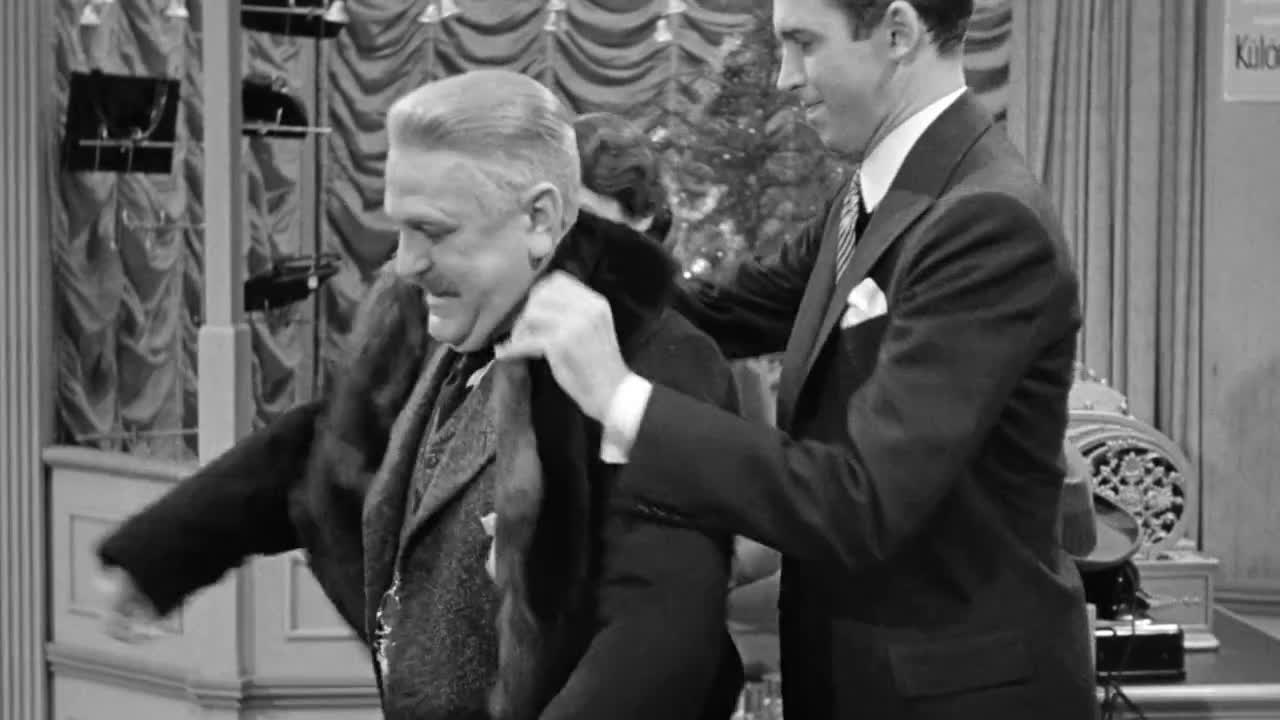
The boss everyone thought was out sick walks back into the shop on Christmas Eve. Nothing is argued about, yet the whole staff is quietly measuring itself against him. "Well, if you don't know, Mr. Matuschek, who should?" is the scene's real question: who has been running this place?

Office chatSmall talkThankingApologizingBoss & employeeB2slowamericanClean

Key moments

Start here, then watch the full scene
  1. ❝ Monólogo · 8 frases The hospital complaint

    He turns two weeks without customers into a joke about the other shop, lonely and proud in the same breath.

    0:05–0:28
    23s
  2. ❝ Monólogo · 12 frases The Best Sales Day, and a Thank-You From the Heart

    1:06–2:00
    53s
  1. ❝ MonólogoThe hospital complaint8 frasesPracticar ↗
  2. ❝ MonólogoThe Christmas thanks12 frasesPracticar ↗

Matuschek Returns on Christmas Eve, explained

What happens

On Christmas Eve, Hugo Matuschek walks into his own leather-goods shop after two weeks in the hospital. The staff greet him as a returning patient; he insists he only came to see if the shop was still standing. Then he asks about business, thanks everyone for the little Christmas tree, and starts handing out bonuses.

What's really going on

For two weeks the shop has run without its owner, and the scene lets the staff see how much that mattered. Matuschek frames his visit as a sick man checking on a building, but every exchange pulls him back inside the life he built: the nurse's handbag that came from a rival, the bonus he can't wait to hand out. The line that gives the game away is "Well, if you don't know, Mr. Matuschek, who should?" — praise that is also a reminder that this man is the shop. Even his apology to Pirovitch comes through money, not words: one line has the bonus proving he "didn't mean it." The staff laugh and thank him, but they are also watching a lonely man come home to the only family he has on Christmas Eve.

Key lines & what they mean

“Well, if you don't know, Mr. Matuschek, who should?”
A compliment dressed as a question: if the owner can't explain the shop's low prices, nobody can, so the reply quietly calls him the man behind everything.
“This is where I spent most of my life.”
The shop is not just a business to him; it is where his whole adult life happened, and saying it out loud is how he admits he has come home.
“Well, when you see the bonus, you'll realize that I didn't mean it.”
An apology with a paycheck attached: he owns up to insulting Pirovitch, then lets the size of the bonus stand in for the words he can't say.
“I just came around to find out if the shop was still here.”
His stated reason for the visit — checking that a building still stands — is really about fearing the shop, and his place in it, went on without him.

Theme

  • Loneliness — Matuschek calls the shop his home and the staff his nurses, because on Christmas Eve he has nowhere warmer to be.
  • Money — The bonus is the only language he has for gratitude and apology, so feeling gets measured out in cash.

Qué aprendes en este capítulo

Puntos de enseñanza

Repasa justo después de ver
Mi nivel0/4

A1–C2 es la escala MCER. Las tarjetas por encima del nivel elegido se atenúan y la reproducción no se pausa en ellas.

The Shop Around the Corner: tu progreso

Capítulo 17 de 19 · quedan unos 7 min

← Anterior
Siguiente · 18your whole life ahead of youLa escena: Matuschek Invites a Lonely Boy Home

Ideas clave

Lo que te llevas
  1. Use from the bottom of my heart for sincere thanks.
  2. Use take it easy to tell someone not to overdo it.
  3. Understand get well and go home in context.
  4. Catch called you names as a softened reference to insults.

Preguntas frecuentes

La pregunta, luego la frase
Why does Matuschek call the staff his 'doctors' and 'nurses'?

Because their Christmas tree and note did more for him than the hospital did. He walked in claiming he was still 'a pretty sick man,' and by the end he says the shop and the people in it are what actually made him well. It's his way of saying they are family.

Why does Matuschek give Pirovitch a bonus instead of a straight apology?

He admits he has 'called you names on several occasions,' then says the bonus will prove he didn't mean it. Money is the apology he can't quite put into words, and it lets both men move past it without an awkward scene on Christmas Eve.

What does 'if you don't know, Mr. Matuschek, who should?' mean?

It's a flattering rhetorical question. Matuschek has just joked about how astonishingly cheap the shop's prices are, and the reply says that if even the owner can't explain how it's done, no one can — a playful way of calling him the man behind the whole operation.

Why does Matuschek say he's 'not here' and only came to see if the shop still exists?

He's teasing his doctor's orders and hiding how glad he is to be back. It's Christmas Eve, he 'couldn't stay away any longer,' but he frames the visit as a quick check on a building — right before he starts running the place and handing out bonuses.