
“Listen, the boss doesn't have to give you a reason.”
Por qué es buena
A blunt reminder of how power works: the one in charge owes you no explanation.
Registro
Informal
Úsala tú
Don't take it personally—management doesn't have to give you a reason.
Capítulo 9 de 19 · 6'07"
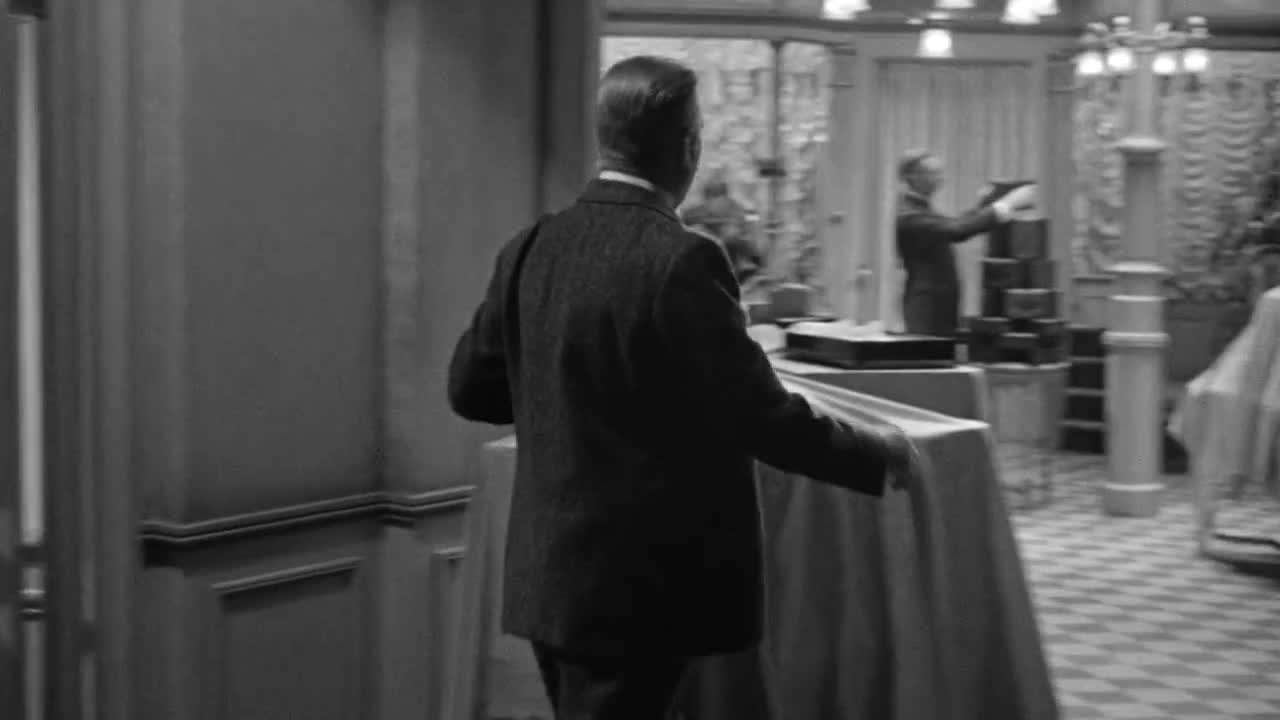
Kralik is called into the office expecting a talk, and gets a farewell instead. Matuschek apologizes for his temper, then says Kralik would be "happier somewhere else." The letter he hands over says Kralik leaves "of his own accord," which is the polite fiction the whole scene turns on.
Matuschek Lets Kralik Go Gently
❝ Monólogo · 8 frases Matuschek reads the letter
The stock phrases pile up until praise itself sounds like an eviction notice.
Matuschek summons Kralik, his first salesman of nine years, into the office and delivers the news sideways: he believes Kralik would be happier elsewhere. Kralik accepts it, signs for a month's pay, and takes a letter of recommendation. He then says goodbye to each co-worker and admits he cannot face meeting his correspondent tonight.
The scene never says the word. Matuschek wraps a dismissal in an apology and a compliment, which is why the blow lands so softly: "I really believe that you'd be happier somewhere else." Kralik, who spent the morning arguing with him, does not fight it. The recommendation letter completes the fiction, praising his nine years and stating that he "leaves my employ of his own accord." The comedy is bitter here: a man loses the job that gave him, as he puts it, "a position, a future," and must thank everyone on the way out. The co-workers' remarks, that "the boss doesn't have to give you a reason," turn the private sting into a general truth about working life, and Kralik's real fear is smaller and more human — that the woman he corresponds with expects a far more important man.
A1–C2 es la escala MCER. Las tarjetas por encima del nivel elegido se atenúan y la reproducción no se pausa en ellas.
“Listen, the boss doesn't have to give you a reason.”
A blunt reminder of how power works: the one in charge owes you no explanation.
Informal
“That's one of the wonderful things about being boss.”
Sarcasm dressed as a perk: never having to explain is the real reward of power.
Informal
“You see, this morning I had a position, a future.”
Two points in time do all the work: this morning he had a future, now he doesn't.
Neutral
“Well, I guess we might just as well say goodbye.”
A goodbye so flat it admits there is nothing left to say.
Informal
"To whom it may concern.. "I wish to state that Mr. Alfred Kralik "leaves my employ of his own accord. "Mr. Kralik started with Matuschek and Company "nine years ago as an apprentice. "Though with diligence, he advanced "to the position of clerk. "For the last five years, he has been our first salesman. "We have found him reliable "efficient, resourceful. "We can recommend him without reserve. "He carries with him our best wishes "for his success in his future career.
 Siguiente · 10mind your own businessLa escena: Matuschek Learns of the Affair
He has decided Kralik must go but wants to avoid a scene. Turning the dismissal into advice about being happier somewhere else lets both men keep their dignity and keeps the shop calm.
He is effectively fired. Matuschek tells him he would be happier elsewhere and Kralik accepts it. The letter, however, says he leaves of his own accord, so on paper it looks like a resignation.
It protects Kralik's reputation when he looks for another job. A letter that admits he was dismissed would make employers wary, so the shop gives him a spotless account of nine loyal years.
He is supposed to meet the woman he has been writing to, but he has boasted in his letters and she expects an important man. Now that he has lost his position, he feels he cannot face her.
It is their way of handling an awkward situation. Lines like "the boss doesn't have to give you a reason" acknowledge how little power they have, and laughing about it keeps the farewell from becoming unbearable.