00:00 / 03:59
00:00 / 03:59

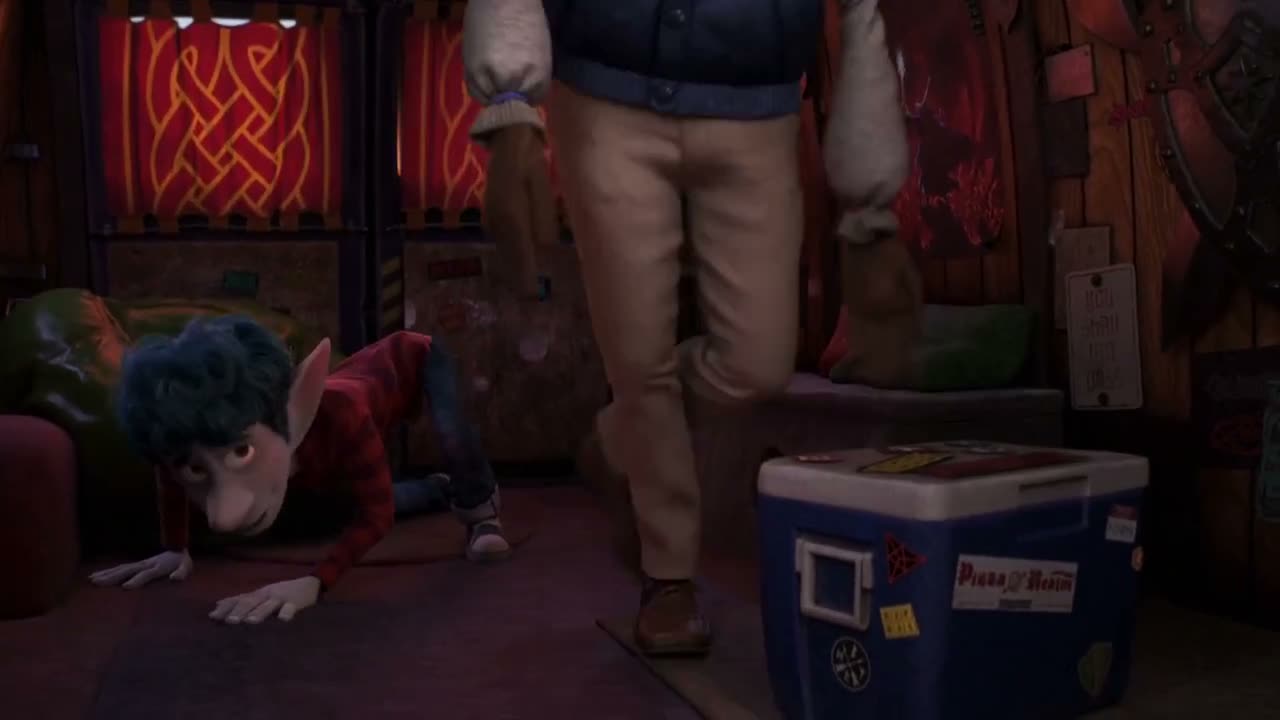
Barley Trains Ian With the Sword, Explained

Onward · 2020

Capítulo 11 de 16 · 3'59"

The brothers argue and train, and the fight at home mirrors the one on the road. "I think Ian s a pretty stand up citizen," someone insists, defending the kid everyone else writes off. Under the slapstick is the older brother's need to be useful and the younger one's fear of being a screwup.

ArgumentsParents & kidsConfrontingComfortingSiblingsB1american

Key moments

Start here, then watch the full scene
  1. Laurel Has Had Enough

    0:02–0:08
    6s

Barley Trains Ian With the Sword, explained

What happens

On the road, Barley and Ian clash while practicing with the sword, and at home Laurel is losing patience with Barley's antics. The argument is about who is really taking care of the family, while the training scene is about who gets to be a hero. Both threads meet in one question: is Ian a screwup, or is he finally becoming someone?

What's really going on

Underneath the sword practice and the jokes, the brothers are working out who gets to be trusted and who gets to be blamed. The trip has worn both of them down, and the label nobody can shake is the one that calls someone a screwup. The disguise at the traffic stop turns that worry into a test, and the quiet pushback — "I think Ian's a pretty stand up citizen." — is a defense of the kid everyone else writes off. What finally lands is not a lesson about magic but a plain statement of how much one person is carrying: "Barley, I'm trying to take care of you and Dad, and you're not making it any easier." The training answers it in its own way, because letting another person teach you is a kind of trust.

Key lines & what they mean

“Barley I don t know what happened back there But I don t think you re a screwup”
A reassurance aimed at Barley: whatever went wrong, the speaker refuses to accept the label everyone else uses for him.
“I think Ian s a pretty stand up citizen”
A defense of Ian as decent and responsible, pushing back on the idea that he is the problem.
“I mean tired Sick and tired Gotta go”
Exhaustion spoken plainly: not just tired, but fed up, and the speaker ends the call before it turns into a fight.
“Barley I m trying to take care of you and Dad and you re not making it any easier”
The caregiver's complaint: the speaker is carrying the family and feels the other person is adding to the load instead of helping.

Theme

  • Family conflict — Barley and Laurel clash over who really takes care of the family, and the brothers' own fight echoes the same unspoken resentment.
  • Identity — Both brothers are fighting a label — screwup or hero — and the training scene is where one of them starts to believe a different version.

Qué aprendes en este capítulo

Puntos de enseñanza

Repasa justo después de ver
Mi nivel2/4

A1–C2 es la escala MCER. Las tarjetas por encima del nivel elegido se atenúan y la reproducción no se pausa en ellas.

Onward: tu progreso

Capítulo 11 de 16 · quedan unos 33 min

← Anterior
Siguiente · 12the worst that can happenLa escena: Ian Crosses the Trust Bridge

Ideas clave

Lo que te llevas
  1. Use get something right to describe doing something successfully.
  2. Recognize screwup as an informal self-criticism or insult.
  3. Use It’s not fair to... to ask for a fair chance.
  4. Hear once in a lifetime as a rare opportunity.
  5. Notice how "ahead on" changes the exchange.

Preguntas frecuentes

La pregunta, luego la frase
Why do Barley and Laurel argue?

Because Laurel feels she is holding the family together alone, while Barley keeps acting without thinking. Both are grieving, and neither feels the other appreciates what they are carrying.

Why does Barley defend Ian so strongly?

Because Barley knows what it is like to be written off. Calling Ian a stand-up citizen is his way of insisting his little brother is better than the labels people use.

What does 'a screwup' mean?

It means a person who keeps failing or messing things up. It is a harsh label, which is exactly why the reassurance that someone is not a screwup matters so much.

Why is the sword-training moment important?

It is the first time Ian lets Barley teach him instead of dismissing him. The lesson is silly, but the trust behind it matters more than the technique.