“Of course, I wouldn't admit it at the time but what woman would? We hate to admit we are wrong.”
A confession that doubles as a defense: nobody likes admitting they were wrong, so we all stall.
Informal
Capítulo 8 de 19 · 4'42"
On the night everyone must stay late, Klara asks Kralik for the evening off. He refuses, she pushes back, and an old grudge turns into war. What looks like a scheduling spat is two proud people keeping score. 'Well, you're out of luck,' he tells her; by the end he is the one walking out.
Kralik Refuses Klara's Night Off
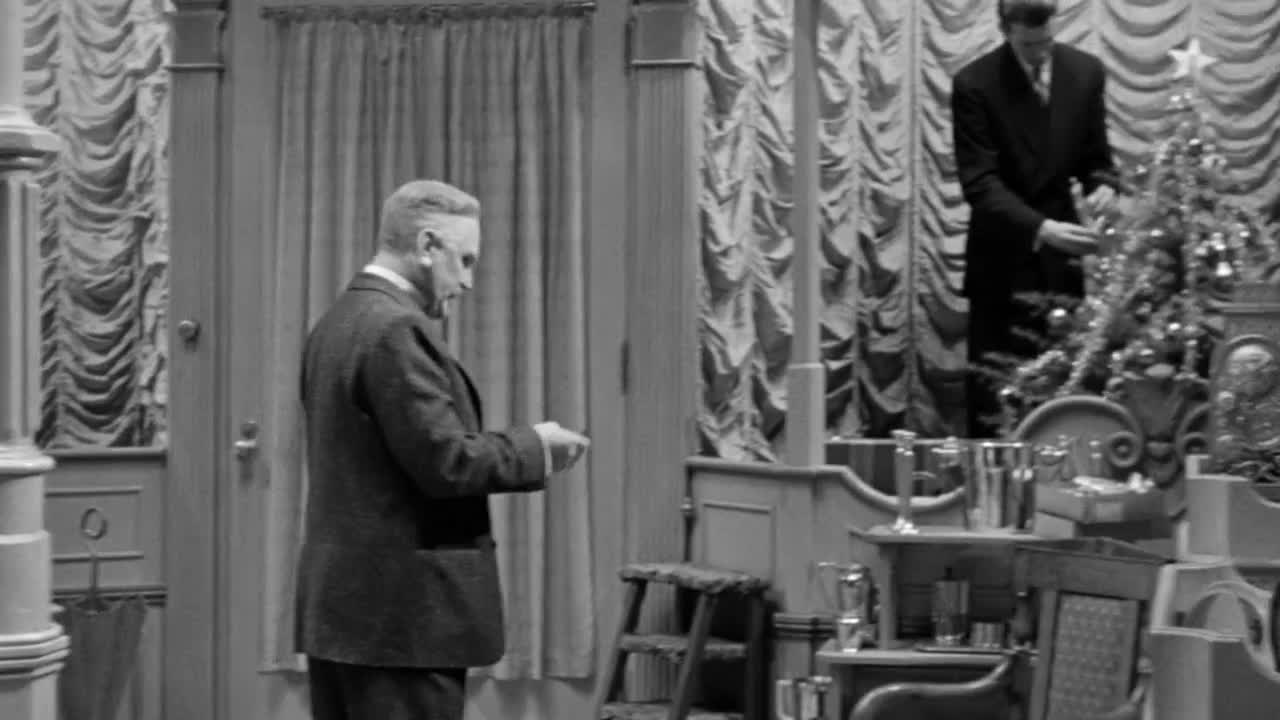
In Matuschek's Budapest shop, the staff must stay after closing to dress the windows. Klara Novak asks her colleague Kralik for the night off, and he turns her down flat; the exchange becomes a fight about everything they have resented for months. When Kralik then asks Matuschek for the same night off, the owner erupts, and Kralik offers to call it a day.
The night off is only the trigger. Klara and Kralik have spent months needling each other, and the request gives both of them a chance to settle scores. She flatters him first — 'this is the first time you've shown a little sense' — and he is pleased enough to say they might get along better, then refuses her anyway. She calls it an obvious trick; he calls her out of luck. Matuschek's own resentment is older and pettier still: he counts the gas, the rent, the taxes and their salaries, and treats one annual request for help as betrayal. 'Perhaps we'd better call it a day' is not about a window — it sounds like a resignation dressed as a casual suggestion. Everyone in the shop is keeping a private ledger.
A1–C2 es la escala MCER. Las tarjetas por encima del nivel elegido se atenúan y la reproducción no se pausa en ellas.
“Of course, I wouldn't admit it at the time but what woman would? We hate to admit we are wrong.”
A confession that doubles as a defense: nobody likes admitting they were wrong, so we all stall.
Informal
“Perhaps we'd better call it a day.”
A graceful way to end a dead-end argument without either side surrendering.
Formal
“Well, you're out of luck.”
A five-word door closing: no explanation, no sympathy, just bad news delivered flat.
Informal
“When I first came into this shop I was full of life and enthusiasm and now I'm nothing!”
A before-and-after lament for a person worn down by years of routine.
Informal
Siguiente · 09of one's own accordLa escena: Matuschek Fires KralikShe has a date and wants to wear the blouse she had just apologized for. When she hears the staff must stay to dress the windows, she asks Kralik first, then Matuschek, to be excused.
The window dressing is an annual event, and he expects all six employees to stay. He resents feeling unappreciated — he pays the rent, gas, taxes and salaries — and treats one request as a test of loyalty.
He is provoked, but he also enjoys the upper hand: he needles her, then denies the favor anyway. Still, she flatters him mainly to get what she wants, and dismisses his question as an obvious trick.
Kralik and Novak have been making plans behind the owner's back, and Matuschek feels his authority undercut. The question reminds everyone who decides — and escalates the fight instead of settling it.
On the surface it means 'let's stop for today.' Coming right after the quarrel, it reads as more than the end of a workday — an offer to quit, made to sound casual.