
“Now, if you wish to look around, just make yourself at home.”
Por qué es buena
Hospitality that survives a refusal: look around, and treat the place as your own.
Registro
Informal
Úsala tú
If you need anything, just make yourself at home.
Capítulo 4 de 19 · 4'03"
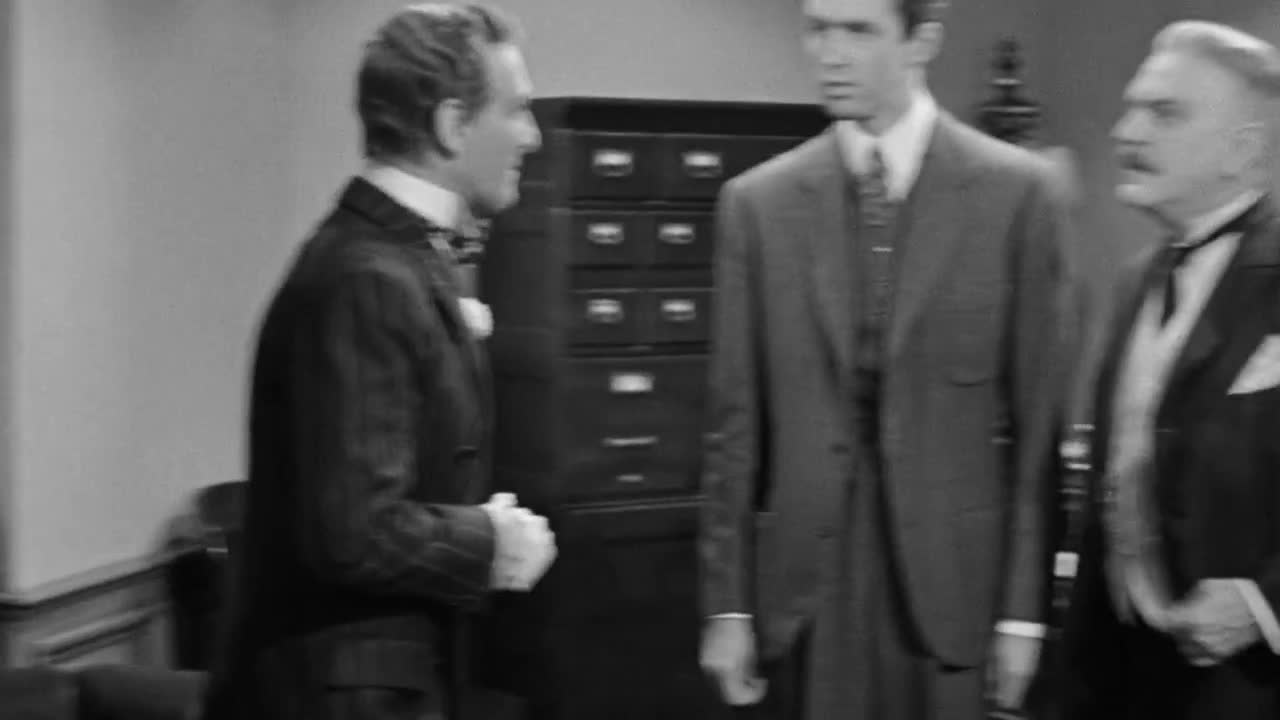
She walks in pretending to be a shopper, so the clerk walks her through the whole sales talk. Then she drops it: "I'm looking for a job." The clerk has been used as an unwitting audition panel, and now the boss has to say no to someone who just proved she is good at the job.
Klara Pitches Herself to a Clerk Who Can't Hire
The Boss Shuts Klara Down
A woman enters Matuschek and Company in Budapest, pretends to admire a bag, and lets the clerk give her the full sales pitch. When she finally admits she wants a job, the boss, Matuschek, brushes her off: no opening. She leaves her name as Klara Novak and an address, still hoping.
The comedy runs on a mismatch of registers. She is not shopping; she is performing, and the performance is an audition she never announces. The clerk does his job perfectly, which is exactly the problem: "that wasn't very nice letting me go through the whole routine." Her complaint is fair and also tactical, because it forces him to admit she did the work well. Underneath the sales patter is the anxiety of a woman who needs any job at all, and the small humiliations of asking. Matuschek's "out of the question" is not cruelty so much as the reflex of a shop on a tight margin. The scene sets up a longer battle of pride: she just proved she can do the job he will not give her, and neither of them can back down now.
A1–C2 es la escala MCER. Las tarjetas por encima del nivel elegido se atenúan y la reproducción no se pausa en ellas.
“Now, if you wish to look around, just make yourself at home.”
Hospitality that survives a refusal: look around, and treat the place as your own.
Informal
“Look, I could do anything for you, I'd do it.”
A raw offer of total effort: do anything for you, and mean it.
Informal
“Look, if it was up to me, I'd put you to work right away. But I'm not the boss.”
Goodwill meets its limit: I would hire you today, but the decision is not mine.
Informal
“But I've got to have a job.”
No plea, just necessity: this is not a want, it is a must.
Informal
 Siguiente · 05have a weakness forLa escena: Selling the Musical Candy Box
She wants to size up the shop and its staff before asking for a job. Testing the clerk's patience and seeing how the store treats people gives her an opening to talk about her own experience.
He is blunt, but he is also telling the truth: the store says there is no opening. Still, he never really listens to her qualifications, so viewers often side with Klara even when his reasoning is sound.
Because he has no power to hire, and he wants to avoid promising something he cannot deliver. It also puts the blame for the rejection on Matuschek instead of himself.
No. She only leaves her address and phone number, with a promise to be called first if anyone is needed. The rest of the film follows what happens after that thin hope.
It is standard shop courtesy, and it keeps a polite distance. For a woman who is really there to ask for work, being treated as a well-off customer is both useful and a little insulting.