00:00 / 02:57
00:00 / 02:57

Morning Gossip at Matuschek's, Explained

The staff of Matuschek & Co. drift into work trading small talk and small cruelties. The real currency is information about Kralik's dinner with the boss. When one man mentions he had "a little too much goose liver," a coworker turns an innocent meal into evidence against him.

Office chatSmall talkTeasingComplainingCoworkersB2fastamericanClean

Key moments

Start here, then watch the full scene
  1. ❝ Monólogo · 4 frases Pepi's errand complaint

    He stacks the chores until the grievance turns comic.

    0:24–0:35
    11s
  2. The Staff Wants Every Detail of Kralik's Dinner

    1:34–2:22
    48s
  3. ❝ Monólogo · 8 frases One Remark About Goose Liver Becomes an Accusation

    2:25–2:47
    22s
  1. ❝ MonólogoPepi's errand complaint4 frasesPracticar ↗
  2. ❝ MonólogoThe pâté defense8 frasesPracticar ↗

Morning Gossip at Matuschek's, explained

What happens

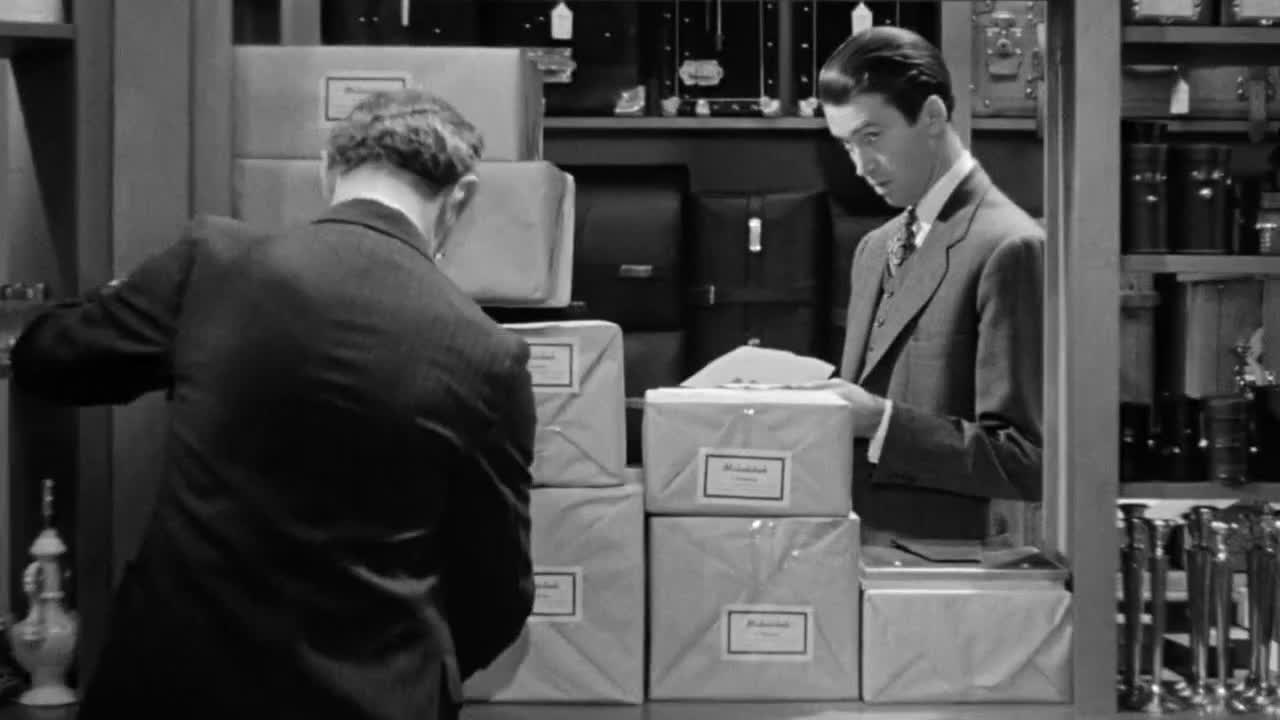
At the opening of The Shop Around the Corner, the employees of Matuschek & Co., a leather-goods shop in Budapest, arrive one by one for the workday. They tease the man who is always first, admire a new fur coat, and crowd around Kralik to hear about his dinner with the boss the night before.

What's really going on

What looks like ordinary morning chatter is a small arena of status and envy. One man is singled out because he had dinner with the boss, and his coworkers can't decide whether to congratulate him or cut him down. The sharpest move comes when someone admits, "I had a little too much goose liver," a harmless remark about a rich meal. It is instantly repeated and held up for everyone to judge, until the reply comes back: "And don't you try to make something out of nothing." Under the jokes lies the shop's real anxiety: who is close to Matuschek, who is not, and what last night's dinner might mean for everyone's place in it.

Key lines & what they mean

“And let me tell you, it doesn't hurt to be too early.”
A defense of always arriving first: coming in early costs nothing and might quietly pay off.
“I just kept still and tried to learn something.”
Said after the boss's dinner: he stayed quiet and tried to pick up how the other half lives.
“Not one word more, and not one less.”
A demand to quote him exactly, adding and removing nothing, after his words were twisted.
“Well, what can you do?”
A shrug of resignation: this is just how things are, and there is nothing to be done.

Theme

  • Money — Talk of an expensive doctor, a costly fur coat and cutting back on cigars shows how tightly daily life in the shop revolves around money.
  • Ambition — The staff read one man's dinner with the boss as a step up, revealing how much they invest in proximity to power.

Qué aprendes en este capítulo

Puntos de enseñanza

Repasa justo después de ver
Mi nivel2/4

A1–C2 es la escala MCER. Las tarjetas por encima del nivel elegido se atenúan y la reproducción no se pausa en ellas.

The Shop Around the Corner: tu progreso

Capítulo 1 de 19 · quedan unos 75 min

Siguiente · 02earn one's daily breadLa escena: The Anonymous Letter From Box 237

Ideas clave

Lo que te llevas
  1. Use give someone a raise for pay increases
  2. Catch running my legs off as an exaggeration
  3. Use cut down on for reducing a habit
  4. Spot teasing questions disguised as real questions

Preguntas frecuentes

La pregunta, luego la frase
Why does one man arrive at the shop so early every morning?

He treats being first as a small point of pride, and when teased about it he insists it does not hurt to be too early. The habit also marks him as the steady veteran of the staff, in contrast to the younger coworkers who drift in later.

Why is Kralik questioned so closely about his dinner with the boss?

In a small shop, a private dinner with Matuschek is read as a sign of favor, so the others press him for details. Their teasing mixes real curiosity with envy; one even asks whether he is a partner now, hinting at what such attention might mean.

Why does a comment about goose liver cause trouble?

Kralik mentions he had a little too much goose liver the night before, a simple remark about a heavy meal. A coworker repeats it and turns it into a grievance, as if the food had been insulted, so Kralik protests that no one should make something out of nothing.

Is Kralik being mocked, or are the others just joking?

Mostly a mix of both. The banter about the fur coat and the dinner is good-natured, but repeating Kralik's remark to the whole staff crosses into needling, and his sharp reply shows it landed as more than a joke.

What is hinted about Kralik and the boss's wife?

The staff gossip that Kralik sat beside Mrs. Matuschek and that she looked young, teasing him about the boss's wife. It is playful here, but the film later turns on Matuschek's suspicion of his marriage, so this early talk plants the theme.