
“I thought we might take a trip, a little getaway.”
Por qué es buena
The softest phrasing carries a serious proposal, and the contrast does the work.
Registro
Informal
Úsala tú
I thought we might take a trip somewhere quiet.
Capítulo 15 de 16 · 2'15"
A lovers' getaway doubles as research. Dagny and Rearden drive to the abandoned Twentieth Century Motor Company, where Rearden explains its collapse: it flattened wages and paid "according to their needs," so the best people walked out. His verdict is flat — "it's no mystery. Bad ideas brought it down."
Rearden Proposes a Secret Getaway
❝ Monólogo · 5 frases Why the Motor Company Failed
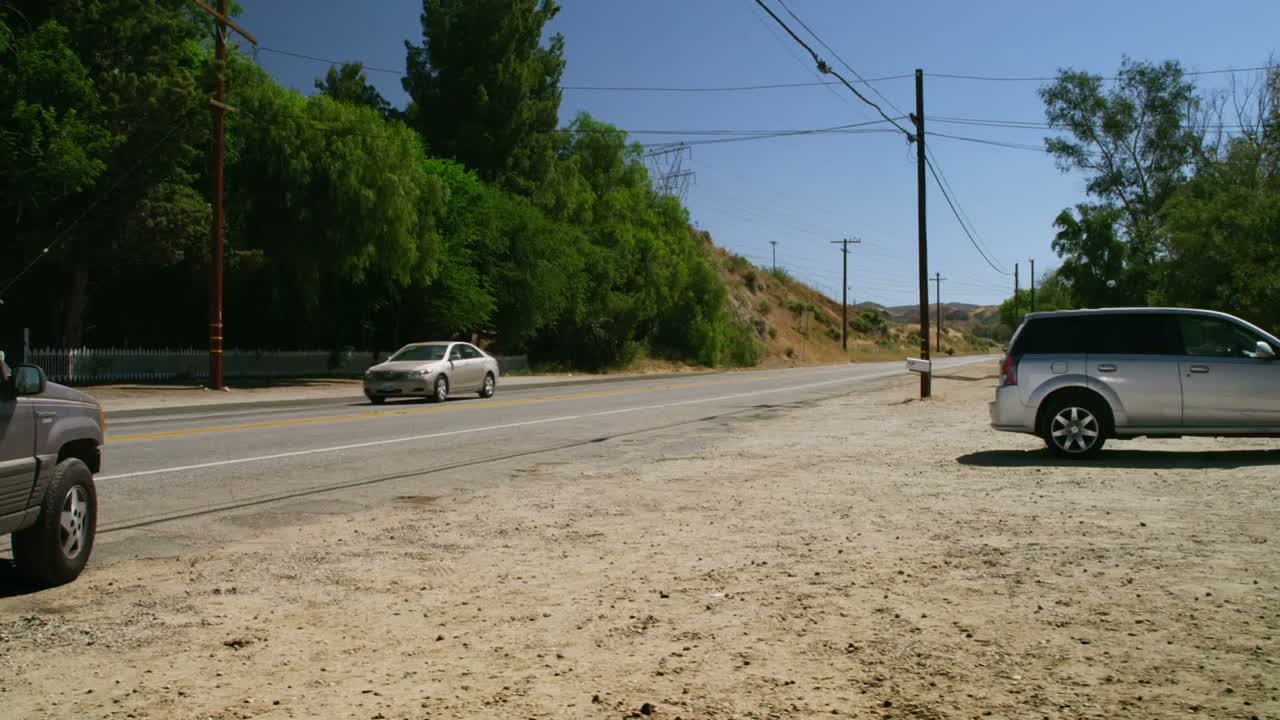
Dagny and Rearden take a private trip to Wisconsin to see the ruined Twentieth Century Motor Company. On the way, they discuss why it failed: it had flattened the wage scale and paid people by need rather than contribution, so the best managers and workers left, and the company went under. At the empty site, Dagny says she wants to figure out what happened.
The trip is a love scene built around a post-mortem. Dagny and Rearden are using the ruins as a lesson, and the reading of the failure is really an argument about how the world should work: pay people for what they contribute, or the able will leave. The line "Bad ideas brought it down" is not just history; it is a warning about the ideas around them, and "Why all these stupid altruistic urges?" is aimed at the present, not the past. The empty factory is evidence, and the wish to "figure out what happened here" is the beginning of the film's larger search. Officially they are on a getaway; actually they are studying a corpse.
A1–C2 es la escala MCER. Las tarjetas por encima del nivel elegido se atenúan y la reproducción no se pausa en ellas.
“I thought we might take a trip, a little getaway.”
The softest phrasing carries a serious proposal, and the contrast does the work.
Informal
“it's a real mystery why the Twentieth Century Motor Company failed.”
Calling the collapse a mystery turns old history into a live question.
Neutral
“it's no mystery. Bad ideas brought it down.”
He dismisses the mystery in four words and blames ideas, not luck, for the ruin.
Neutral
“Why all these stupid altruistic urges? It's not being charitable or fair.”
It strips the shine off good intentions by insisting they are neither kind nor just.
Formal
“What is it with people today?”
One weary question captures a whole frustration with the way people have changed.
Informal
“The Twentieth Century Motor Company went under.”
Two words close a whole company, and the flatness makes it sound final.
Neutral
“I'd really like to figure out what happened here.”
Instead of mourning the ruins, she promises an investigation, which keeps the story open.
Neutral
So after a short while, no surprise... ...the smartest managers and the better workers left the company. But hundreds of remaining staff couldn't handle it alone. Service dropped... ...quality in their once-great products was gone, and that was that.
 Siguiente · 16overstep its boundsLa escena: Dagny Meets Dr. Akston at the Diner
They want to see the Twentieth Century Motor Company, whose failure they find mysterious. The trip is both a getaway and a chance to investigate the ruins of a company connected to the strange engine they are chasing.
Rearden says it flattened the wage scale and paid people according to need rather than contribution. As a result, the best managers and workers left, the remaining staff could not cope, quality collapsed, and the company went under.
It means went bankrupt or collapsed. It is used of businesses and other ventures that fail completely, and in this scene it is the flat statement of the motor company's fate.
He believes paying people by need rather than by contribution is neither charitable nor fair; it rewards no one and drives away the people who actually do the work. His anger is aimed at the ideas of the present, not just the past.
She says she would really like to figure out what happened to the company. Her curiosity about the failure — and the engine tied to it — becomes one of the main threads of the film.