00:00 / 03:33
00:00 / 03:33

Olivia Proposes to the Wrong Twin, Explained

Twelfth Night · 2012

Capítulo 22 de 25 · 3'33"

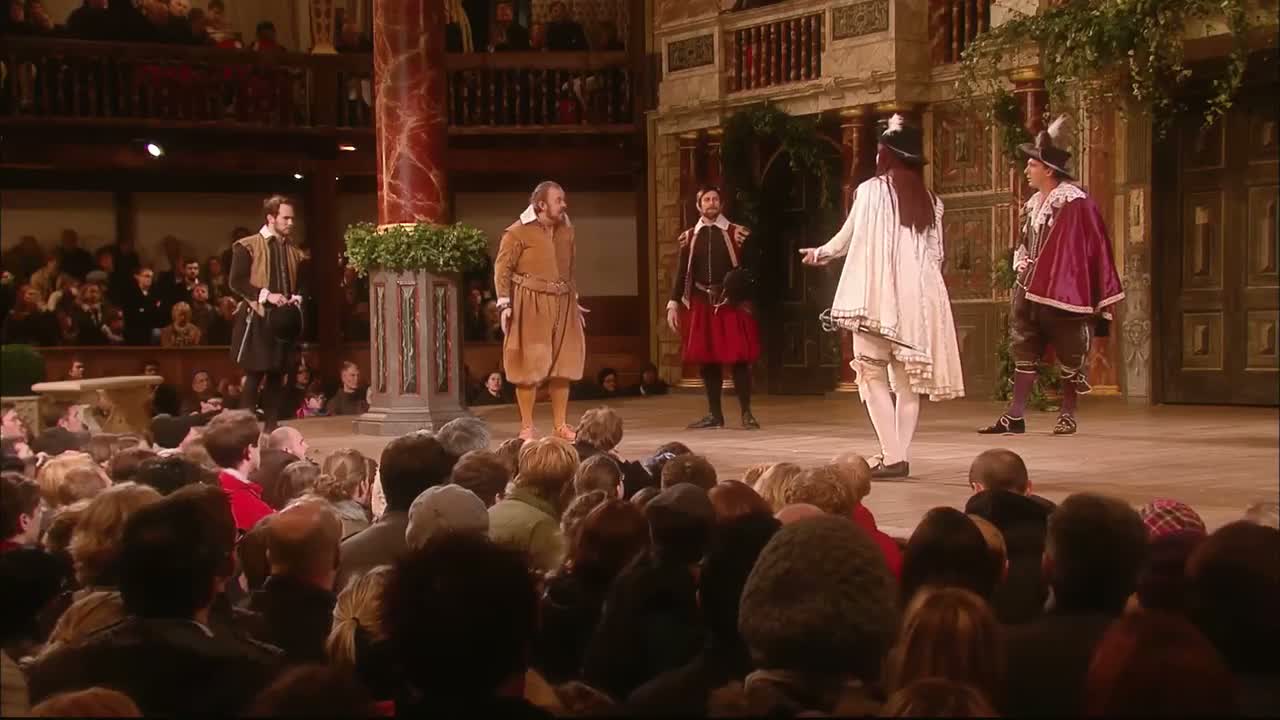
Sebastian wakes from a string of impossible events and decides he is not mad: "And though 'tis wonder that enwraps me thus, yet 'tis not madness." Olivia arrives and asks him to marry her in secret. Then the clown Feste turns up to tease and beg, arguing that friends flatter you while enemies tell the truth.

ProposalsTeasingConfessing lovePromisingCoupleC2fastbritishClean

Key moments

Start here, then watch the full scene
  1. Sebastian Wonders If He Is Mad

    0:02–1:14
    72s
  2. ❝ Monólogo · 5 frases Feste Teases Sebastian for Money

    2:24–3:31
    67s
  1. ❝ MonólogoFeste on enemies and friends5 frasesPracticar ↗

Olivia Proposes to the Wrong Twin, explained

What happens

Sebastian, dazed by his run of luck, insists he is not mad and wishes Antonio were there to advise him. Olivia arrives, asks him to promise his love before a priest, and arranges a secret marriage, which he accepts. The clown Feste then appears, joking that he does better with enemies than friends, and coaxes a second coin out of him.

What's really going on

Sebastian's speech is the mirror image of Viola's: a twin who cannot trust his senses yet refuses to call the truth madness. He looks for Antonio's advice, watches Olivia act with perfect command of her household, and decides 'there's something in't that is deceivable.' Olivia, meanwhile, reads his dazed agreement as the consent she has been begging for, and rushes him toward a secret wedding. The scene's comedy then arrives in Feste, who argues with perfect logic that he is 'the better for my foes and the worse for my friends' — flattery makes him a fool, honesty teaches him. Asked to put his conscience aside and hand over a second coin, he has the last joke: the man who would not be 'a double dealer' takes the money anyway.

Key lines & what they mean

“And though 'tis wonder that enwraps me thus, yet 'tis not madness.”
Sebastian admits the situation is astonishing but insists he is not insane; the wonder is real.
“Truly, sir, the better for my foes and the worse for my friends.”
Feste's paradox: enemies' frankness does him good, while friends' flattery makes him worse.
“Put your grace in your pocket, sir, for this once.”
Feste's cheeky advice to set conscience aside just this once — and pay him again.
“This pearl she gave me, I do feel it and see it.”
Sebastian's proof that Olivia's gift is real: he can touch and see it, so the experience isn't a dream.
“This is to give a dog and in recompense desire my dog again.”
A proverb for a pointless exchange: giving something away and then demanding it back.

Theme

  • Identity — Sebastian is mistaken for Cesario, so Olivia's proposal lands on the wrong twin and he accepts in wonder.
  • Deception — Feste jokes that friends flatter and enemies tell truth, while himself coaxing money by flattery.

Qué aprendes en este capítulo

Puntos de enseñanza

Repasa justo después de ver
Mi nivel0/6

A1–C2 es la escala MCER. Las tarjetas por encima del nivel elegido se atenúan y la reproducción no se pausa en ellas.

Twelfth Night: tu progreso

Capítulo 22 de 25 · quedan unos 9 min

← Anterior
Siguiente · 23ripe in mischiefLa escena: Olivia Mistakes Sebastian for Cesario

Ideas clave

Lo que te llevas
  1. 'Tis is a clipped it is, common in older verse.
  2. A paradox can hook a listener better than a plain claim.
  3. 'Trappings' means showy attachments, not true substance.
  4. Feste treats flattery as a form of harm.

Preguntas frecuentes

La pregunta, luego la frase
Who does Olivia actually propose to?

She thinks she is speaking to Cesario, but it is Sebastian, Viola's twin. He is bewildered but accepts, and they agree to marry secretly before a priest.

Why does Sebastian say he is not mad?

Because the events are unbelievable yet real: the pearl is in his hand, and Olivia behaves with calm authority. He calls it wonder, not madness.

What does 'make an ass of me' mean?

It means to make a fool of someone. Feste says his friends praise him and thereby 'make an ass of me,' while his enemies tell him the truth.

What trick does Feste play for money?

He pretends his frankness makes him the worse for friends, then asks Sebastian to set aside his conscience 'for this once' and give a second coin — which he does.

Why does Feste prefer his enemies?

He says enemies tell him plainly that he is an ass, which helps him know himself, while friends only flatter him into foolishness.