00:00 / 02:58
00:00 / 02:58

Olivia Confesses to Cesario, Explained

Twelfth Night · 2012

Capítulo 15 de 25 · 2'58"

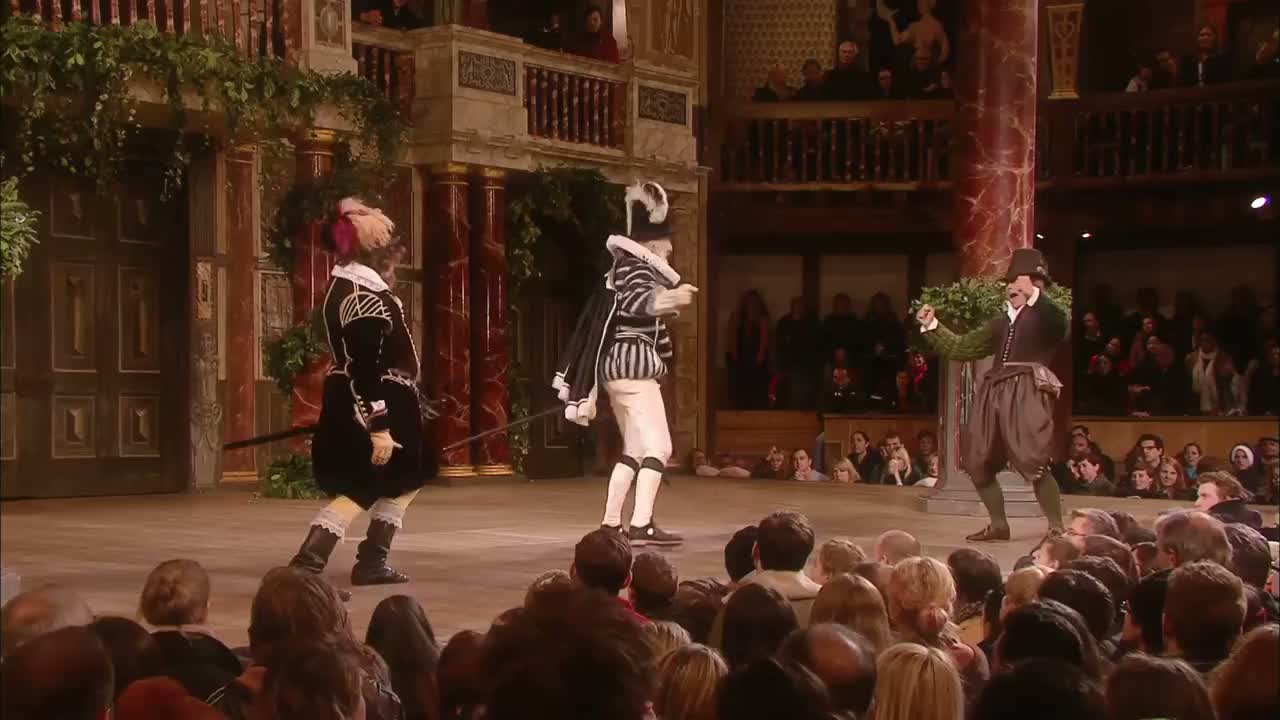
Olivia drops her guard and tells the young messenger plainly that she loves him, swearing by spring roses and her own youth. Her confession turns on a paradox — "I am not what I am" — and a plea: "Loves sought is good, but given unsought is better." Cesario, who cannot love her back, is left trying to leave.

Confessing feelingsProposalsConfessing loveSaying noStrangersC1slowbritishClean

Key moments

Start here, then watch the full scene
  1. I Am Not What I Am

    1:22–1:56
    34s
  2. ❝ Monólogo · 6 frases Olivia's confession

    It opens with oaths and closes with a proverb, so a private plea sounds like law.

    1:56–2:31
    35s
  3. ❝ Monólogo · 4 frases The page's refusal

    Every vow is sincere and every vow hides the same secret, so the refusal is honest and false at once.

    2:38–2:55
    17s
  1. ❝ MonólogoOlivia's confession6 frasesPracticar ↗
  2. ❝ MonólogoThe page's refusal4 frasesPracticar ↗

Olivia Confesses to Cesario, explained

What happens

Alone with Cesario, Olivia finally admits her love, swearing by the roses of spring, by her maidenhood and her truth that her passion cannot be hidden. She argues that a love given freely is better than one that must be won, and asks Cesario to come again. Cesario, who is really Viola and loves Orsino, gently refuses and says no woman shall ever own her heart.

What's really going on

The scene turns the play's disguise into pure ache. Olivia, who swore off men, has fallen for a servant who is not what he seems, and her confession is full of self-knowledge she cannot act on: 'I am not what I am,' Cesario says, and Olivia is the one who is truly not herself. Her plea, 'Loves sought is good, but given unsought is better,' is a lover's argument for being chosen freely. Viola, hearing it, can answer only with refusal, because she loves Orsino and cannot reveal that she is a woman. The irony is exact: the one person Olivia finally opens her heart to is the one who can never take it. Even Olivia's line 'Love's night is noon' describes a brightness that makes the hiding harder, not easier.

Key lines & what they mean

“Loves sought is good, but given unsought is better.”
Olivia's argument that love freely given matters more than love won by pursuit. She wants to be chosen without having to chase.
“I am not what I am.”
Cesario's famous paradox: the person speaking is not the person he appears to be. It names the play's whole game of disguise.
“Love's night is noon.”
Love turns darkness into daylight: a lover's feeling is so bright it cannot stay hidden, even at night.
“That you do think you are not what you are.”
Cesario's careful answer to Olivia: she has an idea of herself that does not match the truth of who she is.
“Be not afraid, good youth.”
Olivia reassures Cesario before her confession, trying to put the startled messenger at ease.

Theme

  • Romance — Olivia confesses love that cannot be returned, because the person she loves is a disguised woman.
  • Identity — The confession circles the line 'I am not what I am': neither speaker is what they appear to be.

Qué aprendes en este capítulo

Puntos de enseñanza

Repasa justo después de ver
Mi nivel0/10

A1–C2 es la escala MCER. Las tarjetas por encima del nivel elegido se atenúan y la reproducción no se pausa en ellas.

Twelfth Night: tu progreso

Capítulo 15 de 25 · quedan unos 33 min

← Anterior
Siguiente · 16laugh yourself into stitchesLa escena: Maria's Crew Goes to Watch Malvolio

Ideas clave

Lo que te llevas
  1. Olivia argues her love is better for arriving unasked.
  2. Cesario's vows are sincere and evasive at once.
  3. The audience knows the secret the Countess cannot.
  4. Verse makes the confession grander and the refusal sadder.

Preguntas frecuentes

La pregunta, luego la frase
Why does Olivia confess her love to Cesario?

She has fallen for the messenger despite her vow to mourn. When Cesario presses her, she finally admits her feelings and swears they cannot be hidden.

Why can't Cesario return Olivia's love?

Cesario is really Viola, a woman, and she is in love with Duke Orsino. She cannot reveal her identity, so she must refuse while hiding the real reason.

What does "I am not what I am" mean?

It means the speaker is not what he appears to be. Viola/Cesario says it about the disguise, but it also fits Olivia, who is no longer the grieving woman she seemed.

What is Olivia's argument about love?

She says a love that is freely given is worth more than one that has to be pursued: 'Loves sought is good, but given unsought is better.'

Why does Olivia ask Cesario to come again?

She cannot let the messenger go even after being refused. Her 'Yet come again' shows her love is stronger than her pride or her dignity.