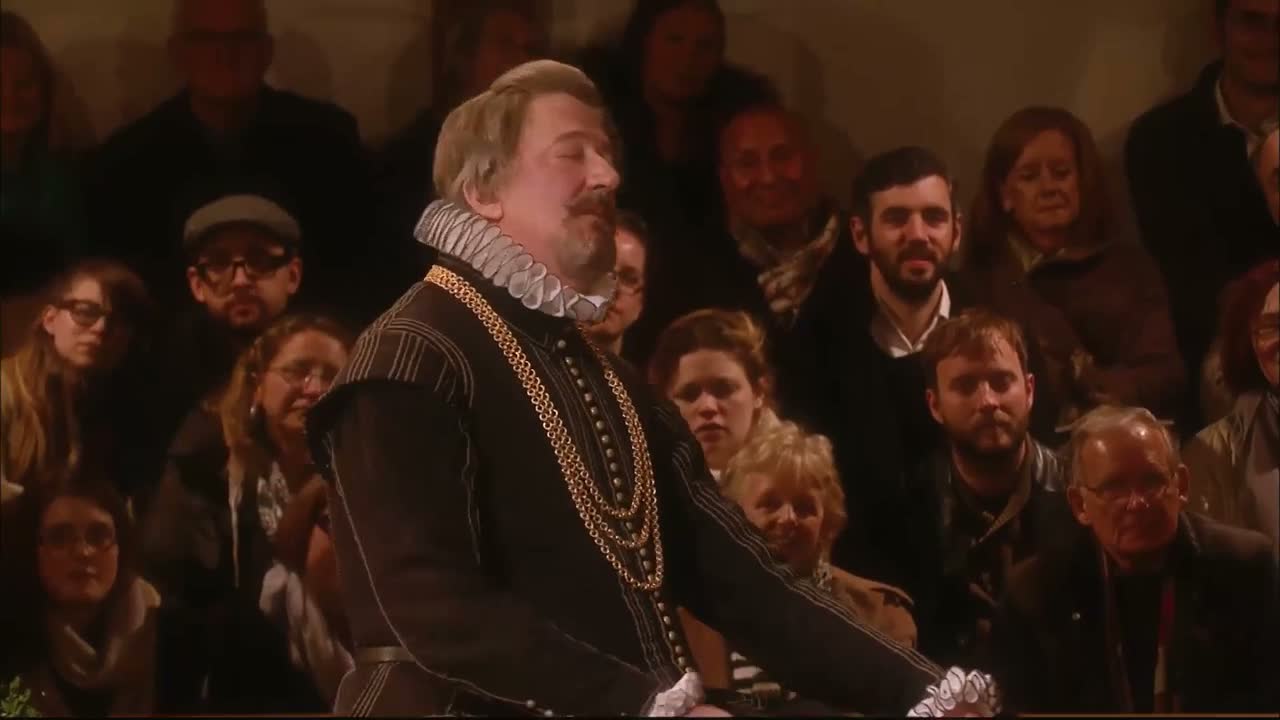
“For still, we prove much in our vows, but little in our love.”
It balances vows against love in one breath and quietly convicts every listener in the room.
literary
Capítulo 11 de 25 · 2'47"
Orsino sends Viola to Olivia again and dismisses women's love as mere 'appetite.' Viola answers with a story: her father's daughter loved in silence until grief consumed her, and men, she says, 'prove much in our vows, but little in our love.'
❝ Monólogo · 6 frases Orsino Sends Viola to Olivia Again
❝ Monólogo · 6 frases Viola's Story of Silent Love
Orsino orders Cesario back to Olivia and insists no woman's heart could hold a love as strong as his. Viola disagrees, telling the story of her father's daughter, who loved in silence so long that concealment, 'like a worm in the bud,' wasted her cheek. The story ends in no marriage, only grief: a warning about how men's vows outrun their love.
The scene is Orsino talking about love and Viola quietly saving it from him. He insists that women cannot love as deeply, calling their feeling 'appetite' and claiming his own is 'as hungry as the sea.' Viola never argues head-on; she tells a story instead, of her father's daughter who loved without speaking, until concealment fed on her cheek like a worm in a bud. The point lands softly but completely: 'For still, we prove much in our vows, but little in our love.' She is describing herself without naming herself, and Orsino, who hears only a sad tale, asks whether the girl died of love. The scene shows the play's real interest — who gets to define love — while Viola keeps her disguise and her silence intact.
A1–C2 es la escala MCER. Las tarjetas por encima del nivel elegido se atenúan y la reproducción no se pausa en ellas.
“For still, we prove much in our vows, but little in our love.”
It balances vows against love in one breath and quietly convicts every listener in the room.
literary
“but let concealment, like a worm in the bud, feed on her damask cheek.”
The worm-in-the-bud image turns silent love into something you can watch consuming her.
literary
“There is no woman's sides can bide the beating of so strong a passion as love doth give my heart.”
It dresses raw vanity as anatomy, claiming no woman could physically survive his love.
literary
“Was not this love indeed?”
The plain question lets a buried story land as a challenge rather than a tale.
literary
There is no woman's sides can bide the beating of so strong a passion as love doth give my heart. No woman's heart so big to hold so much. They lack retention. Alas, their love may be called appetite. No motion of the liver, but the palate that suffer surfeit cloyment and revolt. But mine is all as hungry as the sea and can digest as much.
She never told her love, but let concealment, like a worm in the bud, feed on her damask cheek. She pined in thought. And with a green and yellow melancholy, she sat like patience on a monument smiling at grief. Was not this love indeed?
Siguiente · 12the woodcock near the ginLa escena: Malvolio Dreams of Marrying OliviaHe wants Cesario to plead his suit once more, telling Olivia that his love is nobler than the world and ignores her wealth. Viola warns that Olivia may simply not be able to love him.
She invents a 'father's daughter' who loved a man but never spoke of it. Concealment wasted her, and she sat 'like patience on a monument, smiling at grief.' It is really Viola's own story in disguise.
He claims a woman's heart is too small to hold a great passion and that her love is only 'appetite,' which quickly cloys. Viola challenges this with her story of silent, enduring love.
It means men make big promises in their oaths but show little love in their actions. Viola uses the line as her summary of male courtship.
Orsino is moved by the story and asks whether the sister died of love, not realizing Viola has been describing herself. She deflects with her account of a woman who never told her love.