00:00 / 02:38
00:00 / 02:38

Lord George and Mickey Debate Vice, Explained

The Gentlemen · 2020

Chapter 10 of 15 · 2'38"

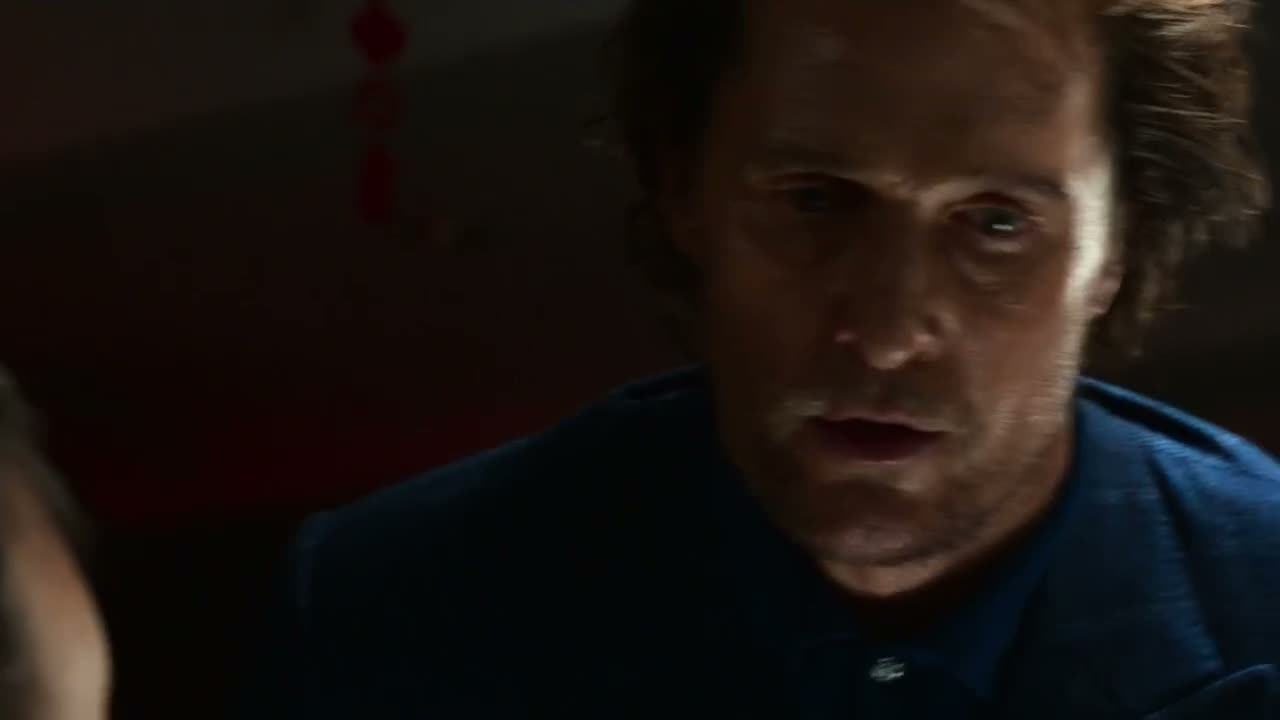
Lord George calls horse racing his only vice; Mickey won't let him have it, insisting he is "eyebrows deep in every vice known to man." The argument becomes a debate about ethics — whether facilitating crime counts as taking part, and which drugs actually destroy lives.

ArgumentsAccusationsConfrontingExplainingRivalsC1slowbritish

Key moments

Start here, then watch the full scene
  1. ❝ Monologue · 10 lines Tea Is a Vice Too

    1:09–1:36
    27s
  2. Facilitation Is Participation

    1:37–2:20
    43s
  1. ❝ MonologueMickey's sermon on vice10 linesPractice page ↗

Lord George and Mickey Debate Vice, explained

What happens

Lord George and Mr. Pearson meet while a horse race plays on satellite from Hong Kong. George jokes that racing is his only vice; Mickey contradicts him and accuses him of being deep in every vice there is. What follows is a debate on ethics: George says he only facilitates other people's vices, and Mickey argues that dealing in marijuana is the lesser evil.

What's really going on

A conversation about hobbies is really an argument about hypocrisy. Lord George wants to keep his hands clean by a technicality — he facilitates vice, he does not commit it — and Mickey refuses to let the distinction stand. "So yes, your facilitation is most definitely participation," he says, and then turns the tables: his own drug, he insists, doesn't kill anyone, while George's "poison" is "a destroyer of worlds." The exchange is less a moral lecture than a power move; each man is measuring the other's sins against his own, and neither is innocent. Mickey even admits the framing: he is not here for a sermon on situational ethics.

Key lines & what they mean

“but you see, my jam, it doesn't kill anyone.”
Mickey's defence of his product: he argues that marijuana is harmless compared with harder drugs, so his trade is the more tolerable one.
“So yes, your facilitation is most definitely participation.”
The accusation in one line: claiming to only 'facilitate' vice does not excuse it, because enabling the trade is taking part in it.
“While your poison is, and always has been, a destroyer of worlds.”
A grand, almost biblical put-down: the other man's drugs are not a business but a force of ruin, in contrast to Mickey's milder trade.
“Sweet Mary Jane is my vice of choice, as you well know.”
Mickey names marijuana by its slang nickname and calls it his preferred indulgence, joking that his vice is a matter of taste rather than crime.

Theme

  • Philosophy — The scene is a debate about definitions: what counts as vice, and whether facilitating something is the same as doing it.
  • Corruption — Both men trade in drugs and profit from addiction; the argument is about which of them has cleaner hands, not whether any of it is wrong.

What this chapter teaches

Teaching points

Review right after watching
My level0/7

A1–C2 is the CEFR scale. Cards above the level you pick fade, and playback will not auto-pause on them.

The Gentlemen: your progress

Chapter 10 of 15 · about 17 min to go

← Previous
Up next · 11under the weatherThe scene: A Warning in a Cup of Tea

Takeaways

What you walk away with
  1. Defining a word can win an argument faster than raising your voice.
  2. Facilitation sounds neutral until someone asks who benefits.
  3. Throwing the opponent's own vocabulary back can end a debate.
  4. The tea table is where the real fight happens.

People also search

Questions, then the lines
Why does Mickey say Lord George's vice is not just racing?

Because he wants to puncture George's clean self-image. Racing is only the polite habit George admits to; Mickey says he is 'eyebrows deep in every vice known to man.'

What is the difference between facilitating and participating?

Facilitating means enabling or providing access to something; participating means taking part yourself. George claims he only facilitates crime, and Mickey argues the distinction is meaningless.

Why does Mickey call marijuana the lesser evil?

He says his product doesn't kill anyone, while George's harder drugs have always been 'a destroyer of worlds.' It is self-serving, but it is the core of his argument.

Why does Mickey mention "situational ethics"?

It is his way of naming the debate they are having — whether a rule depends on context — while insisting he did not come to lecture. Then he immediately asks why George is really there.

Who is Lord George, and what is his relationship to Mickey?

He is a wealthy, titled associate in the drug trade, addressed as 'your lordship.' Mickey treats him as an equal to be argued with, not a superior to be flattered.