
“You mustn't keep beating yourself up, dear.”
Why it's great
A gentle line that stops the spiral of self-blame without a single word of advice.
Register
Neutral
Use it yourself
You mustn't keep blaming yourself for one bad meeting.
Chapter 6 of 15 · 2'41"
The Pressfield family asks Mickey to find their missing daughter, Laura, who has fallen for a washed-up pop star. Mickey agrees to look into it, then hands the job to Ray, who objects: she is on a South London estate, out of their jurisdiction, and "there's too many moving parts."
❝ Monologue · 5 lines the tabloid narration
The flowery tabloid prose lands as cruelty, stacking adjectives until the scandal feels like a headline.
Ray Doesn't Want the Job
At the Pressfields' home, a distraught father blames himself for his daughter Laura's disappearance while others insist it is not his fault and describe how she "fell in with the wrong crowd." Mickey agrees to investigate. Afterward he tells Ray to find her and bring her home; Ray resists, calling it out of their jurisdiction, until Mickey tells him to "think of it as philanthropy."
The request looks like charity and functions like a test. The family's grief is real — "You mustn't keep beating yourself up, dear" — but the scene turns on the phrase "fell in with the wrong crowd," which quietly moves the blame off Laura and onto the people around her. Mickey, the fixer, takes the job with a careful "Let me see what I can do," promising less than he intends. Then the real management problem appears: Ray has done his due diligence and wants no part of it. His list of objections — out of jurisdiction, "too many moving parts," she may not want to come — is a professional's risk assessment, and Mickey overrules every point with "you're still doing it." The last line, "No good deed goes unpunished," admits the job is a favor nobody will thank them for.
A1–C2 is the CEFR scale. Cards above the level you pick fade, and playback will not auto-pause on them.
“You mustn't keep beating yourself up, dear.”
A gentle line that stops the spiral of self-blame without a single word of advice.
Neutral
“It sounds as though Laura fell in with the wrong crowd at a time when she was particularly vulnerable.”
It explains a scandal without blame, turning a family failure into a matter of timing and weakness.
Formal
“There's too many moving parts, parts that we can't control.”
Moving parts turns a mess into a professional risk assessment, making hesitation sound like wisdom.
Neutral
“It's happened to so many of our friends.”
Turning a private shame into something common, the line comforts by normalizing.
Neutral
Lord Pressfield's daughter, the famous and talented Laura, all self hate and has fallen for this Power Noel's smacked out dark charm, and I want the lot of them. especially that slimy little jam rag Pearson, in bed with a skint discredited toff and supplying gear to young and reckless rock star royals, royals unbridled by distracted parents too busy skiing on the Swiss Alps to notice and too fucking stupid to care.
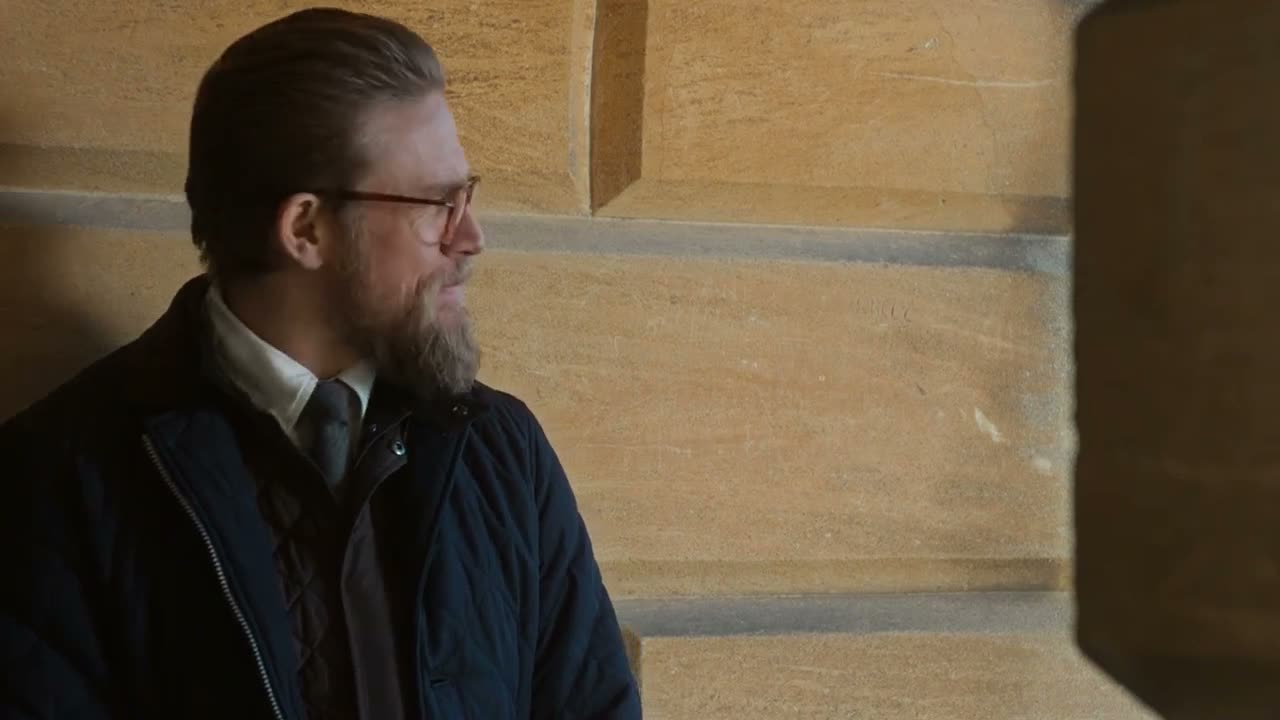 Up next · 07no good deed goes unpunishedThe scene: Raymond Smith Knocks on the Wrong Door
She has gone missing after falling in with a bad crowd and a washed-up pop star. The family asks Mickey to find her and bring her home, framing it as a rescue.
Several reasons: the girl is on a South London council estate, which is out of their jurisdiction; there are too many variables they cannot control; and she may not want to come back at all.
It is a way to make an unwanted errand sound noble. He knows Ray dislikes the work, so he reframes it as charity to get him to accept.
Because he wants his best man on it. He tells Ray plainly, "You're my best man. I want you," so the choice is presented as a compliment rather than a request.
He doesn't like addicts. He says, "I don't like smackies," and describes the filth, grime and mess he expects to find, which is why Mickey jokes about his OCD.