
“Baxter, an insurance company is founded on public trust.”
Why it's great
It turns a small private favor into a question of the whole company's credibility.
Register
Formal
Use it yourself
A team is founded on trust.
Chapter 2 of 15 · 4'59"
Sheldrake has summoned Baxter to admit the office's open secret: a key to Baxter's apartment has been passed among executives. "You give the key to one guy, you can't say no to another," Baxter explains. Then Sheldrake offers two theater tickets, not as a gift, but as a trade.
❝ Monologue · 5 lines Baxter Explains How the Key Got Out of Hand
At the Consolidated Life insurance office, Sheldrake calls Baxter in and, instead of a promotion, lays out what he knows: Baxter's apartment key has been circulating among the executives. Baxter tries to explain it away as favors that got out of hand. Sheldrake then offers him two theater tickets and makes clear he wants something in return.
Sheldrake is a man who trades in leverage. He doesn't threaten Baxter or ask for the key directly; he recites the chain of names it has passed through — "A key is floating around from Kirkeby to Vanderhof to Eichelberger to Dobisch" — so that Baxter understands he is caught. Baxter's defense is that he only ever meant to do favors, which is true and useless: "You give the key to one guy, you can't say no to another." What Sheldrake wants is the key for himself, but he never says so. He offers two theater tickets and corrects Baxter's assumption that they are a gift: "I'm not just giving these tickets. I wanna swap them." The scene is a masterclass in corporate euphemism: nothing is demanded outright, everything is arranged as a fair exchange, and the underling is left to name the price himself.
A1–C2 is the CEFR scale. Cards above the level you pick fade, and playback will not auto-pause on them.
“Baxter, an insurance company is founded on public trust.”
It turns a small private favor into a question of the whole company's credibility.
Formal
“You give the key to one guy, you can't say no to another. It all got out of hand.”
It traces a favor turning into a mess, which makes his excuse feel honest.
Informal
“Look, Baxter. I'm not just giving these tickets. I wanna swap them.”
It drops the pretense of generosity and names the deal out loud.
Informal
“Baxter, you're not reading me. I told you I have plans.”
A natural, slightly impatient way to say someone has missed your point.
Informal
...about a year ago, I was going to night school, studying advanced accounting. One of the guys in our department... lives in Jersey... had to go to a banquet in town. He needed someplace to change into a tuxedo, so I gave him the key. Word must've gotten out because all sorts of guys were suddenly going to banquets. You give the key to one guy, you can't say no to another. It all got out of hand.
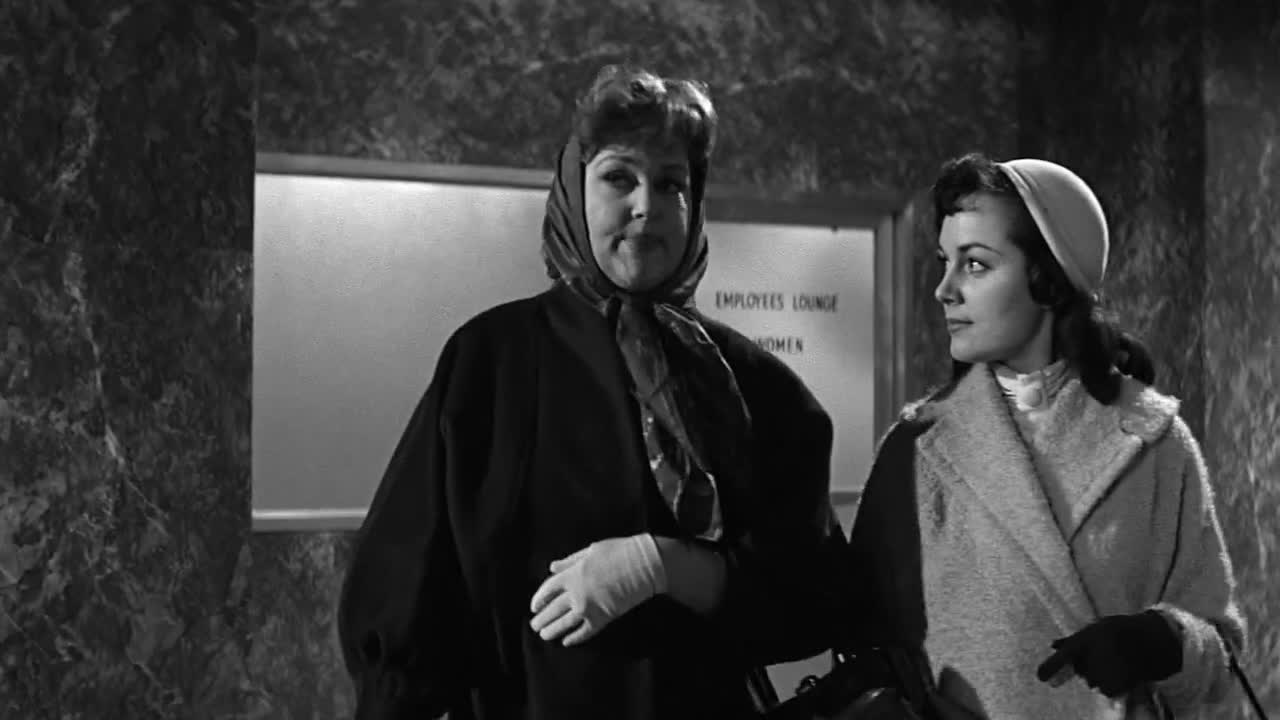 Up next · 03go to wasteThe scene: Baxter Meets Fran at the Theatre
Not to praise him. Sheldrake has learned that Baxter's apartment key is being passed among the executives, and he wants to use that knowledge. Baxter assumes he is being considered for a promotion.
He wants the key to Baxter's apartment. He won't say it outright; he offers the tickets, says he wants to swap them, and leaves Baxter to work out what he is expected to hand over.
It started as a single favor: a colleague needed a place to change into a tuxedo. Word spread, and soon other executives were asking, until he felt he couldn't say no to anyone.
It means out of control. Baxter says the favors "got out of hand" — one request led to another until the key was circulating through half the company.
Dobisch, Kirkeby, Vanderhof and Eichelberger — four executives who have been borrowing the apartment. Sheldrake lists them in order to show Baxter that he knows exactly how far the key has traveled.