00:00 / 04:09
00:00 / 04:09

Baxter Swaps His Apartment Nights, Explained

The Apartment · 1960

Chapter 1 of 15 · 4'09"

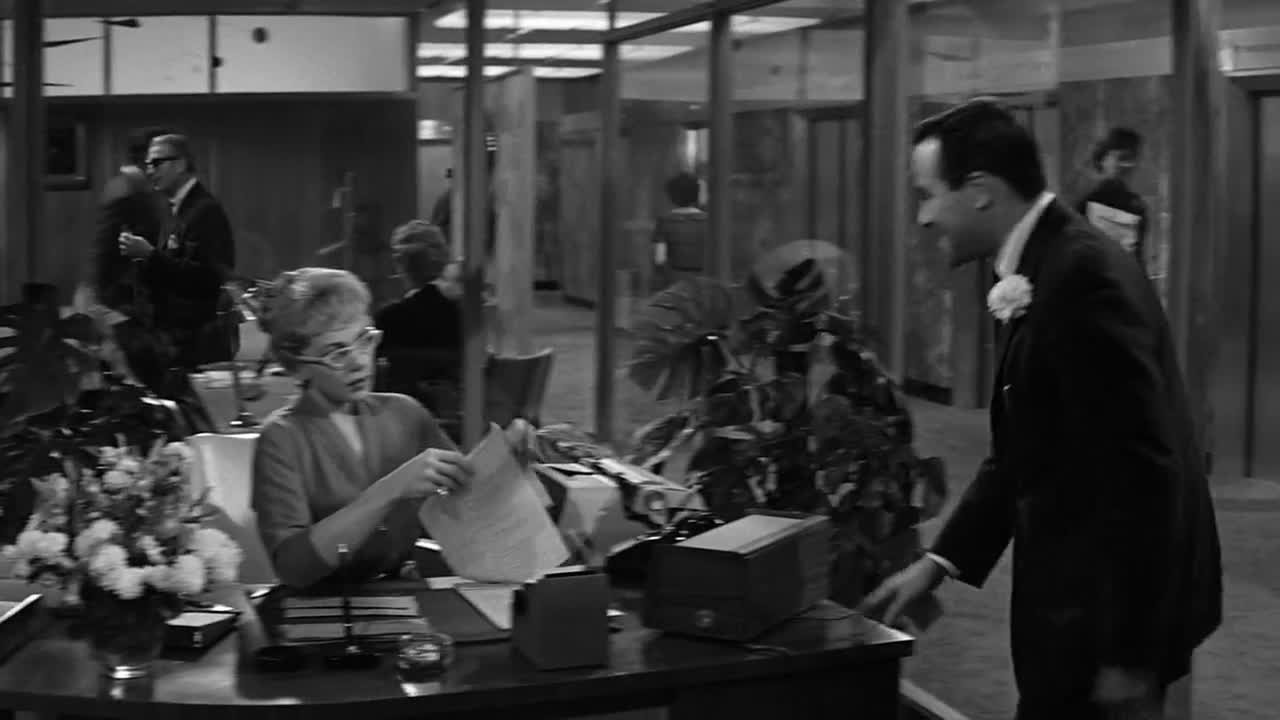
Baxter runs his bosses' private lives from his office desk, rescheduling nights at his own apartment like a booking clerk. He bends over backwards for them, then politely asks one to switch: "You'd be doing me a great favor." The man with the apartment holds the least power in the room.

Phone callsTalking to the bossBargainingAskingBoss & employeeB1slowamericanClean

Key moments

Start here, then watch the full scene
  1. Baxter Fakes Sick, Gets the Turkish Bath

    0:52–1:32
    40s
  2. A Monkey Wrench in the Agenda

    1:43–2:07
    24s
  3. Promoted or Fired? A One-Dollar Bet

    3:47–4:08
    21s

Baxter Swaps His Apartment Nights, explained

What happens

At his desk at Consolidated Life, C.C. Baxter spends the day on the phone, rescheduling which night each executive gets to use his apartment. He coughs through the calls, moves a booking to Wednesday, another to Friday, then hears that Personnel called — Mr. Sheldrake's secretary — and bets a coworker a dollar on whether it means a promotion or a firing.

What's really going on

The comedy is in the inversion: Baxter is a low-ranking insurance clerk, yet his whole day is spent running the romantic schedules of men far above him. He isn't asserting power — he's paying tribute, hoping the apartment buys him a future. When he tells Kirkeby "You'd be doing me a great favor," the politeness is genuine but the phrase has been turned inside out: the favor is really his to grant, and he knows it. The last beat sharpens the theme. Learning that Sheldrake's office called, a coworker asks, "Are you getting promoted? Or fired?" — and Baxter answers, "Would you care to make a small wager?" His fate is a coin flip, decided by people he serves. That's the film's bargain in miniature: access to the top always comes at someone else's price.

Key lines & what they mean

“If you got a cold, you go to a Turkish bath. Spend the night. Sweat it out.”
A boss dismisses Baxter's excuse by prescribing a Turkish bath instead of bed. The absurd advice shows how little his health matters next to the man's night at the apartment.
“You'd be doing me a great favor.”
Baxter's polite request when asking a boss or colleague to switch nights. The irony is that the apartment is his own, yet he frames the accommodation as a favor done for him.
“- Are you getting promoted? Or fired? - Would you care to make a small wager?”
A coworker can't tell whether Sheldrake's summons means a rise or the ax, so Baxter turns his own fate into a one-dollar bet — a joke about how little he controls it.
“Wednesday is out? Oh, that throws a little monkey wrench into my agenda.”
Eichelberger's response to losing his usual night. He treats a scheduling clash like a broken machine, and his agenda is really his affair, not work.

Theme

  • Power — A junior clerk runs his superiors' love lives, yet he holds no real power over them.
  • Ambition — Baxter lends his apartment hoping the favors will buy him a promotion.

What this chapter teaches

Teaching points

Review right after watching
My level6/6

A1–C2 is the CEFR scale. Cards above the level you pick fade, and playback will not auto-pause on them.

The Apartment: your progress

Chapter 1 of 15 · about 55 min to go

Up next · 02out of handThe scene: Sheldrake Grills Baxter About the Key

Takeaways

What you walk away with
  1. Phone favors in an office are really about who owes whom.
  2. Baxter stalls every boss with the same polite line.
  3. A borrowed key quietly turns a favor into a job.
  4. A bet between coworkers hides real anxiety about the call.

People also search

Questions, then the lines
Why does Baxter lend his apartment to his bosses at all?

He's a junior clerk at a big insurance company, and lending the place is how he buys goodwill. The bosses reward him with good reviews and hints of promotion, so he keeps saying yes even when it costs him his own nights and his health.

Why does Baxter say he's sick?

It's his excuse for wanting to keep the apartment one night. But the boss on the phone brushes it aside with the Turkish-bath line, and Baxter's weak comeback about pneumonia only proves he has no leverage.

What does "throw a monkey wrench" mean here?

It's an idiom for disrupting a plan. Eichelberger says the changed Wednesday "throws a little monkey wrench into my agenda" — though his agenda is an affair, not a business meeting.

Why do Baxter and his coworker bet on his future?

Sheldrake's secretary has called, and nobody knows if Baxter is being promoted or fired. Turning it into a one-dollar wager is the office's way of laughing at how arbitrary his fate is.

Does the scene show Baxter enjoying his arrangements?

Not really. He coughs through the calls and ends up betting on his own job. The sequence plays as comedy, but it mostly shows a man working hard to be used by people above him.