
“When you're in love with a married man, you shouldn't wear mascara.”
Why it's great
A small beauty tip carries the whole cost of loving the wrong man.
Register
literary
Use it yourself
When you trust a sweet talker, you shouldn't be surprised.
Chapter 7 of 15 · 4'59"
On Christmas Eve, Fran finally sees herself in a line of women: "There was Miss Olsen, and then there was Miss Rossi." Sheldrake calls them "ancient history" and blames his loneliness, but Fran has the line that ends the argument: "When you're in love with a married man, you shouldn't wear mascara."
Sheldrake Tries to Explain Himself
❝ Monologue · 4 lines Fran Lists All of Sheldrake's Women
Fran's Mascara Punchline
It's Christmas Eve in Baxter's apartment. Fran has learned she's just the latest in Sheldrake's string of office romances, and she sits crying and needling him about Miss Olsen and the others. Sheldrake insists he's changed and explains why he can't leave his wife yet. Then he notices the time and rushes off to catch his train home.
The scene is the end of an illusion. Fran has spent the day at the office party hearing that she is not special — "Ring-a-ding-ding" is how the other women's affairs are remembered, and Sheldrake's first instinct is to file Miss Olsen under "ancient history." Fran answers by becoming the historian he doesn't want: "There was Miss Olsen, and then there was Miss Rossi... Miss Koch came after Miss Olsen." Ranking herself in that sequence is her way of refusing to be lied to. Sheldrake's defense is pure cliché — men stray because they are unhappy and lonely — and even as he says "I've stopped running," he is watching the clock. Fran's mascara line lands as a joke only because the truth is unbearable: she has been crying over a man who will not leave. The gift, the train, the tree at home — every detail confirms her place.
A1–C2 is the CEFR scale. Cards above the level you pick fade, and playback will not auto-pause on them.
“When you're in love with a married man, you shouldn't wear mascara.”
A small beauty tip carries the whole cost of loving the wrong man.
literary
“I said I had no family. I didn't say I had an empty apartment.”
The careful correction turns a sad fact into a hint of hope.
Neutral
“That's me. The happy idiot. A million laughs.”
The three clipped phrases are pure sarcasm, and each one cuts deeper.
Informal
“Right now some lucky girl in the building is gonna come after me.”
Bitter hurt is dressed as vanity, which is what makes it sting and amuse.
Informal
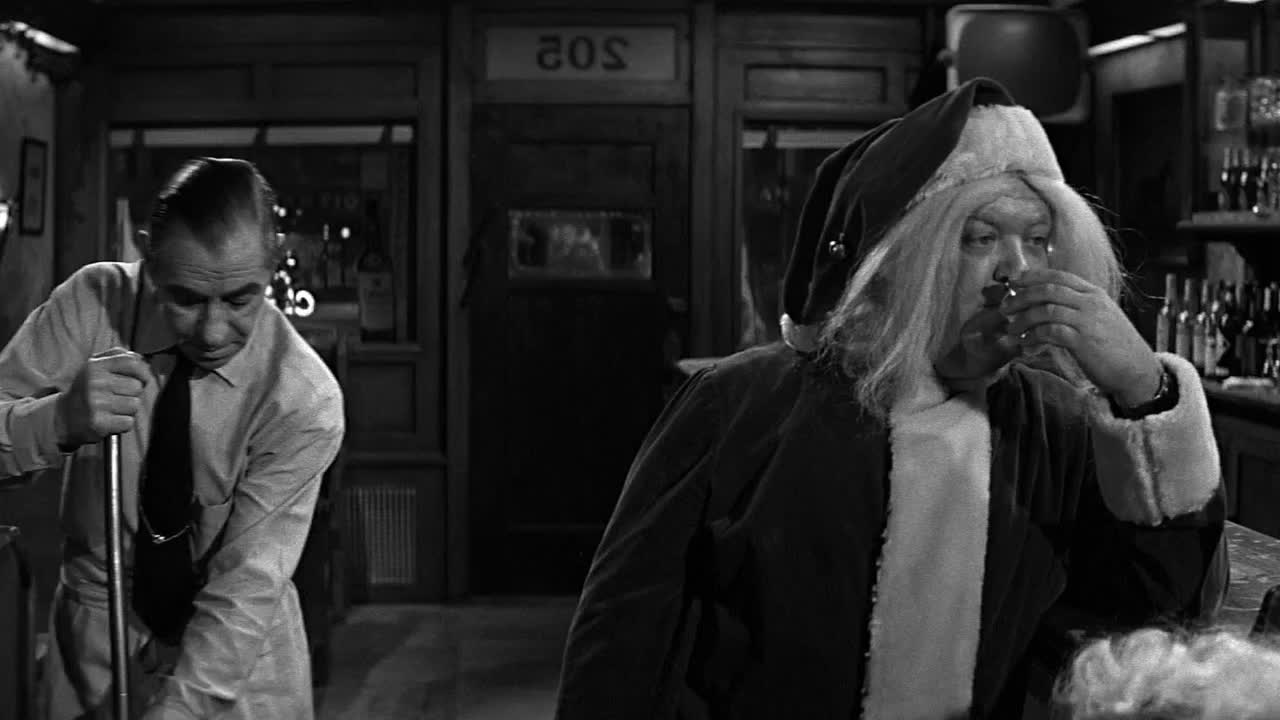
Let me see. There was Miss Olsen, and then there was Miss Rossi. No, she came before. Miss Koch came after Miss Olsen. - Now, Fran... - And just think. Right now some lucky girl in the building is gonna come after me.
 Up next · 08might as wellThe scene: Baxter Picks Up Mrs. MacDougall
It proves she isn't the exception she hoped to be. At the office party she hears Miss Olsen's affair turned into a joke, and at the apartment Sheldrake dismisses it as "ancient history" — the same brush he'll use on her.
He gives every excuse not to: the holiday, the children off school, his visiting in-laws, and "I can't bring it up now." He also says "that was before you, Fran. I've stopped running," yet he's already glancing at the clock.
It's a wry way of saying loving a married man guarantees tears: mascara runs when you cry, so a smart woman in that situation wouldn't bother wearing it. Fran hides the pain inside a joke.
He says he mustn't miss his train and still has to trim the Christmas tree at home. It's the clearest sign that Fran comes second: his family and the holiday routine win over the woman crying in the borrowed apartment.
It's a record — the one from "our friend at the Chinese restaurant," which they decide to keep at the apartment. Sheldrake's own gift is clumsy, and even that scene turns into a discussion about money and the apartment.