
“It's the only way. You gotta keep up appearances.”
Why it's great
The line reduces a whole marriage to pure image, and that is exactly the point.
Register
Neutral
Use it yourself
It's the only way you can fix this friendship.
Chapter 17 of 28 · 3'08"
The crew is not interested in whether Henry still loves his wife. They want the marriage to look intact, for business and for reputation, and they say so plainly: "It's the only way. You gotta keep up appearances." What follows is a staged reconciliation, plus a warning about how far the family will go to avoid a divorce.
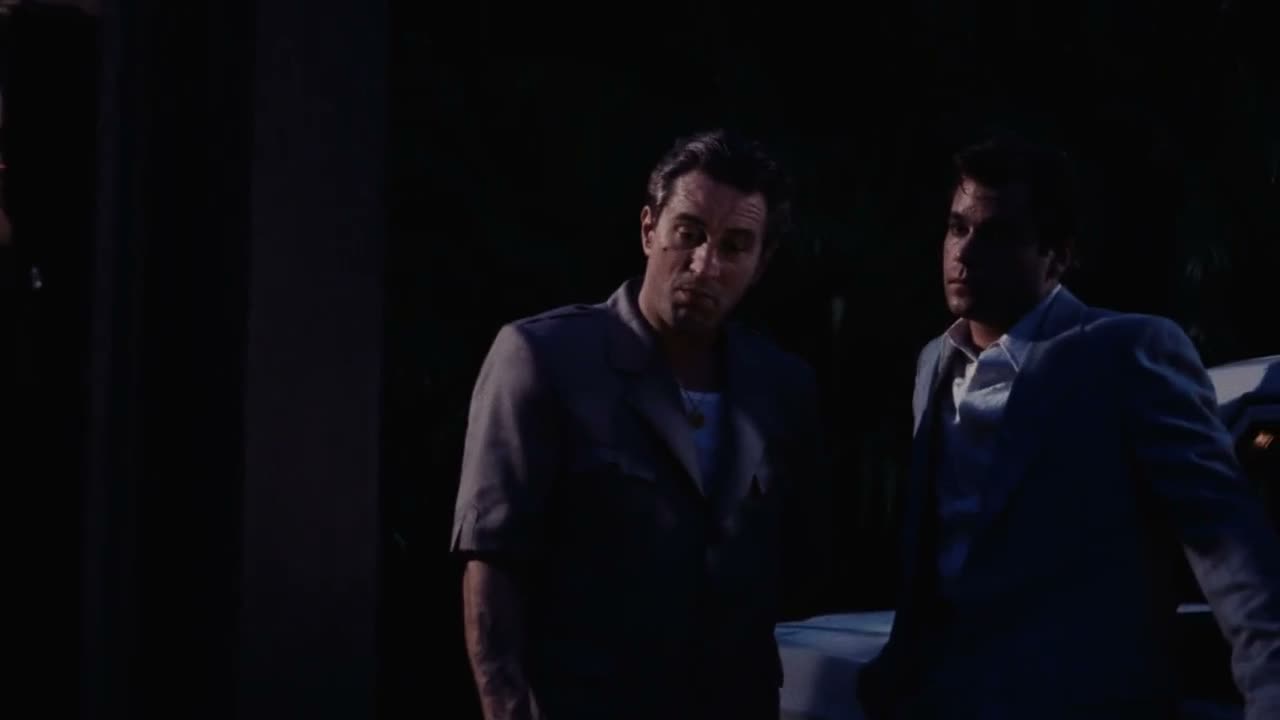
Paulie Tells Henry to Go Home for Appearances
Henry has moved out after the fight with Karen, and Paulie and Jimmy visit to set him straight. They do not argue about love; they argue about image, telling him the marriage has to look normal and that the only route is to go home. Later, Jimmy pressures a man who owes money by threatening to throw him to the lions, and the man pays at once.
The scene is about image management inside a world where reputation is collateral. Paulie and Jimmy never mention happiness; they mention appearances, children, and what people would say, which is why the phrase "It's the only way. You gotta keep up appearances" is delivered as practical advice rather than cruelty. Going home is not a reconciliation but a stage set, and Henry agrees because the alternative costs him standing in the crew. The film sharpens the point a moment later with the line about Karen, "She'll kill him, but she won't divorce him," which treats marriage less as love than as a contract you are not allowed to break. The same logic runs the shakedown scene: threats work because everyone believes a man who refuses to pay will be dealt with. In both cases, what matters is not feeling but the appearance of order.
A1–C2 is the CEFR scale. Cards above the level you pick fade, and playback will not auto-pause on them.
“It's the only way. You gotta keep up appearances.”
The line reduces a whole marriage to pure image, and that is exactly the point.
Neutral
“She'll kill him, but she won't divorce him.”
A wry line that says everything about a marriage held together by pride.
Informal
“We'll throw the bastard to the lions. No!”
The threat lands as a joke, which is exactly what makes it terrifying.
Informal
“You're not gonna get a divorce. We're not animali.”
Keeping up appearances outweighs feelings, and the denial says it all.
Informal
 Up next · 18the jointThe scene: Henry Does Easy Time in Prison
Because a broken home is bad for business and reputation. Paulie and Jimmy care about how things look, so they push Henry to restore the marriage even if the feelings are gone.
It means to maintain the outward look of a normal life even when the reality is a mess. The crew uses it to tell Henry that the marriage only has to seem fine, not be fine.
Not because he wants to. He agrees because refusing would cost him his place with the crew, so the return is arranged and practical rather than loving.
Jimmy and Tommy take a debtor on a trip and threaten him with talk of lions and a moat until he promises to get the money. The threat alone is enough, which is the point of the sequence.