
“If I could change things, I would, but I can't.”
Why it's great
A single conditional and a blunt refusal sum up regret and helplessness in one breath.
Register
Neutral
Use it yourself
If I could go back, I would, but I can't.
Chapter 21 of 30 · 3'04"
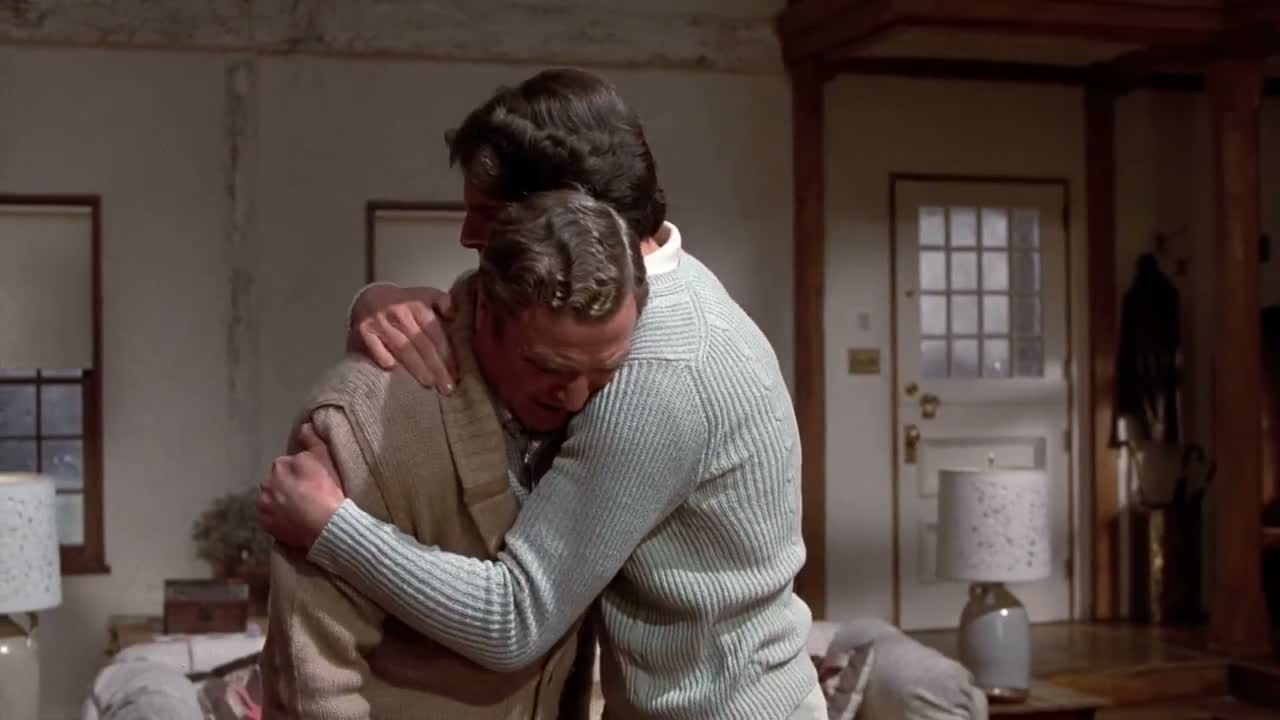
Sidney lays out a new play, Deathtrap, built from the murder they just committed, and reads stage directions that describe his own house. Clifford is appalled: "That you're a lunatic with a death wish?" They argue about whether anyone could prove it, and about whether a writer is the only person who could pull it off.
Sidney Pitches the Murder as a Play
Only a Playwright Could Do It
Sidney proposes turning the murder into a thriller called Deathtrap, and reads out the opening stage directions, which match his own study down to the antique weapons. Clifford calls him a lunatic with a death wish and warns him it could mean twenty years to life. Sidney keeps arguing that only a playwright could stage such a thing.
The scene is the film folding in on itself, and it is played as a fight. Sidney's pitch borrows the room they are standing in, so the stage directions sound like a confession read aloud: the antique weapons, the fireplace, the study in Easthampton. Clifford answers with the blunt reading, 'That you're a lunatic with a death wish?' and then does the practical math of prison. Sidney's defence is that only an insider could fake it, 'It has to be a playwright who writes thrillers,' which is less a moral argument than a business plan. The fight lands on the line that gives the film its logic: plays do not exist until someone writes them.
A1–C2 is the CEFR scale. Cards above the level you pick fade, and playback will not auto-pause on them.
“If I could change things, I would, but I can't.”
A single conditional and a blunt refusal sum up regret and helplessness in one breath.
Neutral
“I've got the same wish you have. A success wish!”
It flips an accusation into common ground and reclaims the word success.
Informal
“But could you give me your own special definition of success?”
A polite request that quietly forces the other man to show his hand.
Neutral
“This, you asshole, is going to bring you 20 to life in maximum security!”
It spells out ruin in one breath, and the insult lands hardest because it is specific.
Informal
 Up next · 22knock offThe scene: Clifford Wants a Shortcut
That they write a thriller called Deathtrap based on the murder they just committed, using their own house as the set and the crime as the plot.
Because it is reckless. He calls Sidney a lunatic with a death wish and says the scheme could put him in maximum security for twenty years to life.
Only a playwright could pretend to receive a finished, profitable script and know how to stage a convincing murder, which is the core of his plan.
Sidney yells that plays do not exist until someone writes them, and Clifford keeps trying to calm him down, saying 'Come on' as the scene closes.