
“Cut your losses, Mary. Get rid of it.”
Why it's great
Two imperatives hand Mary a clean way out instead of another repair bill.
Register
Neutral
Use it yourself
Cut your losses now, before the stock drops any further.
Chapter 16 of 25 · 3'24"
Mary arrives with a saga: the car would not start, was broken into, and has been one failure after another. Tom's advice is blunt — "Cut your losses, Mary. Get rid of it" — but she cannot let go, because of how much she has already spent on it.
Mary's Car Was Broken Into
❝ Monologue · 8 lines Tom Tells Mary to Cut Her Losses
Mary comes in and immediately tells the story of her car: it would not start, so she took the tube; it was broken into and her toilet rolls were stolen; it has had three punctures, a lost exhaust and a failed carburettor. Tom tells her to cut her losses and get rid of it, but Mary refuses because she has spent so much.
The comic catalogue of the car is also a portrait of Mary's life: everything she touches costs more than it should and piles up in the wrong direction. The scene lets her be funny about it, but the pattern is real — she keeps paying into something that is only going to get worse. Tom names the trap plainly: 'Cut your losses, Mary. Get rid of it.' Her reply, 'I can't just sell it now,' is the logic of anyone stuck in a bad investment, and it is the same logic she applies to her past. The kindness at the end, the cake baked 'in your honour,' cuts both ways: it welcomes her, and it quietly underlines the gap between her disasters and their settled, orderly home.
A1–C2 is the CEFR scale. Cards above the level you pick fade, and playback will not auto-pause on them.
“Cut your losses, Mary. Get rid of it.”
Two imperatives hand Mary a clean way out instead of another repair bill.
Neutral
“But I've spent so much on it, Tom. I can't just sell it now.”
She defends a losing car with money already gone, the classic sunk-cost trap.
Neutral
“But if you keep it, it's only going to get worse.”
It names the cost of waiting in one short line and leaves no room to stall.
Neutral
“This car's been a catalogue of disaster, hasn't it?”
Calling a run of bad luck 'a catalogue' makes it funny and true at once.
Informal
It keeps making funny noises. I got towed away and I wasn't even parked on a double-yellow line. I've got seven parking tickets... no, nine parking tickets. And then... I broke down on the motorway on the way to Brighton and I got towed to Crawley, which is the last place I want to go, because I grew up there and I hate it. So, I had to get the train home and then the train back to Crawley the next day and the guy kept trying to touch me up. It cost me nearly £500 and I never even got my weekend in Brighton. That was supposed to be my summer holiday.
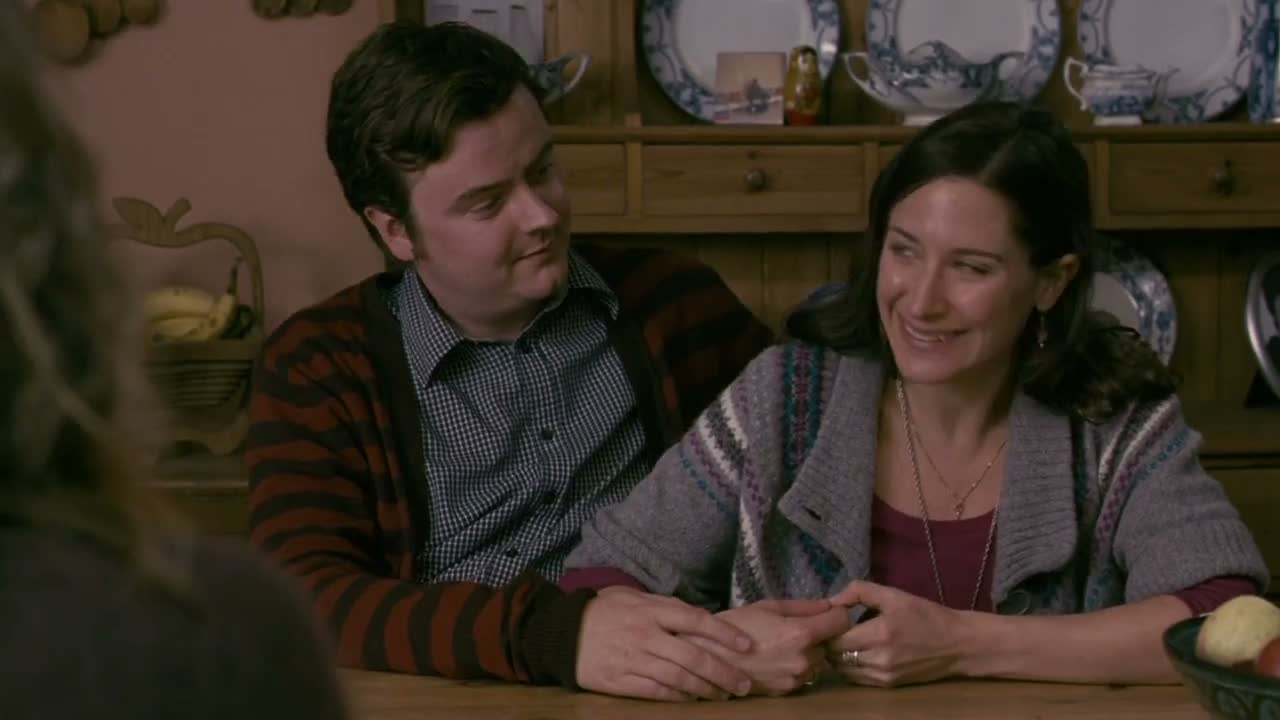 Up next · 17a mean curryThe scene: Mary Meets Joe's Girlfriend Katie
She has already spent a lot of money on it, so selling now feels like admitting the loss. As she says, she cannot 'just sell it now,' even though Tom says it will only get worse.
It means to stop investing in something that is failing before you lose even more. Tom tells Mary to cut her losses and get rid of the car.
It would not start, was broken into, and had toilet rolls stolen; it has had three punctures, a fallen exhaust, a broken carburettor, nine licence points, nine parking tickets and a breakdown on the motorway.
It shows what Mary left behind: she rushed out because her toilet rolls were on the car's front seat. The stolen rolls and smashed window are the comic peak of her run of bad luck.
Katie is a guest at the gathering, and she is friendly to Mary. She asks to swap cake recipes, and the offer, along with Gerri's cake 'in your honour,' softens the scene.