
“Sounds to me like he was a duplicitous shit.”
Why it's great
Tom refuses to soften her memory and names the man for what he was.
Register
Informal
Use it yourself
Sounds to me like he never planned to stay.
Chapter 7 of 25 · 4'33"
Mary, drinking too much at Tom and Gerri's, finally tells the story of her 'big love' — a married man she was never going to have. Tom refuses to be sentimental about him, Gerri says 'It takes two to tango,' and Mary hears blame in it and turns it on herself.
Mary Reveals Her Old Love Was Married
At Tom and Gerri's, Mary drinks too much and opens up. She offers to be there for Gerri, then confesses that her great love was a married man who never left his wife. Tom calls him out, Gerri offers 'It takes two to tango,' and Mary — taking it as blame — spirals into her divorce, her money and her rented flat.
The scene is about what happens when Mary's loneliness finally talks. Sober, she keeps things light and useful — offering to listen, insisting, 'I'm a very good listener.' Drunk, the same need becomes a confession: her 'big love' was a married man, and she still measures the loss. Tom and Gerri answer from a place of security, and their bluntness is the point. Tom's verdict is unsparing; Gerri's 'It takes two to tango' is meant as a neutral proverb, but Mary hears judgment and immediately turns it inward — 'Why do I always get it wrong, Gerri?' From there the old romance collapses into the divorce, the payoff, and the rented flat. The scene doesn't mock her; it lets her say the quiet part out loud, then watches the friends absorb it.
A1–C2 is the CEFR scale. Cards above the level you pick fade, and playback will not auto-pause on them.
“Sounds to me like he was a duplicitous shit.”
Tom refuses to soften her memory and names the man for what he was.
Informal
“Well, we all have to make choices, don't we?”
A truism gently closes the blame game without taking sides.
Neutral
“Well, what can you do, Tom?”
A short rhetorical shrug: not a question but a sigh aimed at Tom.
Informal
“I'm living in a poky rented flat when I should have my own home at my age.”
Age, dignity and reality collide in one line of quiet grievance.
Neutral
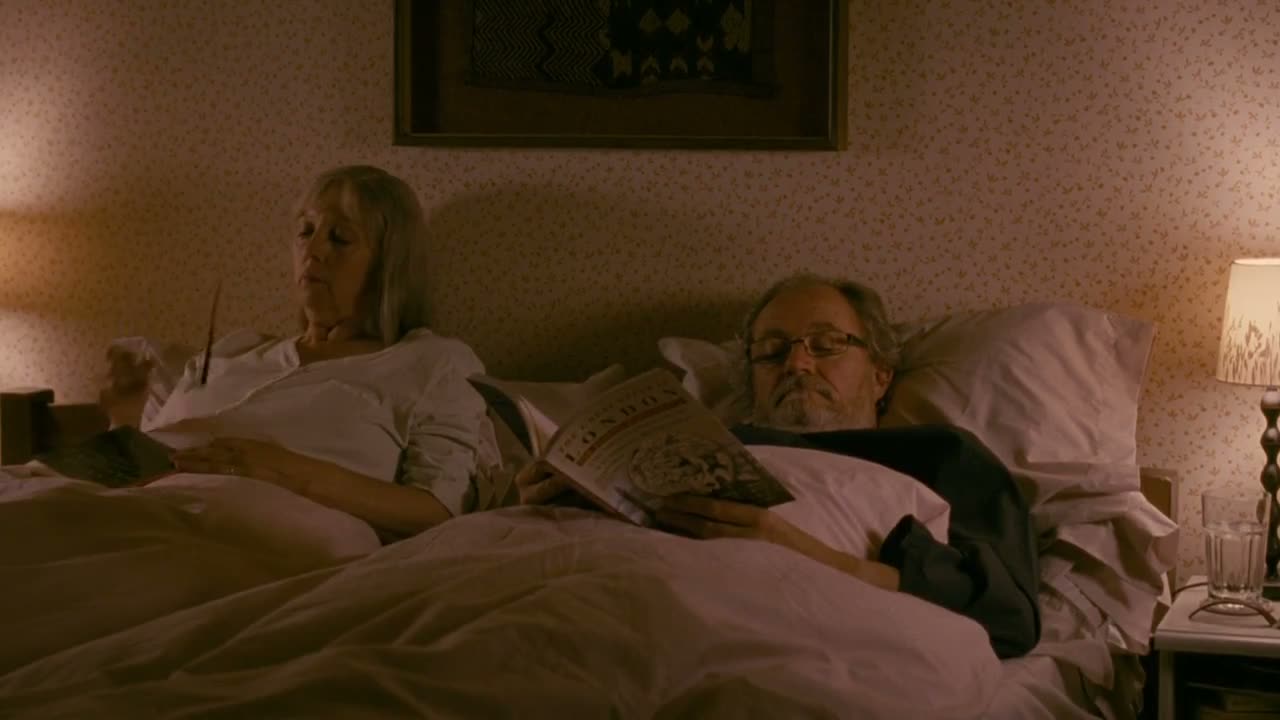 Up next · 08knackeredThe scene: Joe Comes Home on Sunday Morning
A married man she describes as the great love of her life. He never left his wife, and years later she still wonders what he's doing and whether he thinks about her.
Because Tom won't romanticize the affair. In his view the man lied and took advantage, and saying so out loud is his way of defending Mary.
Gerri offers 'It takes two to tango' as a neutral saying, but Mary hears it as blame and snaps back, 'so you think it was my fault?' before backing down.
She says her ex-husband palmed her off with 5,000 pounds, leaving her with nothing, and she now rents a small flat instead of owning a home.
It's a hopeful British phrase meaning keep going and things will improve. Mary says it to close a dark conversation and move on.