
“for if he is taken I count myself his murderer.”
Why it's great
He takes the blame in advance, so the plea sounds like guilt rather than duty.
Register
Formal
Use it yourself
If the deal falls through, I count myself the one who failed the team.
Chapter 27 of 29 · 4'02"
Hale has no official standing; he comes to save a life. He tells Elizabeth that Proctor is "marked to hang," warns her to "cleave to no faith when faith brings blood," and argues that God damns a liar less than a man who throws his life away for pride. Elizabeth promises nothing.
❝ Monologue · 7 lines Hale Warns Elizabeth Against Blind Faith
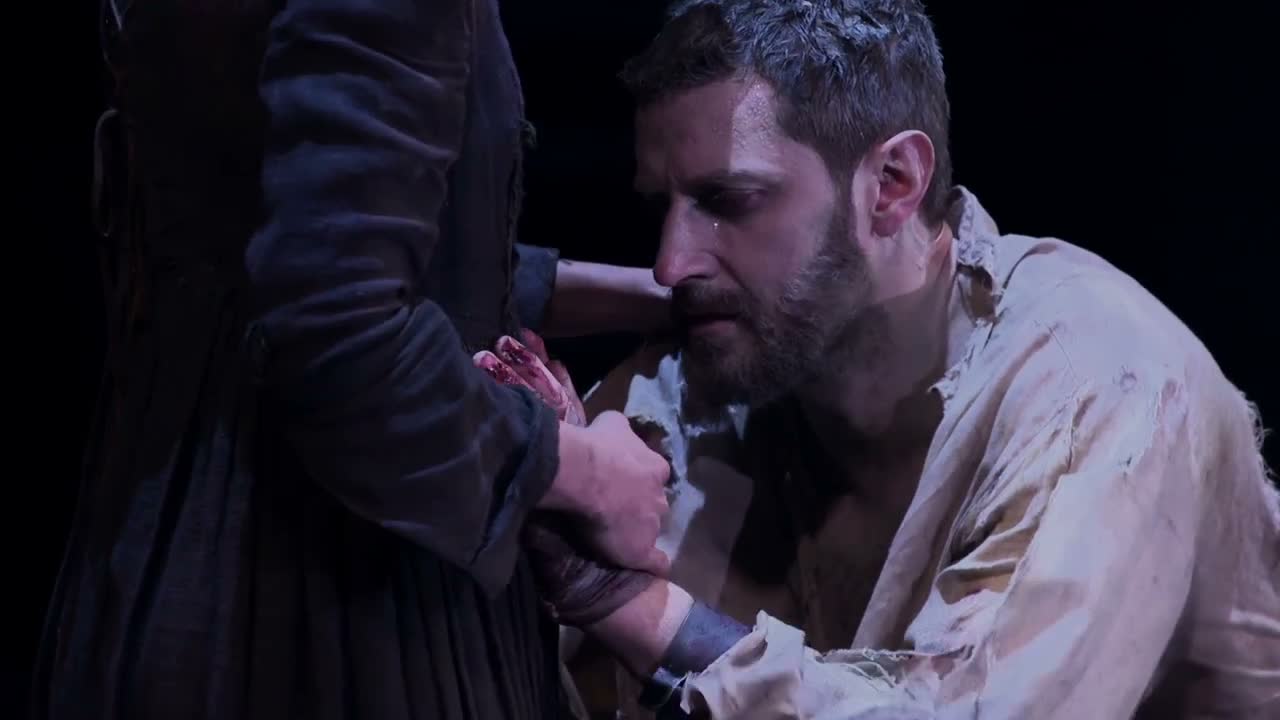
In the Salem jail before the executions, Hale visits Elizabeth. He says he is not there for the court and that if Proctor dies he will count himself his murderer. He urges her to persuade John to confess, arguing that God forgives a lie more easily than a life thrown away for pride. Elizabeth agrees to speak to him but promises nothing.
The scene is Hale's last attempt to undo what he helped start. He has come to the jail not as a minister of the court but as a guilty man: "for if he is taken I count myself his murderer." His argument is a strange one for a reverend — he tells Elizabeth to let her husband lie, because "God damns a liar less than he that throws his life away for pride." He even turns the language of faith against itself: "cleave to no faith when faith brings blood." Elizabeth is the counterweight. She does not argue, does not promise, and does not pretend to have learning she lacks: "I cannot dispute with you, sir." Her answer, "I promise nothing," keeps her honest and keeps the choice with John. Hale wants the couple to buy life with a lie; Elizabeth will not sell John's decision on his behalf.
A1–C2 is the CEFR scale. Cards above the level you pick fade, and playback will not auto-pause on them.
“for if he is taken I count myself his murderer.”
He takes the blame in advance, so the plea sounds like guilt rather than duty.
Formal
“Beware, Goody Proctor - cleave to no faith when faith brings blood.”
It puts faith and blood in one breath, turning a warning into a moral test.
literary
“It is mistaken law that leads you to sacrifice.”
The emphatic frame blames the law, not the person obeying it.
Formal
“God damns a liar less than he that throws his life away for pride.”
It ranks two sins to make survival sound like the lesser one.
Formal
“Woman, before the laws of God we are as swine!”
By calling everyone swine he claims total humility before God, which gives him the upper hand.
literary
“A very ape would weep at such calamity!”
He shames her by saying even an animal would cry, so her calm looks inhuman.
Neutral
I came into this village like a bridegroom to his beloved, bearing gifts of high religion; the very crowns of holy law I brought, and what I touched with my bright confidence, it died; and where I turned the eye of my great faith, blood flowed up. Beware, Goody Proctor - cleave to no faith when faith brings blood. It is mistaken law that leads you to sacrifice.
 Up next · 28one foot in HeavenThe scene: Elizabeth Visits John in Prison
He believes confession — even a false one — will save Proctor's life. He says God damns a liar less than a man who throws his life away for pride.
Hale started the witch hunt and now sees it killing innocent people. He feels responsible for Proctor's fate and wants to save him.
She refuses to decide for her husband. She agrees to speak with him but will not guarantee anything; the choice must be his.
He thinks anyone would weep at Proctor's fate, and reads her dry eyes as proof she has surrendered her soul to Hell.
It means not to hold on to a religion or belief that causes death. Hale is telling Elizabeth that a faith which kills has become destructive.