
“But somehow I'm not in the mood for a holiday just now.”
Why it's great
A flat refusal of the holiday quietly shows how far the marriage has drifted.
Register
Neutral
Use it yourself
I'm not in the mood for a party just now.
Chapter 10 of 19 · 3'23"
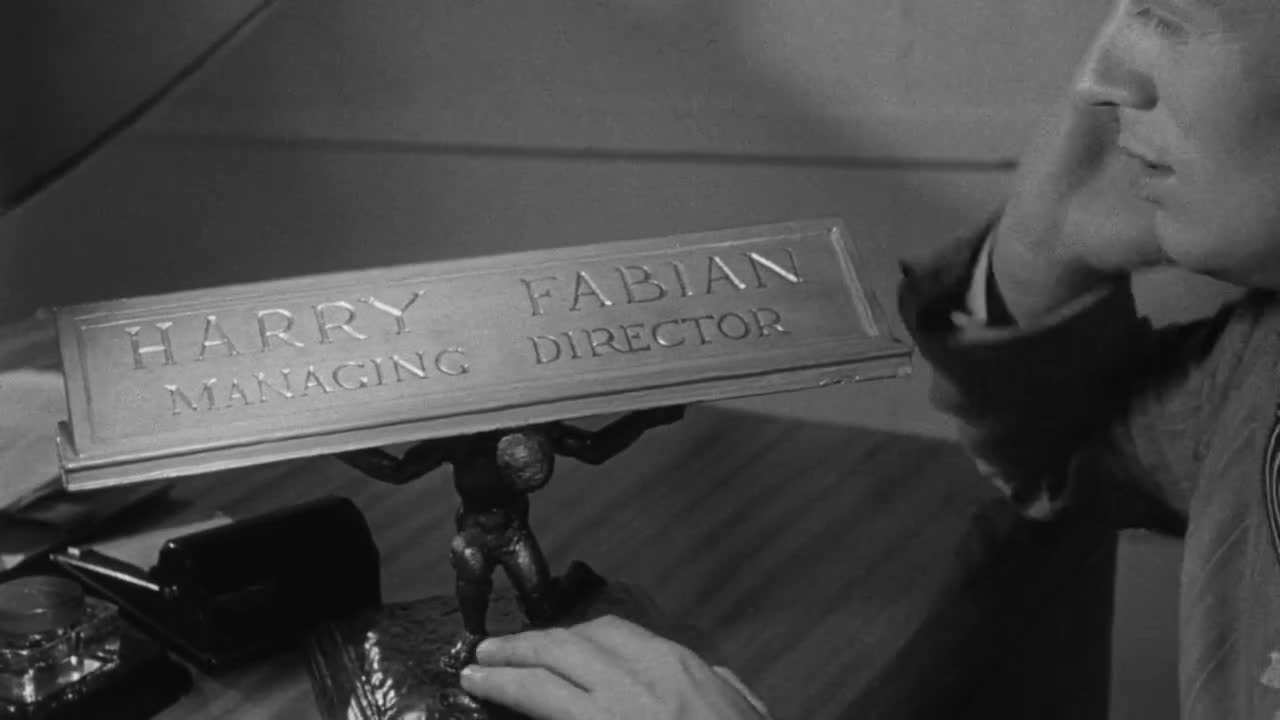
Harry bursts in at night with the two hundred pounds and forces Philip to match it. Philip admits he underestimated him, then agrees to back the wrestling plan on one condition: the business must be in Harry's name, and nobody may know of his connection.
❝ Monologue · 7 lines Phil's retirement dream
Short sentences stack into a dream of escape that keeps drifting further from the room.
Put Up Your Money, You're My Partner
Late at night, Philip tells Helen he wants to sell the club and travel. She is not in the mood. Then Harry arrives with two hundred pounds of his own, forcing Philip to match it, and talks up the wrestling business until Philip agrees to back him. The catch: the business must be in Harry's name and the partnership kept secret.
The scene is the deal that sets the whole tragedy in motion. Harry does the impossible and raises two hundred pounds, and for a moment Philip seems to admit defeat: "I have underestimated you." But the terms Philip adds are the real story. "For private reasons, I'd prefer the business to be in your name" turns Harry from a partner into a front man. Everything risky is now attached to Harry's name, and Philip keeps his distance: nobody must know about his connection. Harry, who has waited his whole life for approval, hears only the flattery and agrees. The audience hears the trap close. Earlier, Philip's plan to clear out and travel shows he was already looking for a way to leave the business; giving Harry the name on the door is exactly that way out.
A1–C2 is the CEFR scale. Cards above the level you pick fade, and playback will not auto-pause on them.
“But somehow I'm not in the mood for a holiday just now.”
A flat refusal of the holiday quietly shows how far the marriage has drifted.
Neutral
“There's no telling how far this will take you.”
It sounds encouraging yet commits to nothing, leaving all the risk with Harry.
Neutral
“For private reasons, I'd prefer the business to be in your name.”
Private reasons is the polite cover for a man making sure the blame lands on someone else.
Formal
“You'll be proud to say, "Harry Fabian? Why, he's my partner."”
He pre-performs the other man's future boast for him, a line that is both swagger and plea.
Informal
I've been thinking, Helen. I'm a rich man. Richer than you know. I want to clear out. Sell this place. Get rid of everything. Just travel. Enjoy ourselves. See a bit of the world.
 Up next · 11get mixed up withThe scene: Kristo Tells Harry to Leave London
Partly because Harry really did raise the money, which Philip did not expect. But he also wants a way out of the business, so he backs the plan while keeping his own name off it.
Philip says it is for private reasons, but the effect is to hide his involvement. If the venture fails, the debts and the blame fall on Harry, not on him.
Not his money and not his travel plans. She wants independence, and her refusal of the holiday shows how little interest she has in his idea of a future together.
No. He hears the flattery and the backing, and he misses the condition hiding inside it. He thanks Philip and says he will not regret it.
It is Philip's dry comment as the deal is settled, as if the arithmetic of the partnership were perfectly simple. It is, but not in Harry's favour.