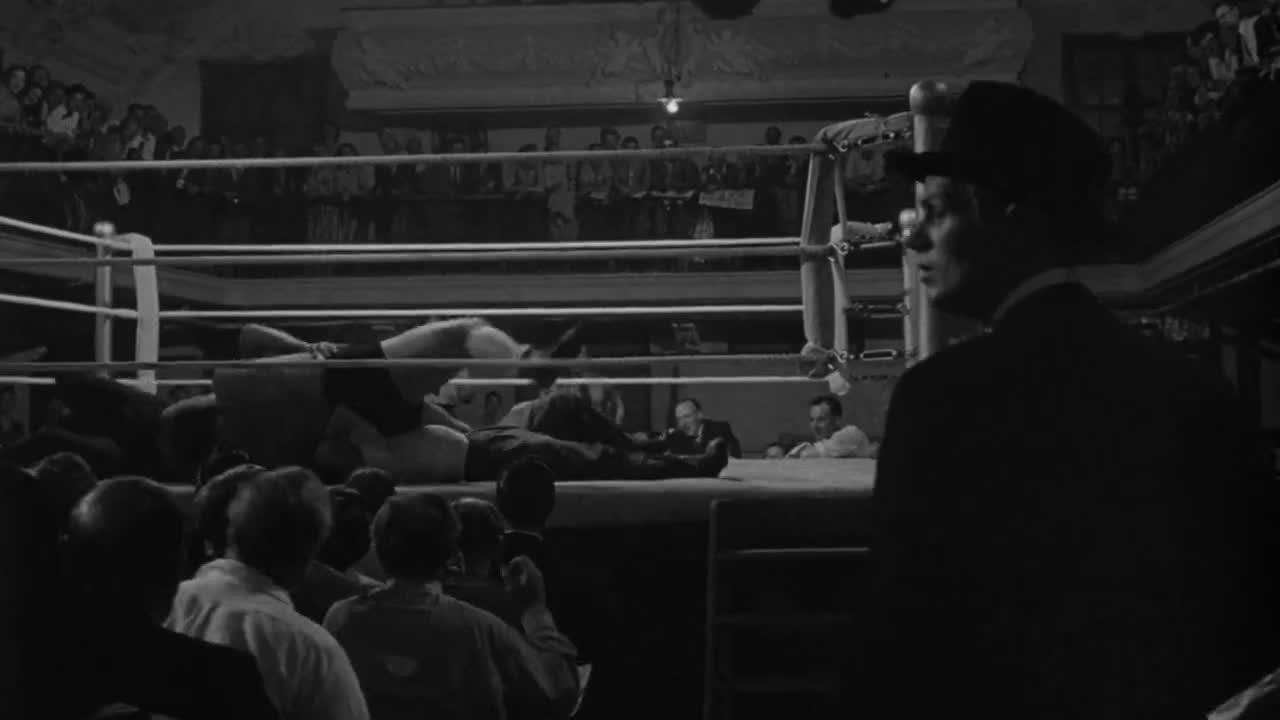
00:00 / 02:30
00:00 / 02:30

Harry's Wallet Trick at the Club, Explained

Night and the City · 1950

Chapter 4 of 19 · 2'30"

Harry uses a fake wallet and a lucky coincidence to charm two visiting businessmen. He pretends he once knew a man they keep mentioning, and the strangers are delighted. By the end he has won their trust and sent them to the Silver Fox club with his card.

Small talkPersuadingInvitingStrangersB2slowamericanClean

Key moments

Start here, then watch the full scene
  1. ❝ Monologue · 5 lines The Wallet and the Lucky Coincidence

    0:41–1:27
    46s
  1. ❝ MonologueThe lost wallet story5 linesPractice page ↗

Harry's Wallet Trick at the Club, explained

What happens

At a club, Harry sets up a con: he picks up a wallet and asks two American businessmen if it is theirs. Then he tells a story about a man named Lamont, and the strangers realise he knew the very person they were discussing. They trust him, and he sends them on to a private club.

What's really going on

The scene is a lesson in how Harry works: he has no product and no plan, only timing. The information about the two visitors comes cheap, and he turns it into a performance. The wallet is a prop, and the line he delivers with it — "I beg your pardon, does this wallet belong to one of you gentlemen?" — is not really a question but an opening. The genius of the con is that the marks do half the work: they hear a name they know and convince themselves they have met a friend from home. "Well, what do you know? We were just talking about him!" It is a small-time trick, but it shows exactly what makes Harry dangerous to himself: he can make strangers believe in him, and he cannot stop once he has started.

Key lines & what they mean

“Hey, Harry. Three live ones. What's it worth to you?”
The informant's opening offer: three gullible marks are in the bar, and he wants to be paid for the tip.
“One of them, the half-pint, kept on talking about a friend of his called Lamont he must write to.”
The detail Harry will use: the shorter man mentioned a name that can be turned into a fake connection.
“Say, er... You boys surely don't plan to spend the entire evening here?”
His soft opening for the next stage of the con, steering the men toward the club without naming it yet.
“Well, what do you know? We were just talking about him!”
The reaction Harry is fishing for: the marks believe the coincidence and take him for an old friend of their friend.

Theme

  • Deception — Harry invents a coincidence and a wallet to win the trust of two men he has never met, purely to use them later.
  • Ambition — The con is small, but it shows Harry's endless hustle: any stranger might be the break he is looking for.

What this chapter teaches

Teaching points

Review right after watching
My level3/5

A1–C2 is the CEFR scale. Cards above the level you pick fade, and playback will not auto-pause on them.

Night and the City: your progress

Chapter 4 of 19 · about 43 min to go

← Previous
Up next · 05take it easyThe scene: Harry Is Thrown Out of the Arena

Takeaways

What you walk away with
  1. A dropped wallet becomes a tool in Harry's hands.
  2. Feigned homesickness opens wallets faster than charm.
  3. The two visitors hear exactly what they want to hear.
  4. Harry's courtesy is a sales technique, not warmth.

People also search

Questions, then the lines
How does Harry trick the two businessmen?

He pretends to find a wallet, asks if it is theirs, and then tells a story that happens to mention a man they know. The shared name makes them feel they have met someone from home.

Why do the men trust Harry so quickly?

Because they are strangers in London and homesick. Hearing the name Lamont from a friendly man feels like a coincidence, and they fill in the rest themselves.

What is Harry's real goal in the scene?

He wants to bring them to the Silver Fox, a private club, where he can keep working them. The charm and the card are the first step of a longer con.

What does the informant want?

Money. He opens by asking what the tip is worth to Harry, and the exchange shows how Harry buys information cheaply and sells it as friendship.

Why does Harry mention Stubby Lamont at the end?

He tells them to give Stubby his best, which cements the illusion that he is an old friend. It is the last touch of the performance as he leaves.