00:00 / 02:20
00:00 / 02:20

Neff's Roulette Wheel Speech, Explained

Double Indemnity · 1944

Chapter 8 of 21 · 2'20"

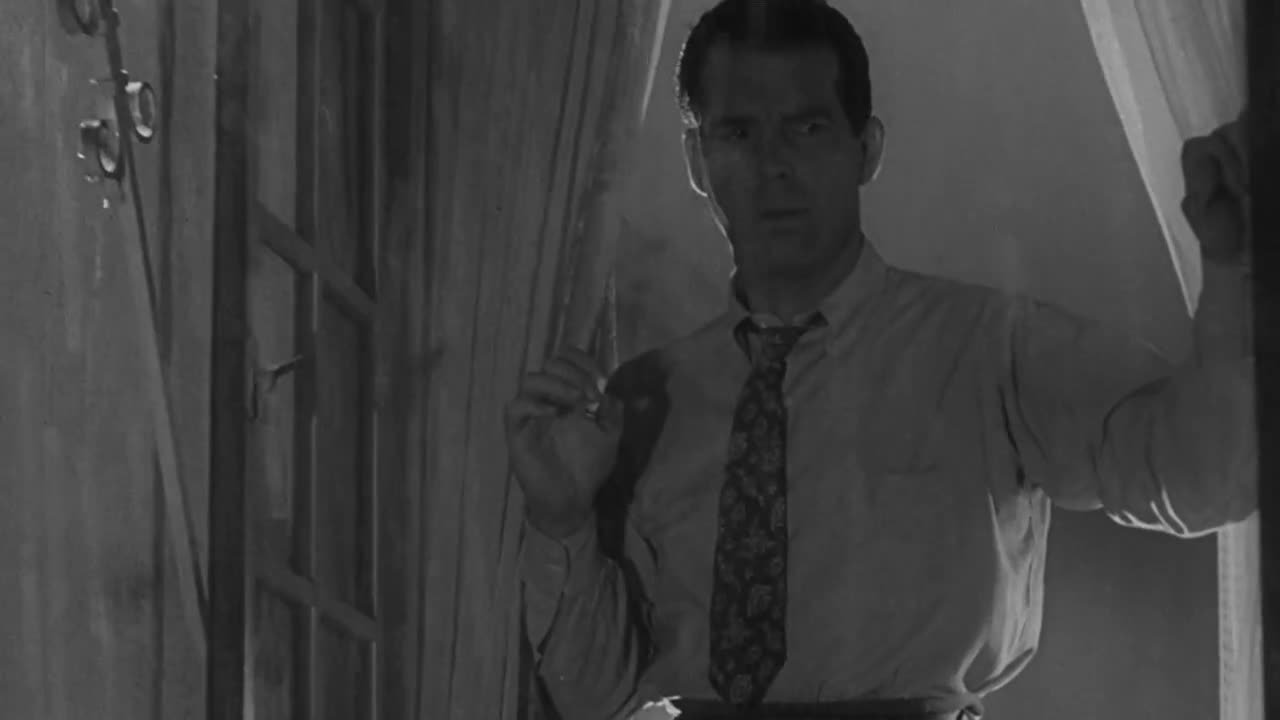
Neff tells Keyes how an insurance man becomes the man at the wheel who decides to cheat it. The talk is a confession and a self-defense: "I fought it, only I guess I didn't fight it hard enough." Then Phyllis supplies the last piece—and the murder stops being an idea.

MonologuesInterrogationsConfessingPersuadingCoworkersB2fastamericanClean

Key moments

Start here, then watch the full scene
  1. ❝ Monologue · 20 lines Neff's Roulette Wheel Speech

    0:02–1:06
    64s
  1. ❝ MonologueThe Roulette Wheel Confession20 linesPractice page ↗

Neff's Roulette Wheel Speech, explained

What happens

In his recorded confession, Neff tells Keyes how the idea took shape. An insurance man, he says, is like the man behind the roulette wheel, watching players to make sure they don't crook the house—until one night he wonders how he could crook it himself. Then Phyllis arrives, and the two settle on a plan.

What's really going on

Neff's roulette-wheel speech is the film's clearest account of how a lawful man talks himself into a crime. The wheel is his life: he knows "every notch in it by heart," and once you know a system that well, the thought of turning it around follows almost naturally. Crucially, he frames it as temptation rather than decision—"I fought it, only I guess I didn't fight it hard enough." Phyllis gives the push he's been waiting for, promising not seduction but competence: "We're gonna do it and we're gonna do it right." From there the murder becomes procedure—no slip-up, nothing sloppy, watch your step, straight down the line. The language of the second half is all quality control, which is the point: they're selling themselves an airtight plan, not confronting what they're about to do.

Key lines & what they mean

“And then one night, you get to thinking how you could crook the house yourself.”
The heart of the metaphor: the guard who knows every trick eventually imagines using them, and that thought is how Neff's crime begins.
“We're gonna do it and we're gonna do it right.”
Phyllis and Neff's pact: the murder is treated as a job to be done well, with its own standards of craft.
“I fought it, only I guess I didn't fight it hard enough.”
Neff's self-defense: he wants the temptation to count as effort, so his guilt looks smaller than his choice.
“You're like the guy behind the roulette wheel...”
The image that opens the confession: an insurance man watches for cheats, knowing the whole machine better than anyone.

Theme

  • Corruption — Neff's speech shows how an insider with full knowledge of the system talks himself into abusing it.
  • Guilt — Calling the crime a temptation he barely resisted is Neff's way of confessing and excusing himself at once.

What this chapter teaches

Teaching points

Review right after watching
My level4/7

A1–C2 is the CEFR scale. Cards above the level you pick fade, and playback will not auto-pause on them.

Double Indemnity: your progress

Chapter 8 of 21 · about 44 min to go

← Previous
Up next · 09at a crackThe scene: Neff Fools Dietrichson Into Signing

Takeaways

What you walk away with
  1. Crook the house means cheating the casino from inside.
  2. A shill places bets so the table looks honest.
  3. Whitewash yourself means covering up your own guilt.
  4. Watch your step warns someone to move carefully.

People also search

Questions, then the lines
Why does Neff confess the roulette-wheel idea to Keyes?

He isn't just narrating. He's explaining himself to the one man sharp enough to see through him. The wheel speech admits that he knew exactly what he was doing and still did it, which is the whole point of the confession.

Does Phyllis manipulate Neff into the murder?

She presses hard—"I can't stand it anymore. What if they did hang me?"—but Neff is already halfway there in his own account. He supplies the wheel metaphor and calls himself the man who knows how. She gives the final push, not the whole idea.

What does "crook the house" mean?

It means to cheat the casino—the house is the side that runs the game. Neff uses it as a metaphor for an insider who turns against his own company. It's gambling slang, and the phrase carries the whole film.

Why do they keep saying the plan has to be perfect?

Because they're treating a killing like a claim that has to survive scrutiny. "There's not going to be any slip-up," Neff insists, and the repeated watch-your-step talk is him steadying his nerve as much as hers.