
“I was being that careful.”
Why it's great
The past continuous turns caution into a state of being, not a single act.
Register
Neutral
Use it yourself
I was being that careful because one typo could sink the whole deal.
Chapter 13 of 21 · 2'10"
Before the murder, Walter walks through every step meant to prove he was somewhere else: leaving his rate book behind, getting his car washed, calling a coworker so the phone company keeps a record. "That was part of my alibi," he says, and the care in his voice is the point.
Walter Sets His Alibi Step by Step
Alone with his thoughts, Walter lays out the alibi for the coming night. He leaves his rate book at the office on purpose, has Charlie wash his car, tells the garage he is staying in, and phones a coworker from home so there will be a record of the call. Then he changes, hides in the back of the Dietrichsons' car, and waits.
Walter narrates this stretch of the film himself, and what he describes is not a crime so much as a checklist. Every ordinary thing he does, from leaving a rate book to having his car washed to making a toll call, is chosen because it can be witnessed or traced later. "That was part of my alibi," he says, and the small card rigged inside the phone is the same idea: a way to know whether anyone came. The scene's power is in its calm. He even frets about a bus, because "there was always the chance that someone might remember seeing me on it." By the time he lies down in the back of the car, the audience has watched him think like the insurance investigator he will have to fool, and the line that sums him up is simple: "I was being that careful."
A1–C2 is the CEFR scale. Cards above the level you pick fade, and playback will not auto-pause on them.
“I was being that careful.”
The past continuous turns caution into a state of being, not a single act.
Neutral
“I could smell that honeysuckle again.”
A smell returns, and the small word again says this night repeats an earlier one.
literary
“All the time I was thinking about that dark street on the way to the station...”
He describes the killing ground as a plain street, and the calm is what chills.
Neutral
“From here on, it was a question of following the timetable...”
Murder is reduced to keeping to a timetable; the flatness of the phrasing is what makes it chilling.
literary
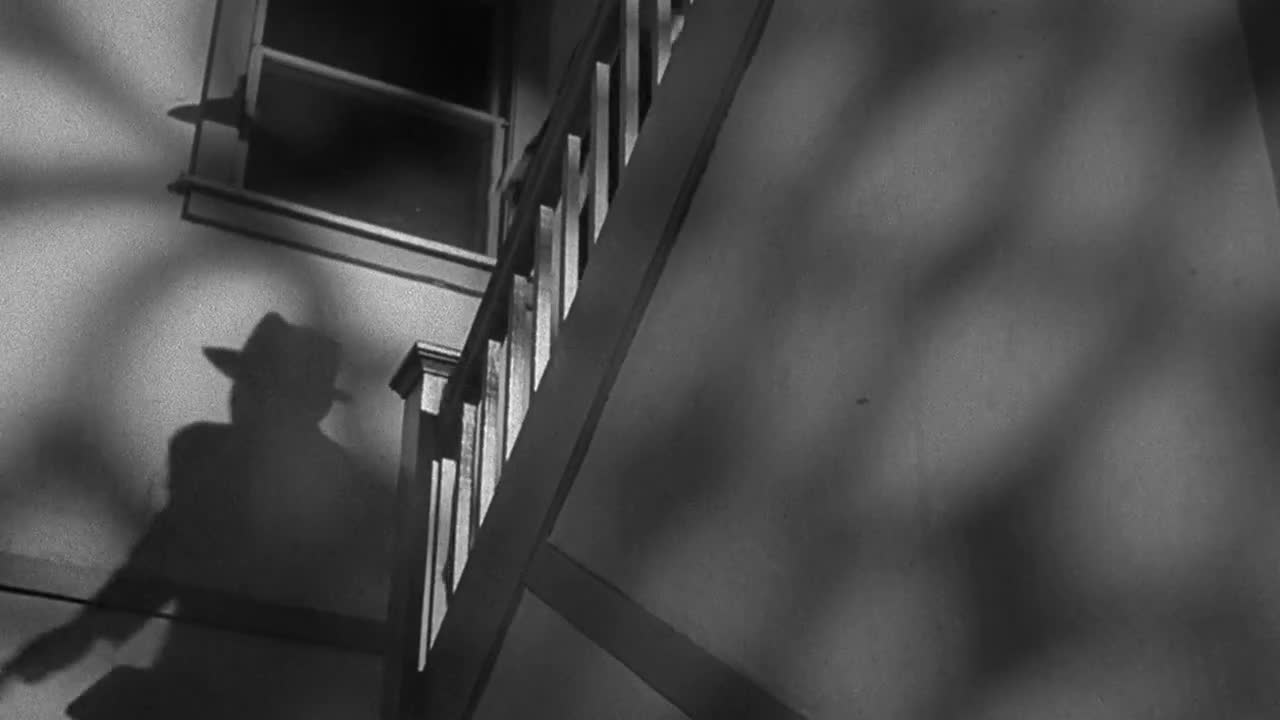 Up next · 14got the ballThe scene: Norton Says It Wasn't an Accident
He wants it noticed. If people remember him leaving it behind, they will assume he was absent-minded and that nothing was planned, which supports his alibi.
Because Schwartz lives in Westwood, the call is a toll call, so the phone company will keep a record of it. That record later proves Walter was home that evening.
If anyone calls while he is out, the ringing bell will knock the card down, so he can tell on returning whether the phone was used.
He is afraid a passenger or driver might remember seeing him on the bus. Walking leaves no one who could place him out that night.
He wants the car facing out so that if her husband gets in before she drives away, he will not be seen or blocked, which keeps the plan safer.