00:00 / 04:24
00:00 / 04:24

Keyes Exposes the Impersonation, Explained

Double Indemnity · 1944

Chapter 19 of 21 · 4'24"

Keyes lays out how the murder was worked: a double took the crutches and rode the train as Dietrichson, then the body was placed on the tracks. The scheme only needs one witness to break, and Keyes brings in a man from Oregon who says the dead man was someone else.

InvestigationOffice chatExplainingWarningCoworkersB2fastamericanClean

Key moments

Start here, then watch the full scene
  1. ❝ Monologue · 10 lines Keyes Says Murder Never Stays Hidden

    3:07–3:47
    40s
  1. ❝ Monologuethe trolley car theory10 linesPractice page ↗

Keyes Exposes the Impersonation, explained

What happens

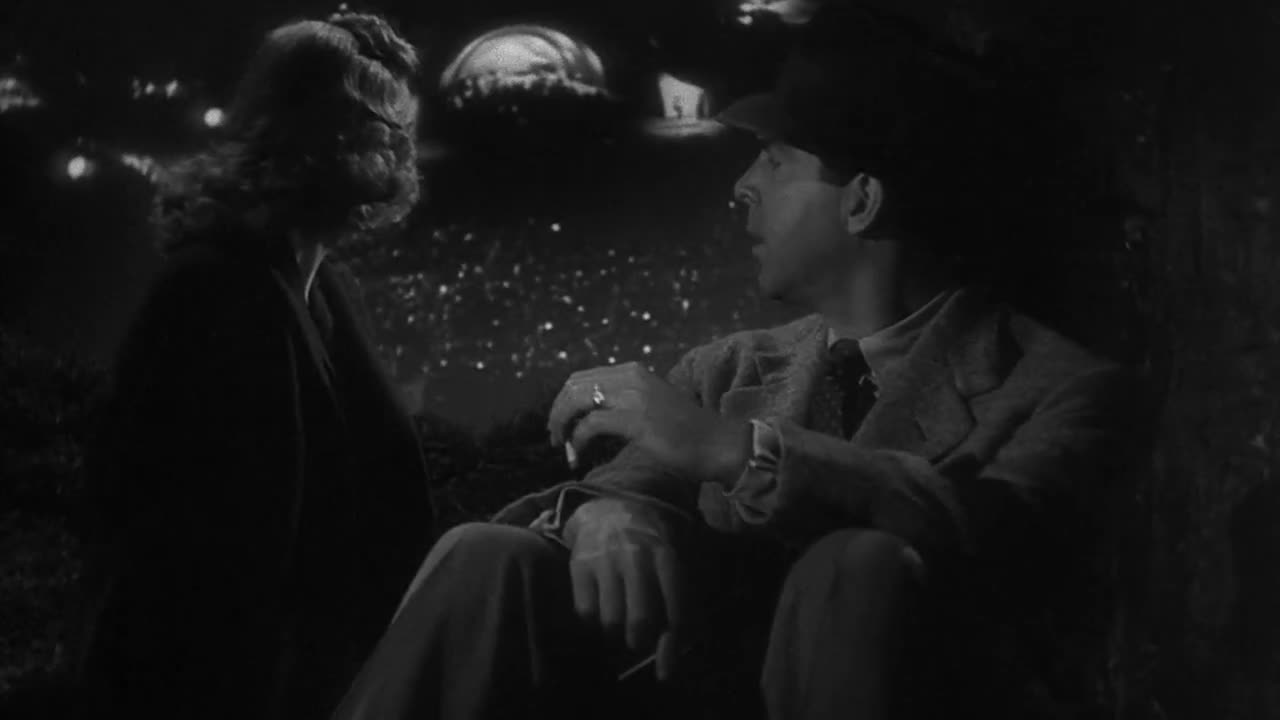
Keyes explains the theory to Walter: an impersonation, in which a double used the crutches and rode the train as Dietrichson while the real man was already dead. To test it, Keyes calls in Mr. Jackson, the only passenger who saw the man on the observation platform, and asks him whether the photographs are of the late Mr. Dietrichson.

What's really going on

Keyes works the case out loud, and the plan he describes is elegant enough to seem safe: "An impersonation, see? A cinch to work." But the scene is built to show why it is not. The whole scheme depends on nobody getting a clear look, and Keyes finds the one man who did, then brings him from Oregon to say the photographs are not the man he saw. Jackson's stubborn, homespun manner makes his identification hard to shake: "If I say it, I mean it." With that, the case "is beginning to come apart at the seams already," and Keyes turns philosophical, comparing the killers to passengers chained together on a train: "it's a one-way trip, and the last stop is the cemetery." Walter, who knows every word is true, can only listen.

Key lines & what they mean

“Murder's never perfect. Always comes apart sooner or later.”
Keyes's verdict on the case: no killing stays hidden forever, and this one is already showing its seams.
“And it's a one-way trip, and the last stop is the cemetery.”
Keyes's image for the killers' partnership: once they are bound together, neither can get off, and the ride ends in their deaths.
“Whether it's love or hate doesn't matter. They can't keep away from each other.”
Keyes argues the two killers will be drawn back together no matter what they feel, and that contact is what will expose them.
“Up in Medford we take our time making up our mind.”
Jackson's way of saying people from his town are deliberate; he uses it before giving his careful, damaging identification.

Theme

  • Deception — The murder hinges on a double impersonating the victim, and the whole plan is designed to hide who really died.
  • Justice — Keyes builds the case step by step and, with one witness, begins to prove the death was staged.

What this chapter teaches

Teaching points

Review right after watching
My level3/7

A1–C2 is the CEFR scale. Cards above the level you pick fade, and playback will not auto-pause on them.

Double Indemnity: your progress

Chapter 19 of 21 · about 6 min to go

← Previous
Up next · 20hang on to your hatThe scene: Keyes Blames the Wrong Man

Takeaways

What you walk away with
  1. A cinch makes a hard job sound easy.
  2. Coming apart at the seams means a story is failing.
  3. Pretty soon signals that a secret will surface.
  4. Take care of something means get it handled.

People also search

Questions, then the lines
How did the killers fake the train accident?

A double took the crutches and boarded the train pretending to be Dietrichson, then jumped off. The body was then placed on the tracks for the train to run over.

Why does Keyes bring Mr. Jackson to the office?

Jackson is the only passenger who got a good look at the man on the observation platform, so Keyes uses his identification to prove the dead man was not Dietrichson.

What makes Jackson change his identification?

He already doubted it, and after he recalls that the man kept his back turned, he becomes certain the photographs are not of the passenger he saw on the train.

What does Keyes mean by "a cinch to work"?

He means the impersonation would be easy to pull off, because at night almost no one on the train got a clear look at the man.

Why does Keyes say the killers are like passengers on a train?

He means they are bound to each other and cannot separate. Because they must meet again, that contact is what will eventually give them away.