“It was... an astonishing vision of a completely unknown world, a world that had existed since the beginning of time.”
Two worlds are laid on each other, and a strange sight turns out to have been there forever.
literary
Chapter 8 of 10 · 3'32"
The narration recalls an ocean that looked untouched in the late 1990s, then explains how fishing fleets found the same nutrient hot spots as the fish. Nets once full of catch soon came back with nothing, and without large predators the nutrient cycle breaks. One line names the result: "The ocean starts to die."
❝ Monologue · 23 lines An Ocean Nobody Has Disturbed
Empty Nets and a Dying Ocean
In the late 1990s a crew films a colorful ocean world undisturbed by any visitor, a world that had existed since the beginning of time. Most of the sea is empty except where currents raise nutrients and shoals gather. Fleets find those places, remove 90 percent of large fish, and within a few years the nets come in empty. Without predators, nutrients sink and the hot spots diminish.
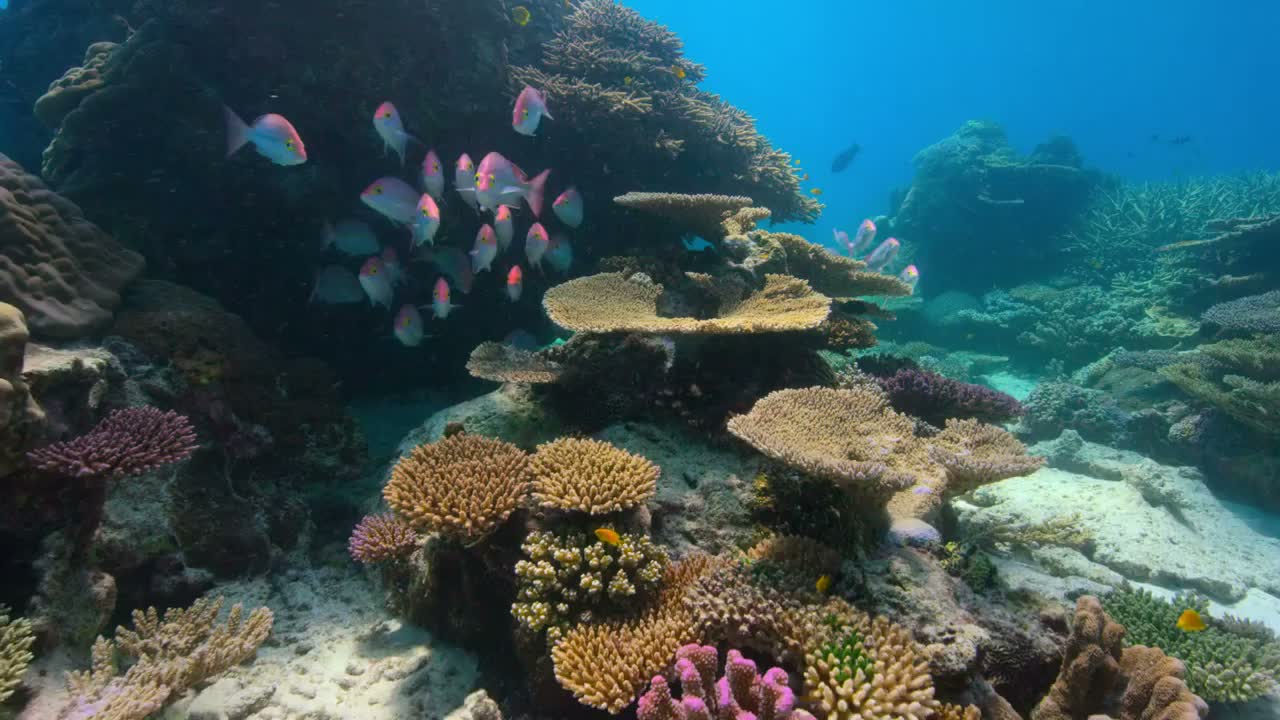
The wonder comes first. A habitat filmed for The Blue Planet appears as "an astonishing vision of a completely unknown world," full of creatures in every color, "completely undisturbed by your presence." For much of its expanse the ocean is empty, and life crowds into hot spots where currents lift nutrients. The trouble is practical, not mysterious: fishing fleets are "just as good at finding those hot spots as are the fish," and once there they gather whole shoals with ease. Large fleets only pushed into international waters in the 1950s, yet "they've removed 90% of the large fish in the sea." Nets that came up full at first were, within a few years, coming in empty, and countries paid subsidies just to keep the industry going. Predators hold nutrients in sunlit water so plankton can use them again and again. Without those predators, nutrients drop "for centuries to the depths," the hot spots shrink, and one line states the end: "The ocean starts to die."
A1–C2 is the CEFR scale. Cards above the level you pick fade, and playback will not auto-pause on them.
“It was... an astonishing vision of a completely unknown world, a world that had existed since the beginning of time.”
Two worlds are laid on each other, and a strange sight turns out to have been there forever.
literary
“And all of them completely undisturbed by your presence.”
The line does not praise the animals for tolerating you. It says your being there never counted.
literary
“The problem is that our fishing fleets are just as good at finding those hot spots as are the fish.”
Matching the fish sounds like respect, until you notice that this skill is how the sea gets emptied.
Formal
“Yet, they've removed 90% of the large fish in the sea.”
A single percentage pulls the splendor down, and Yet makes the figure feel like a verdict.
Formal
“Without large fish and other marine predators, the oceanic nutrient cycle stutters.”
The cycle is given a human stumble, so a chemical loop suddenly sounds like it is missing its step.
literary
“The ocean starts to die.”
After the long build, five words turn death into something just beginning.
literary
This habitat was the subject of the series The Blue Planet, which we were filming in the late '90s. It was... an astonishing vision of a completely unknown world, a world that had existed since the beginning of time. All sorts of things that you had no idea had ever existed, all in a multitude of colors, all unbelievably beautiful. And all of them completely undisturbed by your presence. For much of its expanse, the ocean is largely empty. But in certain places, there are hot spots where currents bring nutrients to the surface and trigger an explosion of life. In such places, huge shoals of fish gather. The problem is that our fishing fleets are just as good at finding those hot spots as are the fish. When they do, they're able to gather the concentrated shoals with ease. It was only in the '50s that large fleets first ventured out into international waters... to reap the open ocean harvest across the globe. Yet, they've removed 90% of the large fish in the sea. At first, they caught plenty of fish in their nets. But within only a few years, the nets across the globe were coming in empty. The fishing quickly became so poor that countries began to subsidize the fleets to maintain the industry. Without large fish and other marine predators, the oceanic nutrient cycle stutters. The predators help to keep nutrients in the ocean's sunlit waters, recycling them so that they can be used again and again by plankton. Without predators, nutrients are lost for centuries to the depths and the hot spots start to diminish. The ocean starts to die.
David Attenborough: A Life on Our Planet: your progress
Chapter 8 of 10 · about 5 min to go
← Previous
Up next · 09stumbled onThe scene: Coral Reefs Turn WhiteThe fleets found the hot spots and removed 90% of the large fish. At first the nets caught plenty, but within a few years they came in empty, and fishing became so poor that countries subsidized the fleets.
Places where currents bring nutrients to the surface and trigger an explosion of life, so huge shoals of fish gather. Most of the ocean is otherwise largely empty.
Large fish and other predators keep nutrients in the sunlit waters and recycle them for plankton. Without them, nutrients are lost for centuries to the depths, the hot spots diminish, and the ocean starts to die.
They are just as good at finding the hot spots as the fish are. Once they locate those crowded places, they gather the concentrated shoals with ease. Large fleets first went into international waters in the 1950s to reap that harvest.