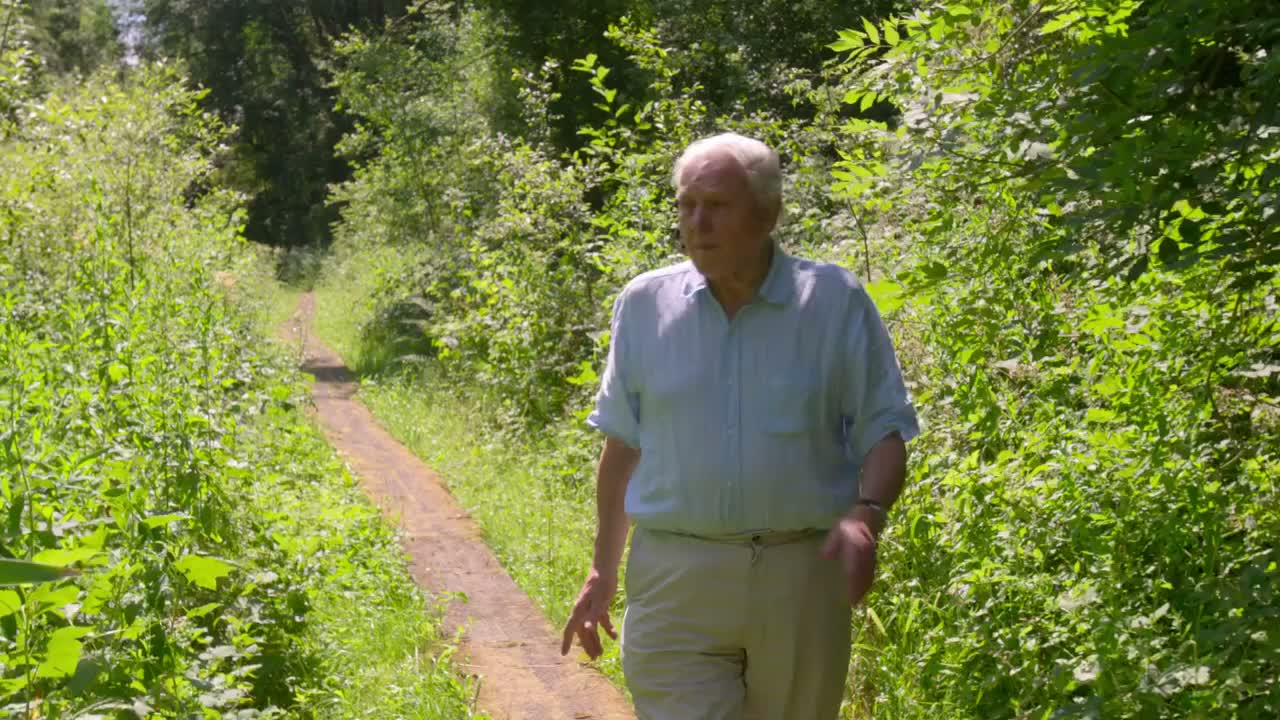
“But on the 26th of April, 1986, it suddenly became uninhabitable.”
A fixed date and one hard adjective turn a lived-in city into a place people had to leave.
Formal
Chapter 1 of 10 · 3'26"
A city of nearly 50,000 stands empty. On the surface this is Chernobyl: the station exploded, and in less than 48 hours everyone was gone. Underneath, those streets stand for a slower disaster. "The true tragedy of our time is still unfolding across the globe, barely noticeable from day to day."
An Empty City After the Blast
❝ Monologue · 7 lines We Can Yet Put It Right
❝ Monologue · 6 lines The witness turn
He states the fading, swears he saw it, and still leaves room to repair it.
Someone describes an empty city in Ukraine that was once home to almost 50,000 people. On 26 April 1986 the nearby Chernobyl station exploded. In less than 48 hours the city was evacuated, and no one has lived there since. The account then sets that one explosion beside a slower loss: the planet's wild places and its biodiversity, which human life is now sending into a decline.
A city once home to almost 50,000 people became uninhabitable on 26 April 1986, was emptied in less than 48 hours, and "No one has lived here since." The cause is given as bad planning and human error. Chernobyl is then called a single event, not the main point. "The true tragedy of our time is still unfolding across the globe, barely noticeable from day to day." That tragedy is the loss of wild places and biodiversity. The living world is described as lives that interlock and sustain each other, a "finely tuned life-support machine" that "relies on its biodiversity to run smoothly." The way humans live now is "sending biodiversity into a decline," and the same causes "will lead to what we see here," "A place in which we cannot live." The empty city is the picture already in view. The close is personal: it happened "in my lifetime," seen "with my own eyes," yet "we can yet put it right."
A1–C2 is the CEFR scale. Cards above the level you pick fade, and playback will not auto-pause on them.
“But on the 26th of April, 1986, it suddenly became uninhabitable.”
A fixed date and one hard adjective turn a lived-in city into a place people had to leave.
Formal
“No one has lived here since.”
Five quiet words leave the streets empty up to this moment, with nobody coming back.
Neutral
“The true tragedy of our time is still unfolding across the globe, barely noticeable from day to day.”
It sets a famous disaster aside and makes the bigger loss dangerous because it is so hard to see.
literary
“We rely entirely on this finely tuned life-support machine.”
The machine image makes dependence absolute: if the tuning fails, people fail with it.
Formal
“I've seen it with my own eyes.”
He stops speaking in general and puts his own sight on the line as the proof.
Neutral
The living world is a unique and spectacular marvel. Billions of individuals, and millions of kinds of plants and animals... ...dazzling in their variety and richness. Working together to benefit from the energy of the sun and the minerals of the earth. Leading lives that interlock in such a way that they sustain each other. We rely entirely on this finely tuned life-support machine. And it relies on its biodiversity to run smoothly.
The natural world is fading. The evidence is all around. It's happened in my lifetime. I've seen it with my own eyes. This film is my witness statement and my vision for the future, the story of how we came to make this our greatest mistake, and how, if we act now, we can yet put it right.
David Attenborough: A Life on Our Planet: your progress
Chapter 1 of 10 · about 26 min to go
Up next · 02achingly intricateThe scene: Attenborough at the Disused QuarryOn 26 April 1986 the nearby nuclear power station of Chernobyl exploded. The city, once home to almost 50,000 people, "suddenly became uninhabitable," and in less than 48 hours it was evacuated. "No one has lived here since." The explosion is called a result of bad planning and human error.
The line "But Chernobyl was a single event" sets the explosion apart from "the true tragedy of our time," which "is still unfolding across the globe, barely noticeable from day to day." The following line names that tragedy: the loss of the planet's wild places and its biodiversity.
The living world. The account describes billions of individuals and millions of kinds of plants and animals, dazzling in their variety, whose lives interlock and sustain each other. "We rely entirely on this finely tuned life-support machine," and it relies on its biodiversity to run smoothly.
It is "what we see here": the emptied city. Biodiversity is being sent into a decline by the way humans live, and that decline, also blamed on bad planning and human error, "will lead to" a place where people cannot live.
No. It calls the loss "our greatest mistake," then says that if we act now, "we can yet put it right." It does not say the mistake has already been undone.