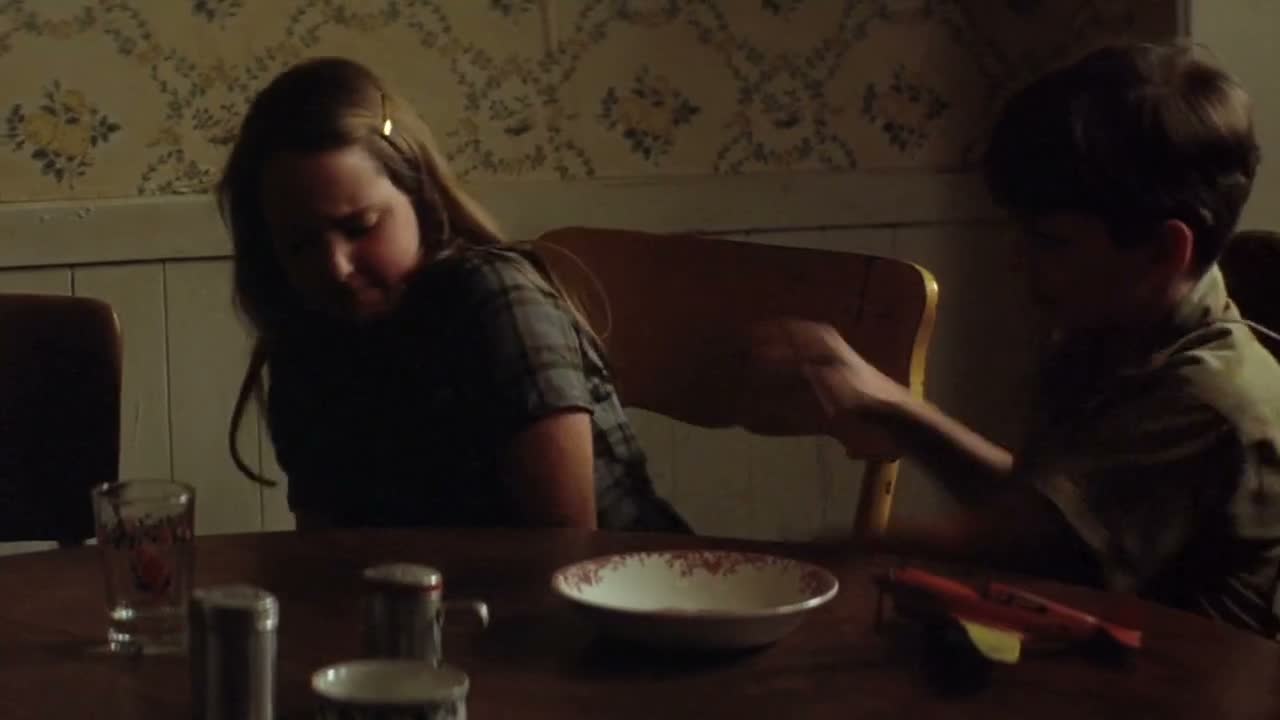
“I wouldn't come between Gertie and her kids, She won't like it much.”
A warning wrapped in first-person restraint: the speaker says what she herself would avoid.
Informal
Chapter 10 of 16 · 3'53"
The boys invite Sylvia out, and Gertrude lets the evening pass before turning on her: "Apparently, you've been telling more lies about my daughter." A going-out scene becomes a lesson in who owns the house — and who gets to decide what Sylvia is.
Staying Out of Gertrude's Family Business
Gertrude Demands to Know Who's In Charge
❝ Monologue · 5 lines A mother turns one child on another
It slides from hurt to instruction to a forced answer, tightening its grip with each line.
Sylvia spends the afternoon with the neighborhood boys, then comes home to Gertrude, who has been waiting. Gertrude accuses her of spreading lies about her daughter and flirting with Andy. When Sylvia denies it, Gertrude asks, "Who's in charge here?" — and makes her own children answer. She then turns to Jennie and asks if she wants to be like her sister.
Gertrude doesn't punish Sylvia for going out — she uses it. The boys' attention gives her something to attack, and the accusations arrive stacked: lies, then Andy, then the verdict that "no matter what you want, you just... you just take it." "Who's in charge here?" is the tell. She isn't asking a question; she's staging one, with her own kids answering "You are, mama" so the whole room performs her authority. From there the pressure moves down the line to Jennie: "do you wanna be like your sister?" The real subject is never the rumor. It's control — who sets the rules in this house, and whether Sylvia agrees to them.
A1–C2 is the CEFR scale. Cards above the level you pick fade, and playback will not auto-pause on them.
“I wouldn't come between Gertie and her kids, She won't like it much.”
A warning wrapped in first-person restraint: the speaker says what she herself would avoid.
Informal
“No matter what you want, you just... you just take it.”
The repeated you just stalls into an accusation; the pause itself does the damage.
Informal
“do you wanna be like your sister?”
A plain question used as a threat, forcing a child to pick a side at home.
Informal
“Apparently, you've been telling more lies about my daughter.”
A cold accusation delivered as if it were old news.
Informal
Well' if you won't listen to me... maybe I can get you to listen to your sister. Keep her from making those mistakes. Jennie... do you wanna be like your sister?
Up next · 11learns her lessonThe scene: Gertrude Says Sylvia Went to JuvenileShe says Sylvia has been telling lies about her daughter and flirting with Andy. She also brings up the California boys, using Paula's account as proof.
She's forcing them to confirm she runs the house. Her kids answer "You are, mama," so her authority gets stated out loud in front of Sylvia.
No. She accepts Paula's claim without checking it, treats a conversation with Andy as flirting, and brushes aside Sylvia's denials.
She's using Sylvia as a warning. By making Jennie say no, she turns Sylvia into a bad example and pulls the younger sister onto her side.