
“Sylvia... had to go to juvenile.”
Why it's great
A calm sentence turns a locked basement into an official errand, and that calm is the horror.
Register
Informal
Use it yourself
He had to go to the clinic for a check-up.
Chapter 11 of 16 · 2'32"
Gertrude has told the family a lie: Sylvia "had to go to juvenile." In truth she is locked in the basement, and the household is told she must stay until she "learns her lesson." The talk about working together and getting along better is the cover for it.
❝ Monologue · 6 lines Gertrude's Talk About Family Teamwork
❝ Monologue · 5 lines Gertrude Covers Up with the Juvenile Story
At the Baniszewski house, Gertrude says she called the children's parents: they have taken a Florida tour and cannot collect the girls until late November. She tells everyone they must work together as a family. Meanwhile Sylvia is held in the basement, and Gertrude instructs the household to say that she was sent to juvenile.
The scene is a masterclass in covering tracks. Gertrude doesn't just punish Sylvia; she gives the family a sentence to repeat — "Sylvia... had to go to juvenile" — so that the punishment looks like something the state did, not something she chose. Earlier she frames the whole arrangement as family teamwork: "We all have to learn to get along better." That phrase sounds warm, but it really means everyone should accept her version of things. Paula's question, "How long is Sylvia, down in the basement?", is the one moment the truth almost surfaces, and Gertrude shuts it down: "Until she learns her lesson." The language is domestic and calm, which is exactly what makes the arrangement so chilling. The lie is the point.
A1–C2 is the CEFR scale. Cards above the level you pick fade, and playback will not auto-pause on them.
“Sylvia... had to go to juvenile.”
A calm sentence turns a locked basement into an official errand, and that calm is the horror.
Informal
“We all have to learn to get along better.”
Preaching harmony in a house built on cruelty is exactly what makes the line land.
Neutral
“She needs to be punished, Paula.”
Framing abuse as a household rule makes punishment sound reasonable and routine.
Neutral
“How long is Sylvia, down in the basement?”
A casual question about a captive that reveals total indifference.
Informal
Well, they picked up the Florida Labor Day circuit... so, they wont be here for you, until the end of November, now. Their checks are coming in regular, though. My ironing slowed down... quite a bit. So, we all have to work together, as a family.
She needs to be punished, Paula. Yes, Mama. Now, if anybody asks... Sylvia... had to go to juvenile. You got that, Jennie?
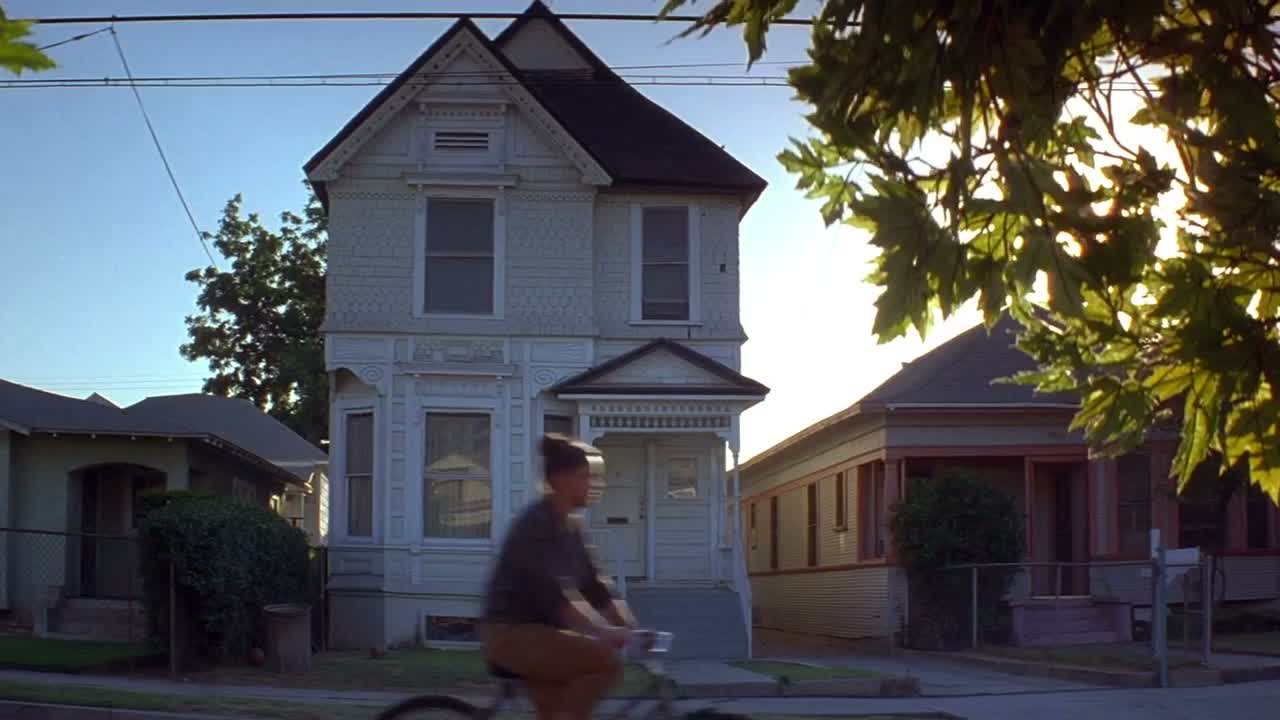 Up next · 12tie someone upThe scene: The Children Testify Against Gertrude
To hide what is really happening. Sylvia is locked in the basement, so Gertrude invents an official-sounding reason for her absence and tells everyone to repeat it if anyone asks.
Paula's question, "How long is Sylvia, down in the basement?", shows she knows the truth. The invented story is less about belief than about giving the household one shared lie to tell outsiders.
It makes her demands sound like ordinary family cooperation. By framing money troubles as a shared problem, she can push the children to take on more work and accept her control.
She says the family has to pull together because the parents' checks and her ironing income have shrunk. In practice she is shifting the household's burden onto her children.
It means juvenile detention, a facility for underage offenders. Gertrude uses the word to make Sylvia's disappearance sound official and legal.