
“Wow! You should do this for a living.”
Why it's great
It ties praise to real skill by naming a career, which makes the compliment land.
Register
Informal
Use it yourself
You should cook for a living, honestly.
Chapter 2 of 16 · 3'04"
On the surface it is a lazy afternoon: girls braid hair, trade gossip, and tease Sylvia for being sheltered. Underneath, Paula is quietly advertising a life the others only glimpse. She shows off Bradley, then admits, "Because he's married," and the talk turns into pressure on Sylvia about boyfriends.
❝ Monologue · 4 lines You Should Do This for a Living
Over an afternoon at the Doyles, Paula and the neighborhood girls listen to music and do each other's hair while Sylvia is drawn into their world. Paula talks about her divorced parents and her mother's money, brags about her cute boyfriend Bradley, and then admits he is married. The girls tease Sylvia about whether she has ever had a boyfriend.
The scene looks like ordinary hanging out, but Paula keeps steering it toward what she has that the others don't: money and a man. She talks about her father's support payments, then about Bradley — 'That's my Bradley' — before dropping the key line, 'Because he's married.' That confession is less a secret than a boast, and it sets the tone for how she treats Sylvia. When Paula asks, 'Don't tell me you never had a boyfriend,' she is probing for a weakness, and the follow-up is openly cruel: 'Well, aren't you just so damn pure.' Sylvia's quiet answer about a boy in California only gives the group more to push against.
A1–C2 is the CEFR scale. Cards above the level you pick fade, and playback will not auto-pause on them.
“Wow! You should do this for a living.”
It ties praise to real skill by naming a career, which makes the compliment land.
Informal
“and I wouldn't have to work so hard.”
A conditional about money quietly exposes how much weight the girl already carries.
Informal
“Don't tell me you never had a boyfriend.”
Mock disbelief works better than a direct question when you want someone to open up.
Informal
“Well, aren't you just so damn pure.”
A backhanded compliment that mocks someone's innocence.
Informal
Maybe, if he's more regular with his support... Mom wouldn't be so sick... and I wouldn't have to work so hard. Little Kenny's got a different daddy.
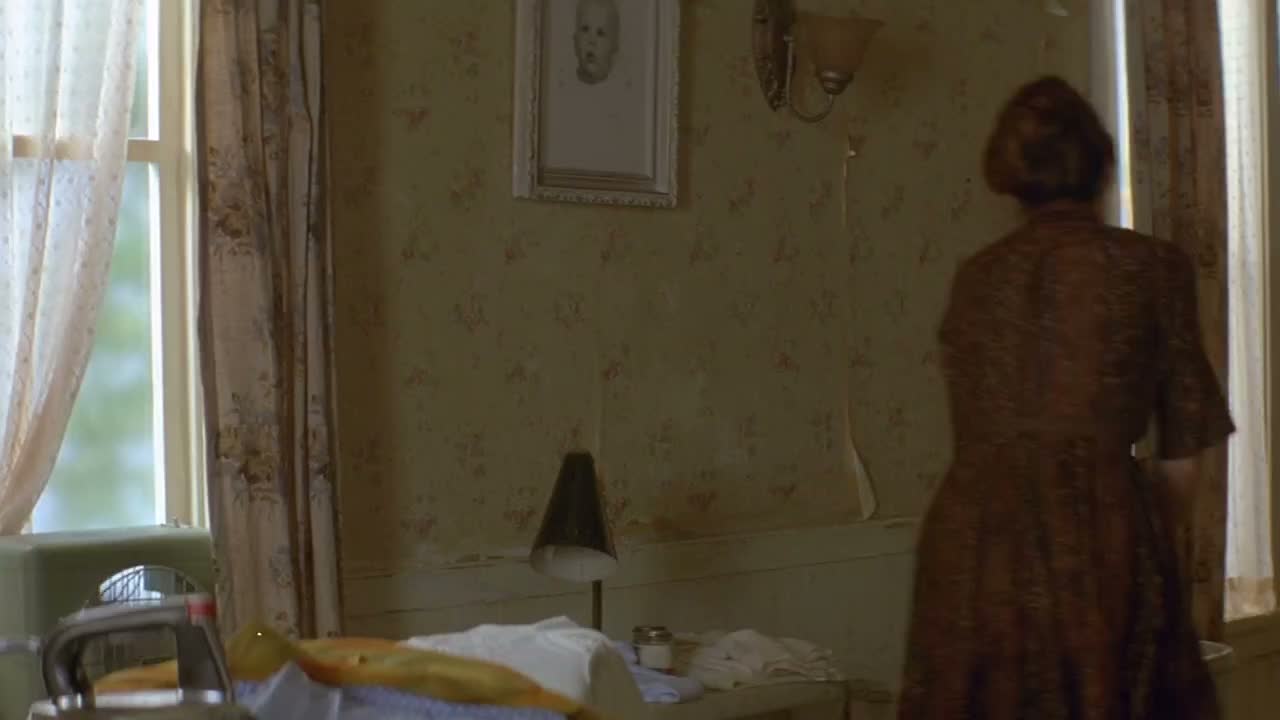 Up next · 03make a differenceThe scene: Gertrude Takes In the Likens Girls
She treats it as proof of her maturity. She tells Sylvia to be careful about it, but she also brags — naming Bradley and announcing 'Because he's married' — so the danger is part of the appeal.
Sylvia is the new girl and clearly less experienced. Paula asks if she has ever had a boyfriend, then mocks her answer as 'pure,' which turns Sylvia's innocence into something to be laughed at and pressured.
She is doing adult work while her mother is ill and her father's support payments are irregular. Her line about wanting his money, not him, explains why money and a married man carry so much weight for her.
He is the baby in the house, and he has a different father. The children are told not to discuss it, which is why the subject comes up in whispers and gets cut off.