
“Laugh, gentlemen. It'll be the only story everyone reads.”
Why it's great
It flips newsroom despair into a dare: this is the one story nobody can skip.
Register
Informal
Use it yourself
Write it well. It will be the only memo everyone opens.
Chapter 7 of 18 · 3'36"
A donor tells a reporter he is caught in the middle and finally admits he handed a $25,000 check to Stans, Nixon's finance chief. The surface is one nervous man's story; underneath is the first hard link between campaign money and the Watergate burglars. "It goes all the way to Stans," the reporter tells Woodward.
The Donor Names Stans
Bernstein Calls Woodward
A donor meets a Washington Post reporter, admits he raised the money in cash, exchanged it for a cashier's check and gave it to Maurice Stans, Nixon's head of finance. The reporter calls Woodward with the news, and the paper's budget meeting goes on around them, weighing the Bremer diary, Taiwan and McGovern's VP hunt.
The donor is not a villain or a victim, just a man caught between powerful people and a reporter who will not let him off the hook. "I know I shouldn't be telling you this," he says before naming Stans, and that hesitation is the whole scene: he wants to unburden himself without being the one who gets blamed. The reporter's questions stay calm and narrow, offering him room to keep talking. The payoff is immediate. "It goes all the way to Stans," Bernstein tells Woodward, and for the first time the cash that was raised for re-election is connected to the men arrested at the Watergate. Around this call, the newsroom argues about softer stories, which makes the contrast plain: the burglary is still a sidebar, and the two reporters are the only ones pulling on the money thread.
A1–C2 is the CEFR scale. Cards above the level you pick fade, and playback will not auto-pause on them.
“Laugh, gentlemen. It'll be the only story everyone reads.”
It flips newsroom despair into a dare: this is the one story nobody can skip.
Informal
“I just talked to him. I just hung up. It goes all the way to Stans.”
Short clipped sentences race like a heartbeat as the trail suddenly reaches the top.
Informal
“The irony, of course, that's a direct result of Nixon's visit to China.”
The irony names a reversal: the trip aimed at China pushed Japan toward Beijing.
Neutral
“Now, what he did with it, I really do not know.”
He hands off the one crucial link and stops the confession exactly there.
Formal
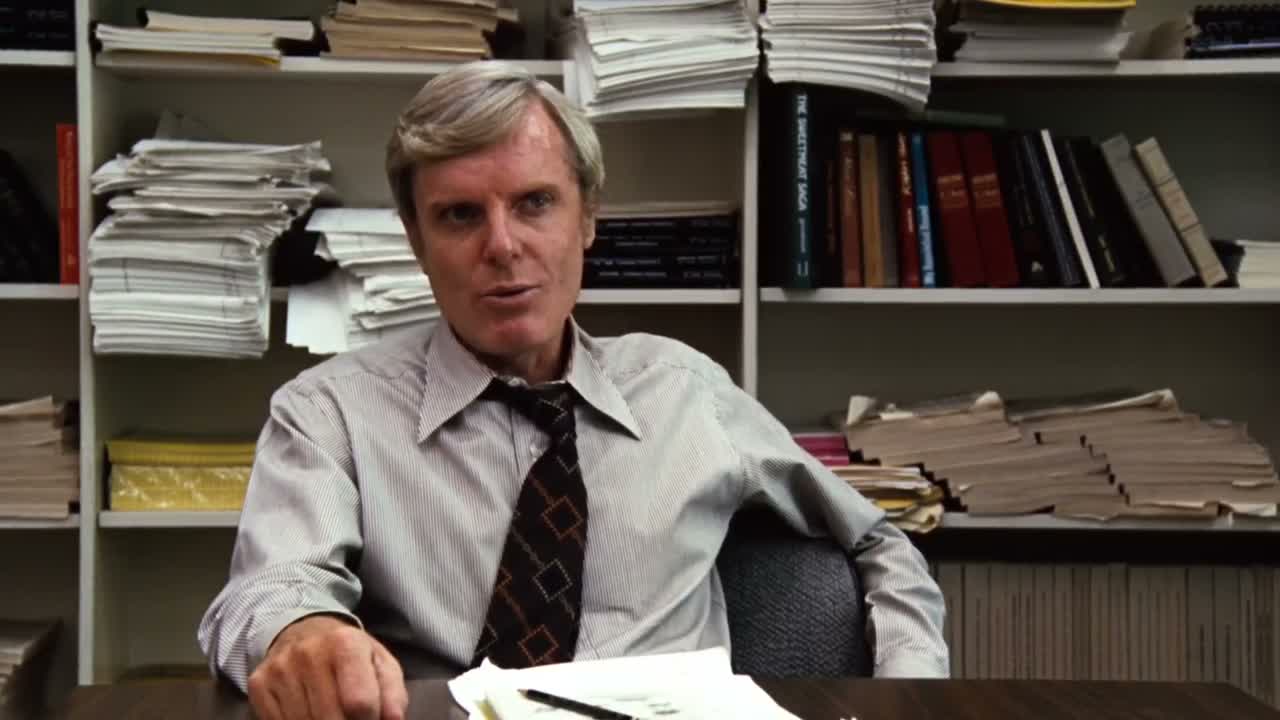 Up next · 08monopoly on wisdomThe scene: Bradlee Doubts the Watergate Story
He is caught in the middle and wants to unburden himself, but he still insists he does not know what Stans did with the check afterward.
It is the first documented line from campaign money to the Watergate burglars' account, which is exactly the trail Deep Throat told Woodward to follow.
Bernstein trusts him because he admits he should not be talking at all, and the details he gives match what the reporters already know.
The editors are ranking softer stories, from Taiwan to the Bremer diary, while the Watergate lead sits largely unnoticed.