00:00 / 03:34
00:00 / 03:34

Police Arrest the Watergate Burglars, Explained

The break-in looks like a routine burglary, but the details don't add up: five men, cash in sequence, and lawyers who show up before anyone calls them. "That's kind of unusual, wouldn't you say?" Woodward is already sensing a bigger story.

CourtroomInvestigationConfrontingSaying noBoss & employeeB2slowamericanClean

Key moments

Start here, then watch the full scene
  1. Bernstein Gets Told to Finish His Story

    1:12–1:33
    21s
  2. The Lawyer Who Says He Isn't There

    2:19–2:58
    38s

Police Arrest the Watergate Burglars, explained

What happens

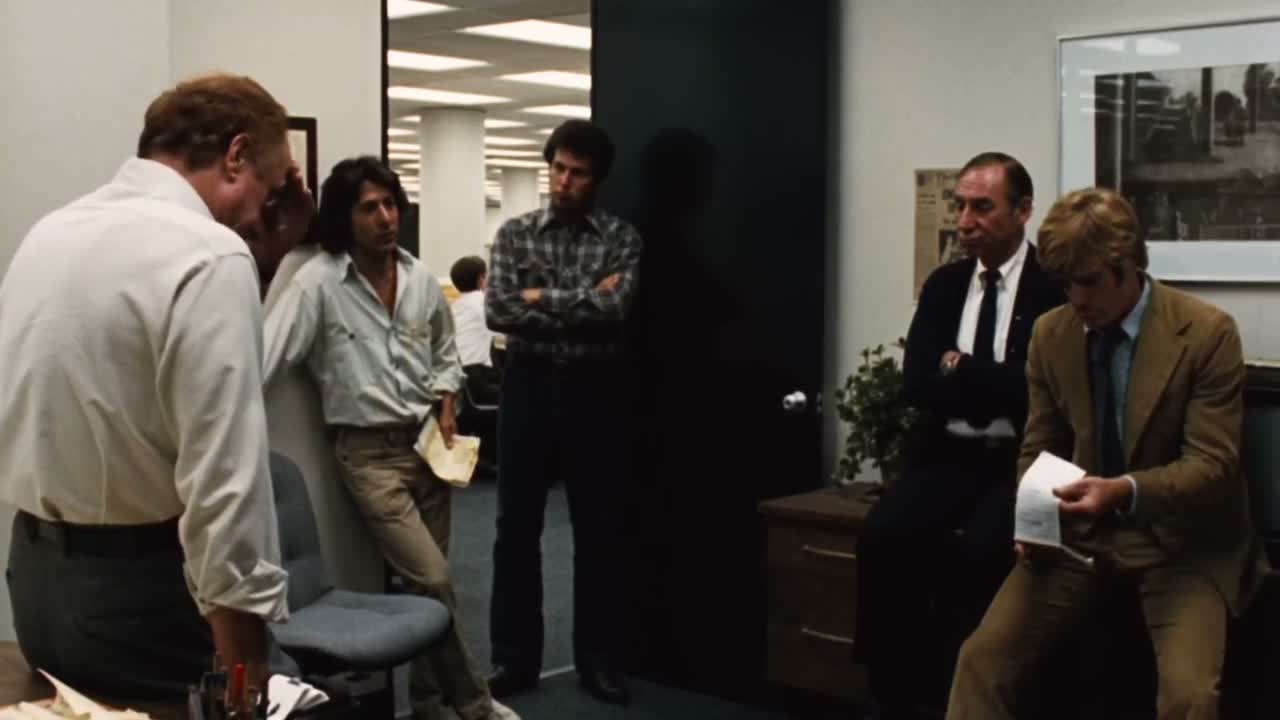
Early morning in Washington: five men break into the Democratic National Headquarters and are arrested. Woodward is sent to cover the arraignment, while Bernstein tries to grab the story for himself. In court, the lawyer Markham dodges questions, insisting he's not really there.

What's really going on

What looks like a small burglary is the first thread of Watergate, and the scene tracks how a reporter notices the wrong details. Five men caught with sequentially numbered hundred-dollar bills; burglars who already have their own counsel, which the desk clerk calls strange. Woodward asks Markham if he's there in connection with the break-in, and gets a dodge: "I'm not here." Then Markham does it again, denying he's the attorney of record while pointing Woodward to Starkey. The real subject is the gap between the official story and the details that don't fit, and the newsroom's appetite for it. Bernstein wants in, but the editor reminds him: "Why don't you finish one story before trying to get on another?" Even the desk treats break-in plus car crash as a good Saturday.

Key lines & what they mean

“Why don't you finish one story before trying to get on another?”
The editor's jab at Bernstein: he keeps chasing a new story—the Watergate break-in—before finishing the one he already has, and gets told to close it out first.
“What I don't understand is how you got here.”
Said to the reporter who has just tracked this person down. It admits the surprise that a reporter found him so fast, right before the other answers there is nothing mysterious about it.
“I have nothing more to say.”
A flat refusal to answer any further questions. It ends a conversation while giving the reporters nothing to quote, and someone has to remind them of it outside.
“Break-in, car crash. That's not bad for a Saturday.”
A newsroom line: two big stories landing on a slow weekend make a good day for a reporter. It captures the appetite that will pull the Post into Watergate.

Theme

  • Secrets — A routine burglary hides a bigger secret: cash in sequence and lawyers arriving before they're called give the first hint of Watergate.
  • Corruption — The break-in at the opposing party's headquarters points to political spying, the crime the whole film will unravel.

What this chapter teaches

Teaching points

Review right after watching
My level3/7

A1–C2 is the CEFR scale. Cards above the level you pick fade, and playback will not auto-pause on them.

All the President's Men: your progress

Chapter 1 of 18 · about 59 min to go

Up next · 02under adjudicationThe scene: Woodward Traces the White House Call

Takeaways

What you walk away with
  1. Politeness in court can hide a hard question.
  2. Markham answers identity, not the case.
  3. A repeated denial can sound rehearsed.
  4. Work the phones means calling everyone for leads.

People also search

Questions, then the lines
Why does the editor stop Bernstein from chasing the Watergate story?

Bernstein hasn't turned in the Virginia Legislature piece yet. The editor tells him to finish that story first, which is why Bernstein insists he's only "polishing it."

Why do the burglars having their own lawyer matter?

It's suspicious. Ordinary burglars get assigned counsel, but these men already have a private one—described as an anonymous "country-club type"—hinting someone with money is behind them.

What is Markham trying to say with "I'm not here"?

He's dodging. Markham doesn't want to be quoted as being involved, so he claims he isn't present, then says he appears only as an individual, not the attorney of record.

Who is actually representing the burglars?

Markham points Woodward to Mr. Starkey. Markham says he's only there as a private individual, so anything Woodward wants has to come from Starkey.

What does "country-club type" mean here?

It's the clerk's guess at the defense lawyer's background—someone wealthy and well connected, not the kind of lawyer poor burglars get. That mismatch is the clue.