
“Well, you put a pretty good face on things...”
Why it's great
The idiom praises his composure and sets up the punch: the face is doing all the work.
Register
Neutral
Use it yourself
He put a good face on things after the failed launch.
Chapter 11 of 16 · 4'39"
Vicki tells Warren he "put a pretty good face on things," then reads him: under the calm he is grieving, angry and lonely. He half-confesses, then makes a pass at her and is thrown out of the house.
❝ Monologue · 6 lines Vicki's observation
It climbs from compliment to verdict, showing how softness can corner a person.
❝ Monologue · 5 lines Warren's confession
One comparison and one number undo forty-two years in a single breath.
Vicki Throws Warren Out
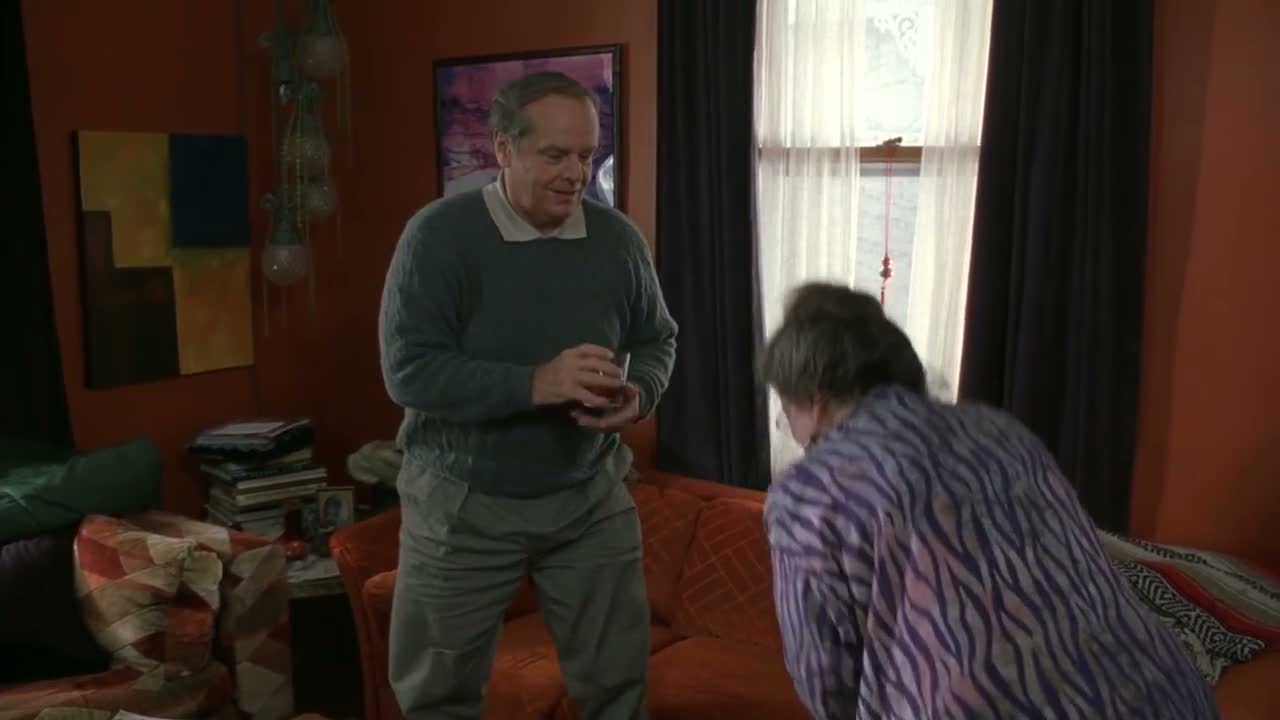
At John and Vicki Rusk's house, Vicki asks Warren if she can make an observation. She says he keeps a good face on things, but that she senses sadness, anger and loneliness underneath. Warren admits he is lonely, says she understands him better than his wife did, then puts a hand on her and is ordered to leave.
Vicki's "observation" is the first time anyone names what Warren cannot say. He has been performing the cheerful widower, and she sees straight through it: "I think inside you're a sad man." When he agrees that he is lonely, her response, "See, there, I knew it," sounds less like sympathy than triumph at being right. It is that framing that makes what follows ugly. Warren hears understanding, then reaches for more; she meant only to read him, not to hold him. His confession that she understands him "better than my wife, Helen, ever did" is the real exposure: he is not in love, just unbearably lonely. It ends with her shouting, not with anyone comforted.
A1–C2 is the CEFR scale. Cards above the level you pick fade, and playback will not auto-pause on them.
“Well, you put a pretty good face on things...”
The idiom praises his composure and sets up the punch: the face is doing all the work.
Neutral
“I see something more than grief and loss in you.”
It names two heavy things, then claims to see a third, which is how insight becomes an intrusion.
Neutral
“Maybe if I'd met someone like you earlier...”
An unfinished conditional leaves the saddest part unsaid, which is why it lands.
Neutral
“God, what is wrong with you?”
The line flips a tender scene into panic, and it is the last thing anyone says before he is thrown out.
Informal
Well, you put a pretty good face on things... ...considering everything you've been through lately. - And I know I've just met you. - Uh-huh. But I have good instincts about people, and the feeling that I get from you... ...is that despite your good attitude and your positive outlook... ...I think inside you're a sad man.
- Can I tell you something? - I'm listening. I've only known you for an hour or so... ...and yet I feel like you understand me... ...better than my wife, Helen, ever did. Even after 42 years of marriage.
 Up next · 12easy on the eyeThe scene: Warren Meets Randall's Family
She says she has good instincts about people and has just met him. His wife died recently, and she notices that he is performing calm rather than actually being calm. It reads as easy intimacy on her part.
Nothing in her lines suggests that. She says she has only known him an hour and asks to make an observation, then keeps reading him out loud. His move comes as a shock, and her answer is immediate refusal.
He says Vicki understands him better than his wife Helen ever did, even after 42 years. It shows how starved he is for attention, and how little he has to measure his marriage against.
No. Being lonely is what makes him vulnerable, but the rejection follows an unwanted pass. Vicki repeatedly tells him to get off her and to leave, and he apologizes as he goes.