
“The truth is it sounds pretty old to me too.”
Why it's great
He admits his age and quietly pulls the reader into the same feeling with one small too.
Register
Neutral
Use it yourself
The truth is twenty years sounds long to me too.
Chapter 3 of 16 · 3'20"
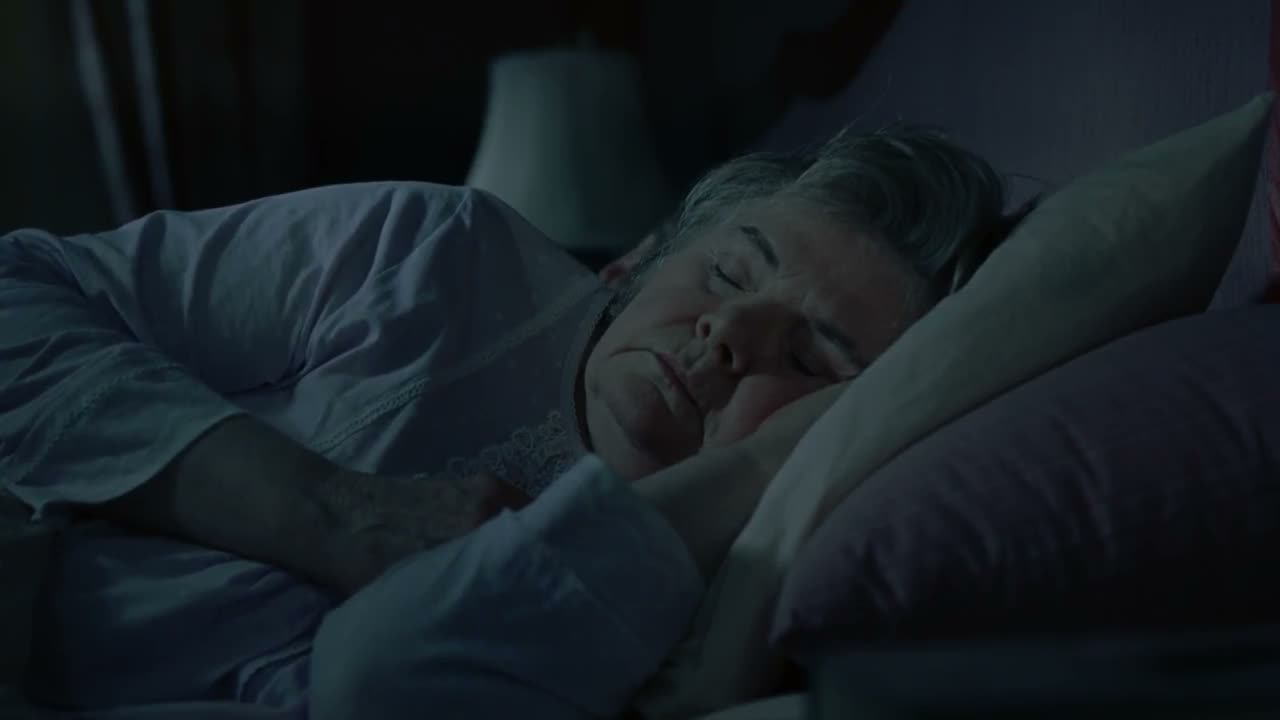
A newly retired man introduces himself to a sponsored child he will never meet. What sounds like a form letter becomes a confession: "I was gonna be one of those guys you read about," he says, then admits the life he planned never happened.
Warren Looks in the Mirror
❝ Monologue · 40 lines The Dream That Never Worked Out
In his Omaha home, Warren Schmidt sits down to record a video letter for Ndugu, the child he sponsors through Childreach. He lists the facts of his life — Omaha, his brother Harry, 66 years old, just retired from Woodmen of the World — then turns on the insurance kid who replaced him and confesses that he once expected to be somebody.
The form is addressed to a child, but the audience is Warren himself. Alone after a lifetime at one company, he uses the letter to say the things nobody in Omaha wants to hear: the retirement party, the cocky replacement, the mirror he no longer recognises. "The truth is it sounds pretty old to me too," he admits, and the politeness of the format lets him go further than he could face-to-face. The turn comes with "I was gonna be one of those guys you read about" — the dream he can still name, followed by the flat verdict that "it just didn't work out that way." He is not asking Ndugu for anything; he is discovering, sentence by sentence, that he has become ordinary.
A1–C2 is the CEFR scale. Cards above the level you pick fade, and playback will not auto-pause on them.
“The truth is it sounds pretty old to me too.”
He admits his age and quietly pulls the reader into the same feeling with one small too.
Neutral
“But somehow, it just didn't work out that way.”
By blaming no one and saying somehow, he lets a whole unlived life sit inside one flat line.
Neutral
“Don't they give me all the pride and satisfaction I could ever want?”
The question is meant to console him, but the need to ask it at all is what gives him away.
Formal
“I was gonna be one of those guys you read about.”
A plain sentence that quietly measures a whole life against the success he never reached.
Informal
My name is Warren R. Schmidt and I am your new foster father. Say personal information. All right, ahem. I live in Omaha, Nebraska. My older brother, Harry, lives in Roanoke, Virginia with his wife, Estelle. Harry lost a leg two years ago to diabetes. I am 66 years old... ...and recently retired as assistant vice president and actuary... ...at Woodmen of the World Insurance Company. And goddamn it if they didn't replace me with some kid who... All right, so maybe he's got a little theory under his belt... ...and can plug a few numbers into a computer... ...but I could tell right off that he doesn't know a damn thing... ...about genuine real-world risk assessment. Or managing a department, for that matter. Little cocky bastard. Anyway, 66 must sound pretty old to a young fellow like yourself. The truth is it sounds pretty old to me too. Because when I look in the mirror and see the wrinkles around my eyes... ...and the sagging skin on my neck and the hair in my ears... ...and the veins on my ankles, I can't believe it's really me. When I was a kid, I used to think that maybe I was special... ...that somehow destiny had tapped me to be a great man. Not like Henry Ford or Walt Disney or somebody like that... ...but somebody, you know, semi-important. I got a degree in business and statistics... ...and was planning to start my own business someday. Build it up into a big corporation. Watch it go public, you know? Maybe make the Fortune 500. I was gonna be one of those guys you read about. But somehow, it just didn't work out that way. You've gotta remember, I had a top-notch job at Woodmen... ...and a family to support. I couldn't exactly put their security at risk. Helen, that's my wife. She wouldn't have allowed it. But what about my family, you might ask. What about my wife and daughter? Don't they give me all the pride and satisfaction I could ever want? Helen and I have been married 42 years.
 Up next · 04up to snuffThe scene: Warren Complains About His Wife
He is newly retired and has no one to really talk to. The Childreach sponsorship gives him a stranger he can address without being interrupted or judged.
Because the young successor is everything Warren once wanted to be — and Warren reads his confidence as proof he skipped the real-world judgment Warren spent decades earning.
He half-blames her — "She wouldn't have allowed it" — then catches himself and insists his family gave him all the pride and satisfaction he could want.
No. Ndugu is a sponsored child overseas Warren has never met; the letters are really a diary for a man with no one else to confide in.
It's the line where the polite self-introduction turns honest: Warren admits he expected to be exceptional, and is still measuring himself against a life he never lived.