
“There are just as many notes as I required,neither more nor less.”
Por qué es buena
The neither-nor ending is polite and absolutely firm.
Registro
Formal
Úsala tú
Not a word more or less; the draft stays.
Capítulo 7 de 25 · 4'41"
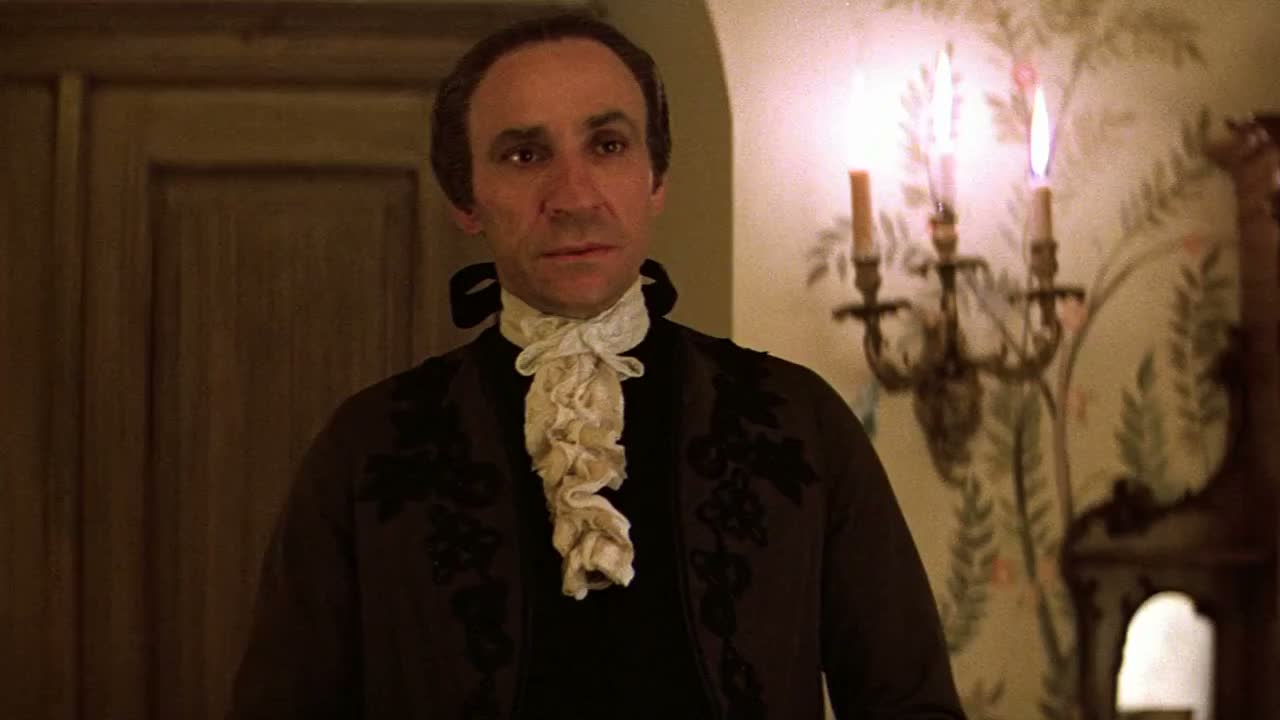
The Emperor congratulates Mozart with faint praise: "A good effort." When pressed, he lands on the verdict that has followed the opera ever since - "Too many notes" - and Salieri politely agrees. Mozart fires back, "Which few did you have in mind?" Then the talk shifts from music to marriage.
The Emperor's Faint Praise
Too Many Notes
After a performance of his opera, Mozart waits for the Emperor's verdict. Joseph offers polite praise first - "A good effort" - then admits the music seems a touch crowded, and finally delivers the famous judgment: "Too many notes." Mozart protests and asks which notes should go. The scene then turns domestic as the Weber family arrives and the Emperor urges Mozart to marry Constanze and stay in Vienna.
The Emperor's praise is a trap of manners. "A good effort" sounds kind, but it grades Mozart like a student, and the room can hear the criticism coming. When the verdict arrives - "Too many notes" - it is not a musical judgment at all: it is a court deciding how much art it is willing to sit through. Salieri's answer, "On the whole, yes, Majesty," is the quiet center of the scene; he agrees with the Emperor while the audience knows what he thinks of Mozart. Mozart makes it worse for himself with "Which few did you have in mind?", a question no courtier would ask. The comedy and the cruelty are the same gesture: taste used as a weapon, and a genius who will not pretend otherwise.
A1–C2 es la escala MCER. Las tarjetas por encima del nivel elegido se atenúan y la reproducción no se pausa en ellas.
“There are just as many notes as I required,neither more nor less.”
The neither-nor ending is polite and absolutely firm.
Formal
“And there are simply too many notes. Just cut a few and it'll be perfect.”
An amateur verdict delivered as friendly advice, which is what makes it funny.
Neutral
“Young man,don't take it too hard. Your work is ingenious.”
Soothing and cutting in one breath, the perfect tone of a man in charge.
Neutral
“Well,of course I did! It's very good!”
Of course makes the agreement emphatic, which makes the later carping funnier.
Informal
“An excellent effort! You have shown us something...”
The praise trails off, hinting at the criticism everyone can feel coming.
Formal
 Siguiente · 08the fault is mineLa escena: Salieri Learns Mozart Had Katerina
He is not really counting. It is a court judgment about how demanding the music is, expressed as if it were a simple excess that could be trimmed for comfort.
The line is remembered as the court's failure, not Mozart's. The opera has lasted, and the remark survives as shorthand for people unable to hear what they are judging.
He is court composer and is asked directly what an audience can take. Agreeing costs him nothing publicly and keeps him in favor while Mozart argues.
He knows the criticism is meaningless, so he turns it back on the Emperor as a literal question. It is a pointed joke that no one at court can answer.
He seems to like Constanze and wants Mozart settled in Vienna. His advice is also a way of keeping a useful young composer where the court can employ him.