
“It has been banned by the emperor.”
Por qué es buena
The passive with has been states the ban as an accomplished fact.
Registro
Formal
Úsala tú
The film has been banned in several countries.
Capítulo 16 de 25 · 4'07"
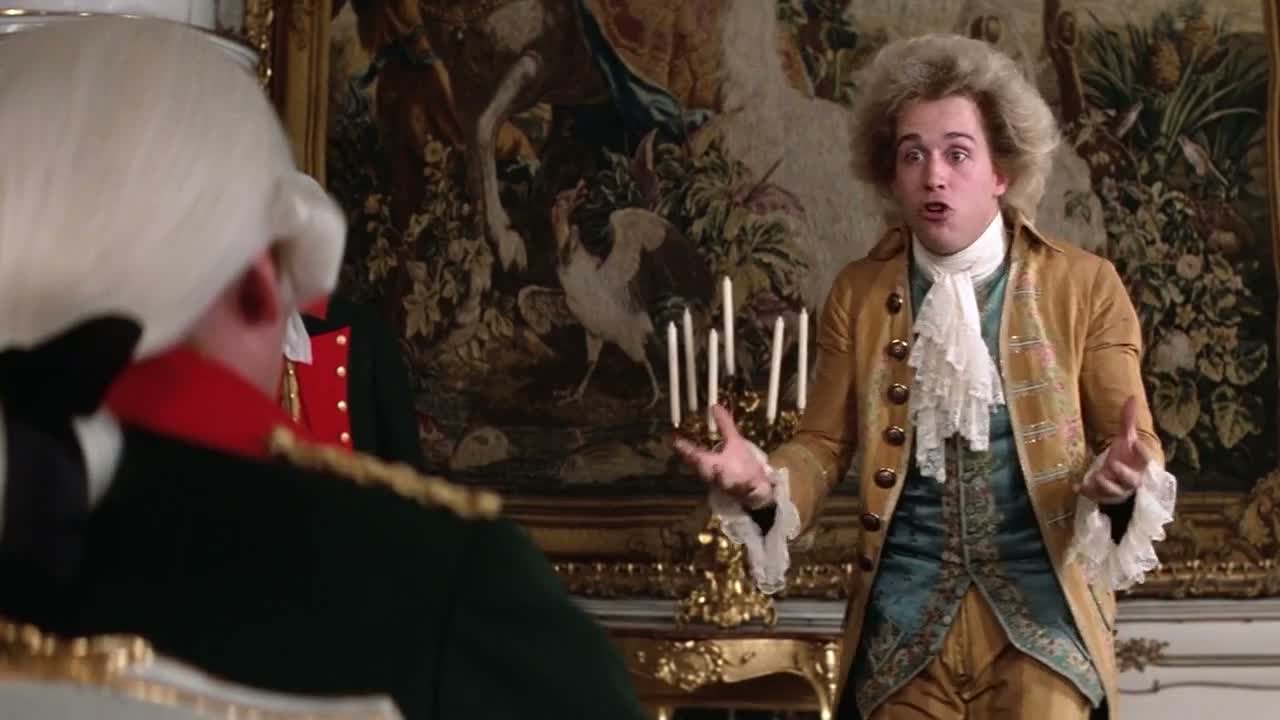
Court gossip reaches the Emperor: Mozart is setting the banned French play Figaro as an opera. Summoned, Mozart is told, "It is not your place to ask questions," and hears the Emperor's case against the play. Mozart answers that he has removed everything that could give offense, calls it a frolic, and promises the audience will go mad for it.
❝ Monólogo · 10 frases The emperor on Figaro
From tolerance to his sister's fear, he turns a ban into statecraft.
Mozart Pitches the Finale
Word reaches the Emperor that Mozart is adapting Figaro, the French play he has banned, into an opera. The Emperor summons him and makes the case for censorship: the play stirs up hatred between classes and could provoke the people. Mozart insists he has cut anything that might give offense, calls the piece a frolic, and describes the finale that builds from a duet into a septet and octet.
Figaro is banned, and that is precisely why it is worth talking about. The courtiers bring the news as gossip, knowing the Emperor will react; the Emperor treats the subject as a matter of order, not taste: "It stirs up hatred between classes." Mozart's defense is careful and revealing - he says he has removed everything that could give offense and insists, "I hate politics." He wants the work judged as music, while the court judges it as a weapon. The finale he describes, a duet swelling into a septet and octet, is his real argument: not politics but craft, voices piling up until the effect is impossible to ignore. He ends by betting on the audience - the people will go mad for it - which is exactly the kind of popularity the Emperor fears.
A1–C2 es la escala MCER. Las tarjetas por encima del nivel elegido se atenúan y la reproducción no se pausa en ellas.
“It has been banned by the emperor.”
The passive with has been states the ban as an accomplished fact.
Formal
“I do not censor things lightly. When I do,I have good reason.”
The emphatic do and the calm follow-up make censorship sound reasonable.
Formal
“I've taken out everything that could give offense. I hate politics.”
He clears himself first, then waves the politics away.
Formal
“Majesty,this is just a frolic. A piece about love.”
Calling it a frolic shrinks the whole scandal down to a romp.
Informal
“It's entirely new. The people will go mad for it.”
Go mad for exaggerates the coming popularity with confidence.
Informal
...I am a tolerant man. I do not censor things lightly. When I do,I have good reason. "Figaro" is a bad play. It stirs up hatred between classes. In France,it has caused only bitterness. My sister Antoinette is beginning to be frightened of her own people. I swear,there's nothing like that in the piece. I've taken out everything that could give offense. I hate politics. I'm afraid you're rather innocent. In these dangerous times I cannot afford to provoke our people...
 Siguiente · 17fed to the teethLa escena: Mozart Argues Opera With the Court
He says it stirs up hatred between classes and caused bitterness in France. With his sister Antoinette frightened of her own people, he cannot risk a play about servants outwitting their masters.
He has adapted the banned play instead of avoiding it. To the court it looks like defiance, so the Emperor questions him directly about whether the rumor is true.
He says he has removed everything that could give offense and calls it a frolic about love. He also argues that only opera could build the finale he describes, shifting the topic from politics to craft.
An act-ending number that begins as a duet, then grows into a trio, quartet, quintet and beyond. He claims it runs twenty minutes, an effect he says only opera can achieve.
Because popularity means the people are listening. He already fears unrest, and a piece the whole city loves is harder to control than one that is merely banned.