“I never faint in case I don't fall gracefully, and I never use smelling salts because they puff up the eyes.”
She refuses to faint for fear of falling badly, turning every tearful cliché on its head.
Informal
Chapter 8 of 27 · 3'07"
Christine Vole arrives expecting to be treated as a fragile, hysterical foreign wife, and quietly refuses the part. Told her husband has been charged with murder, she answers, "Call it what you like. What is the next step?" — no tears, no faint, just a demand for facts. Wilfrid, meanwhile, tells her he is too ill to defend Leonard.
Wilfrid Won't Cope With Tears
Christine Vole Refuses to Faint
❝ Monologue · 5 lines the nurse's bedtime routine
A run of small domestic orders shows how much the nurse controls the old lawyer's day.
At Sir Wilfrid's chambers, the lawyers prepare to break the news to Leonard Vole's wife. Mayhew warns that she is a foreigner, so they should expect hysterics and have smelling salts ready. Christine Vole then walks in, cool and composed, and says she never faints. She is told Leonard has been arrested and charged with murder; her response is to ask what the next step is.
The scene upends the courtroom's expectations about women. Everyone has been told to handle the "foreign wife" gently and to brace for tears, yet Christine treats the arrest as a problem to be solved, not a tragedy to be felt. "Call it what you like. What is the next step?" she says, brushing past Wilfrid's compliment about her fortitude. Her line about never fainting — "in case I don't fall gracefully" — is both a joke and a warning: she will not perform the helplessness people expect. When Wilfrid refuses the case on health grounds, she does not plead; she lands a sharper blow, asking whether the real reason is that the cause is too hopeless to win. Even the nurse's complaints about foreign wives echo the prejudice Christine is quietly outplaying.
A1–C2 is the CEFR scale. Cards above the level you pick fade, and playback will not auto-pause on them.
“I never faint in case I don't fall gracefully, and I never use smelling salts because they puff up the eyes.”
She refuses to faint for fear of falling badly, turning every tearful cliché on its head.
Informal
“Call it what you like. What is the next step?”
She waves off the label and asks for the next step, showing where her mind really is.
Neutral
“Thank you, no. I'm in no condition to cope with emotional wives drenched in tears.”
A polite refusal sharpened by drenched in tears, which paints the scene in three words.
Informal
“Miss Plimsoll, how alluring you look, waiting like a hangman on the scaffold.”
A mock compliment pairs flattery with a gallows image for instant comic contrast.
Informal
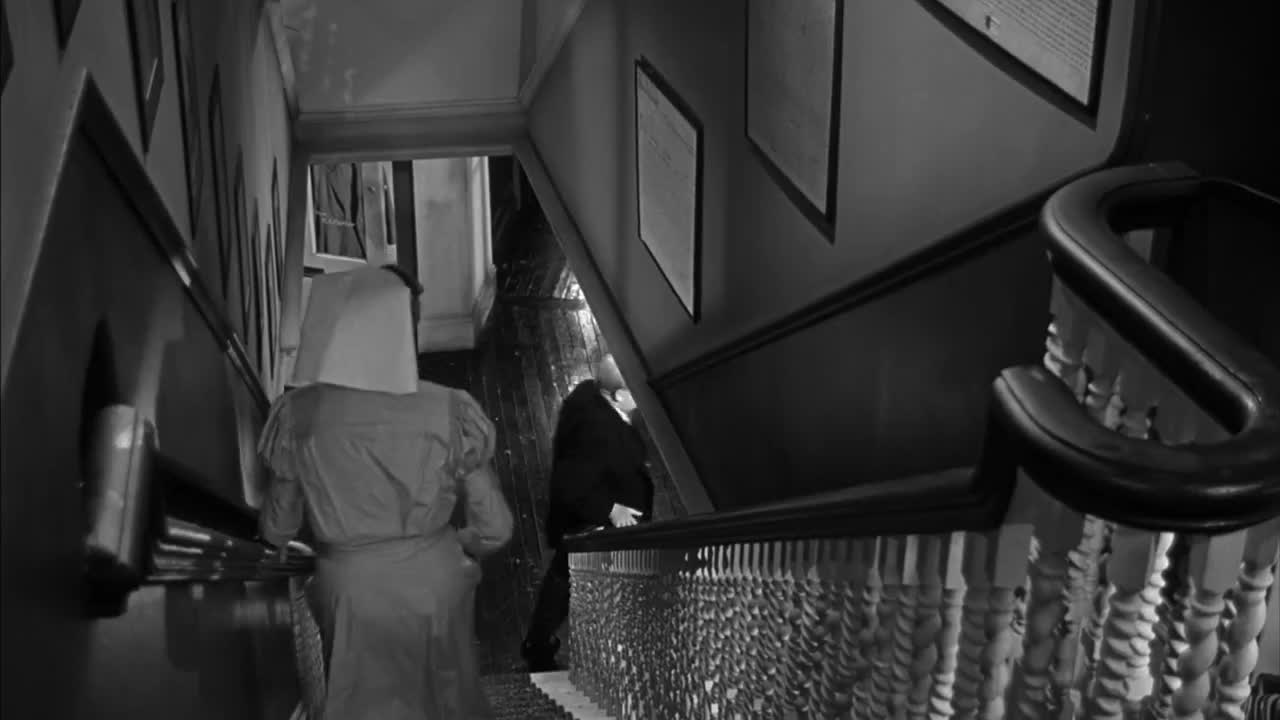
Come now, Sir Wilfrid, you must not think of it. You must get ready for sleep, think beautiful thoughts. Now, let's get undressed. Put these on, tops and bottoms, while I make your bed. After your rest we'll have a nice cup of cocoa. Then perhaps we'll have a walk around the square.
Up next · 09a way with womenThe scene: Christine and the Green SocksShe refuses to act the part of the fragile foreign wife the lawyers expect. Instead she treats the news as a problem to work through and immediately asks what the next step is.
He says his health forbids it; he has just left hospital and Miss Plimsoll is enforcing a rest cure. Christine suggests the real reason may be that the case looks hopeless.
It means "whatever you want to call it" — a cool way to refuse an argument about labels. Christine uses it to brush aside Wilfrid's praise of her fortitude.
She dislikes her for being foreign, assuming she must be German and blaming foreign wives for a string of problems — a piece of everyday prejudice the film quietly exposes.
The famous defence barrister, convalescing at home under his nurse. He is known as a champion of hopeless causes, which is why everyone expects him to take Vole's case.