
“This is real world. Possible hijack.”
Why it's great
Six words cancel the drill and put the room into a live response.
Register
Formal
Use it yourself
This is real world, not a training run.
Chapter 5 of 17 · 3'19"
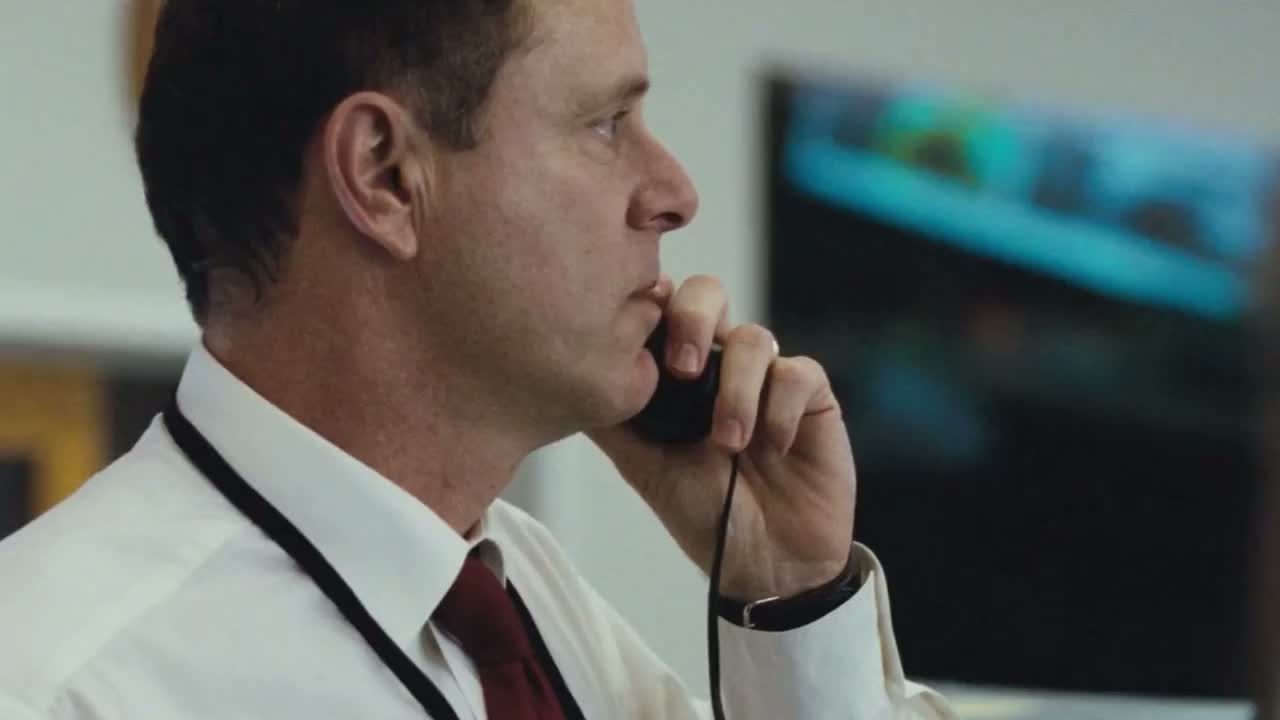
The hijacking reaches the FAA command center as a rumor and leaves as a national emergency. Controllers are told, “This is real world. Possible hijack,” then ordered to track the plane and call the FAA. A flight attendant's call confirms the worst: “the aircraft is being hijacked and one or more people have been stabbed.”
The FAA Command Center Mobilizes
The FAA Warns Headquarters
At the FAA's command center, a controller reports a possible hijacking out of Boston. The room goes to work: tracking the plane, calling the FAA for its last known position, and putting Otis on battle stations. Then a call from American Airlines confirms a flight attendant reported the plane was hijacked and people had been stabbed.
The scene is about institutions catching up to a disaster in real time. Much of the room reaches for the milder reading — a phony transmission, a lost radio call, "We get a lot of that crap" — because the system is built for routine delays, not for this. Two things strip away the caveats: "This is real world. Possible hijack," and the flight attendant's call that people "have been stabbed." The language becomes pure procedure — battle stations, last known position, heading southbound. What makes it chilling is how calm the room stays while the information gets worse, each order delivered in the same flat voice.
A1–C2 is the CEFR scale. Cards above the level you pick fade, and playback will not auto-pause on them.
“This is real world. Possible hijack.”
Six words cancel the drill and put the room into a live response.
Formal
“We get a lot of that crap.”
A veteran's shrug that deflates the alarm before it can spread.
Informal
“They're not even my delays. I started today.”
A defensive line that every worker knows: the mess predates me.
Informal
“Somebody's making phony transmissions on the radio...”
It trails off before naming a suspect, which is exactly what makes it uneasy.
Neutral
“Maybe we should get in touch with headquarters and start briefing them on this now. Yeah, I'll call immediately.”
A suggestion and an instant yes; the teamwork shows in how fast the reply comes.
Formal
 Up next · 06pull the tapesThe scene: FAA Pulls the Tapes, Scrambles Jets
The command center handles delays and lost radio calls every day, so the early warning sounds like one more problem. Only the phrase about the real world, and the call from the flight attendant, change that.
It controls the airspace, so when a plane goes off course and stops responding, the center has to track it, warn other facilities, and clear the way for whatever comes next.
A flight attendant calls American Airlines from onboard and reports that the aircraft is being hijacked and people have been stabbed. That report reaches the command center and removes the doubt.
They call New York Center and TRACON, clear traffic out of the plane's path, and start briefing headquarters, moving from tracking the flight to preparing a national response.