00:00 / 02:16
00:00 / 02:16

Rick and Pam Hear a Woman Cry, Explained

The Uninvited · 1944

Chapter 9 of 28 · 2'16"

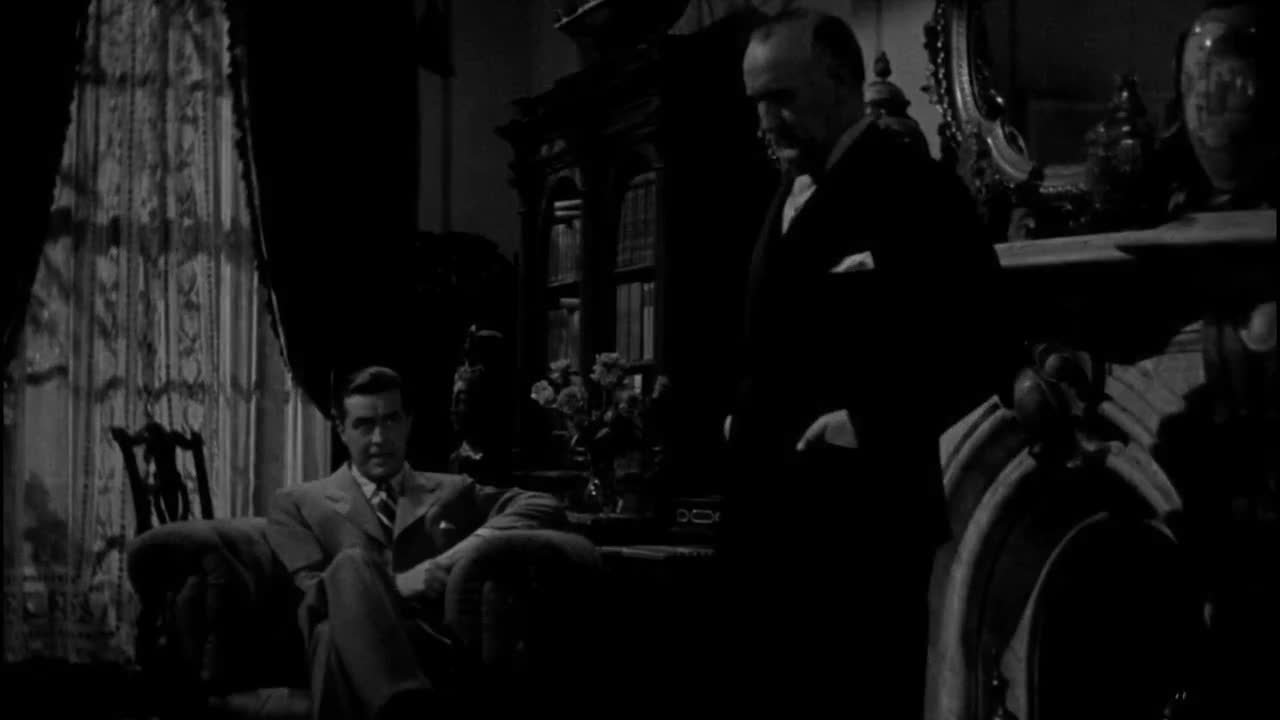
Pamela finally admits she has heard the crying before and kept it to herself. "I thought I might be going crazy," she says, and Rick answers with bravado rather than an answer. The real fear under the talk is that their new home may be unlivable — and that she faced the nights alone.

Comforting a friendSiblingsComfortingExplainingSiblingsB2mediumbritishClean

Key moments

Start here, then watch the full scene
  1. Rick Explains Away the Crying

    1:44–2:14
    30s

Rick and Pam Hear a Woman Cry, explained

What happens

At night in Windward House, Rick and his sister Pamela hear a woman crying that seems to come from everywhere and nowhere. Pamela confesses she has heard it before and had not told him, afraid she was imagining it. Rick insists there is a scientific explanation, and the sound dies away at dawn.

What's really going on

The scene is less about a ghost than about two people discovering they are not safe in the house they just bought. Pamela has carried the sound alone for nights, and her confession "I thought I might be going crazy" shows how much she needed Rick to confirm she was not imagining it. Rick's answer is pure reassurance — loose wires, aerials, a woman crying somewhere in the village — and when Pamela pushes back with "Was she crying when the last tenants were frightened out?", his science runs out. "I'm here now, and I'm not the least rattled" is a line said to steady her, and himself. They cannot leave and cannot explain it, so they do the only thing left: talk it down and wait for dawn.

Key lines & what they mean

“Just when you begin to think you dreamt it, it comes again.”
Pamela describes the crying's timing: it returns right after she has convinced herself it was only a dream, which is what makes it so unsettling.
“You can't expect me to give it to you offhand, but it stands to reason.”
Rick admits he cannot produce the explanation on the spot, yet insists one must exist; it is confidence without evidence.
“I'm here now, and I'm not the least rattled.”
Rick declares himself unshaken to calm Pamela, though he is the one who just went downstairs to search for the sound.
“This business can be scientifically explained.”
His whole strategy in one line: file the haunting under physics — a loose wire, an aerial — rather than let it be a ghost.

Theme

  • Secrets — Pamela hid the crying from Rick for nights rather than admit she might be losing her mind.
  • Trust — Once Rick confirms he hears it too, Pamela's fear eases; his calm is what she actually needs.

What this chapter teaches

Teaching points

Review right after watching
My level1/7

A1–C2 is the CEFR scale. Cards above the level you pick fade, and playback will not auto-pause on them.

The Uninvited: your progress

Chapter 9 of 28 · about 53 min to go

← Previous
Up next · 10circulate rumorsThe scene: Rick Confronts Commander Beech

Takeaways

What you walk away with
  1. Fear makes both of them doubt their own ears.
  2. A scientific excuse is his way of staying brave.
  3. The crying stops at dawn, but not the question.
  4. They admit the sound before they admit the fear.

People also search

Questions, then the lines
Why did Pamela keep the crying a secret from Rick?

She was afraid the sound was in her own head and that admitting it would make her seem to be losing her mind. She needed Rick to hear it too before she could be sure.

What is Rick's explanation for the crying?

He suggests a loose wire somewhere in the house is acting like an aerial and picking up the sound of a woman crying in the village. Pamela immediately doubts it.

Why does Pamela ask about the last tenants?

She uses their story to test Rick's theory: if the sound was only a radio accident, why did it also frighten the previous tenants out of the house?

Does Rick really believe his own explanation?

He repeats it more to steady Pamela than because he is sure. He tells her he is not the least rattled, yet the line lands as reassurance rather than fact.