
“I don't even know if I like you yet.”
Why it's great
It says out loud the awkward truth most people only think during an interview.
Register
Informal
Use it yourself
I don't even know if I fit in here yet.
Chapter 3 of 17 · 5'03"
Over lunch, David Foster Wallace admits the interview makes him uneasy: 'I don't even know if I like you yet,' he tells journalist David Lipsky, then asks whether Lipsky likes him. Talk drifts from fame to food to feeling bought and sold — both men circling the fear of being seen on someone else's terms.
❝ Monologue · 7 lines Wallace Fears Selling Himself on Tour
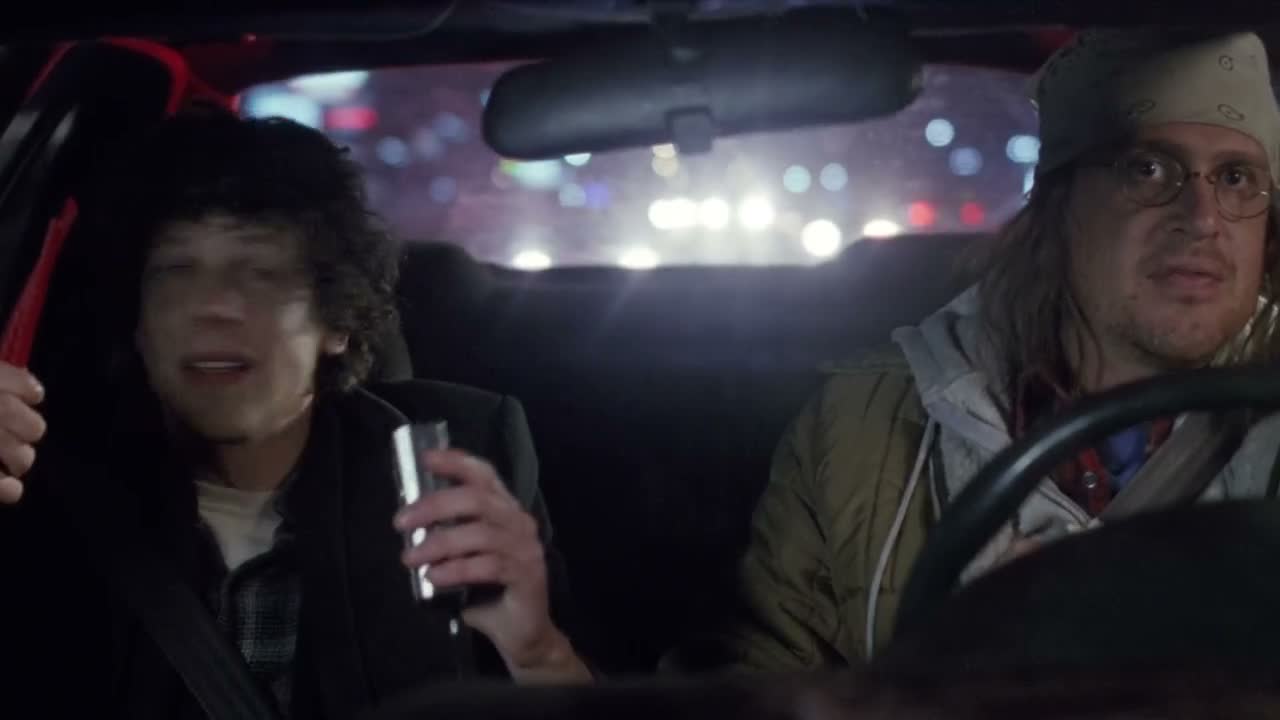
At a diner during the book tour, journalist David Lipsky and novelist David Foster Wallace size each other up. Wallace is wary of how the piece will frame him and says he is not sure he even likes Lipsky yet. They banter about interviewing, fame, food, and publicity, then continue the conversation in the car.
This is less a meal than a negotiation about who gets to define whom. Wallace opens by naming the power imbalance out loud — Lipsky will 'go back to New York and sit at your desk and shape this thing however you want' — and admits the thought is 'extremely disturbing,' because he would like to 'shape the impression of me that's coming across.' Then comes the line that sets the tone for the whole film: 'I don't even know if I like you yet.' It is both a warning and an invitation, and when he adds that he is nervous about whether Lipsky likes him, the neediness under the honesty is plain. As they move to fame, money and junk food, Wallace keeps testing whether he is being admired or sold, calling the tour work 'being a whore' while joking about book sales. The scene's real subject is the impossibility of being known without being packaged.
A1–C2 is the CEFR scale. Cards above the level you pick fade, and playback will not auto-pause on them.
“I don't even know if I like you yet.”
It says out loud the awkward truth most people only think during an interview.
Informal
“It really worries me that what I'm doing right now is like being a whore.”
The blunt word turns a book tour into a moral accusation against himself.
Informal
“Mmm, but what saves us is that most entertainment is not very good.”
A wry compliment: bad entertainment is the only thing keeping us safe.
Neutral
“I can't stand to look like I'm actively trading off this sexually.”
It exposes the self-disgust of trading sex for fame in one blunt clause.
Informal
The thing about the tour is, yes, I would like to get laid off of it a couple of times. People come up. They kind of, like, slither up. And it seems like... I don't know. What I want is not to have to take any action. What kind of action? I don't want to have to say, like, "Do you want to come back to the hotel?" I want them to say, "I am coming back to your hotel."
 Up next · 04channel surfingThe scene: Wallace on Why We Feel Empty
He knows Lipsky will go back to New York and shape the story however he wants, and he calls that idea extremely disturbing because he would like to control the impression readers get of him.
It is his blunt way of naming the awkward setup: a stranger will decide how the world sees him. He then admits he is nervous about whether Lipsky likes him, so the feeling is mutual.
He feels publicity can mean selling himself rather than his work — cashing in on fame and misunderstandings just to move more copies. The thought worries him even as he jokes about it.
Food becomes a way to talk about pleasure and selling out. Wallace says it has no nourishment but is real pleasurable, calls it seductive commercial entertainment, then jokes that most entertainment is not very good.
It is slang for a goofy, awkward nerd. Wallace asks to be quoted in a context where he does not sound like a total dweeb, mocking his own earnestness.