“And if they can't understand you, then they're not listening, and that's their problem.”
He moves the blame off the boy and onto the listener, turning an insult into a shield.
Neutral
Chapter 12 of 14 · 3'30"
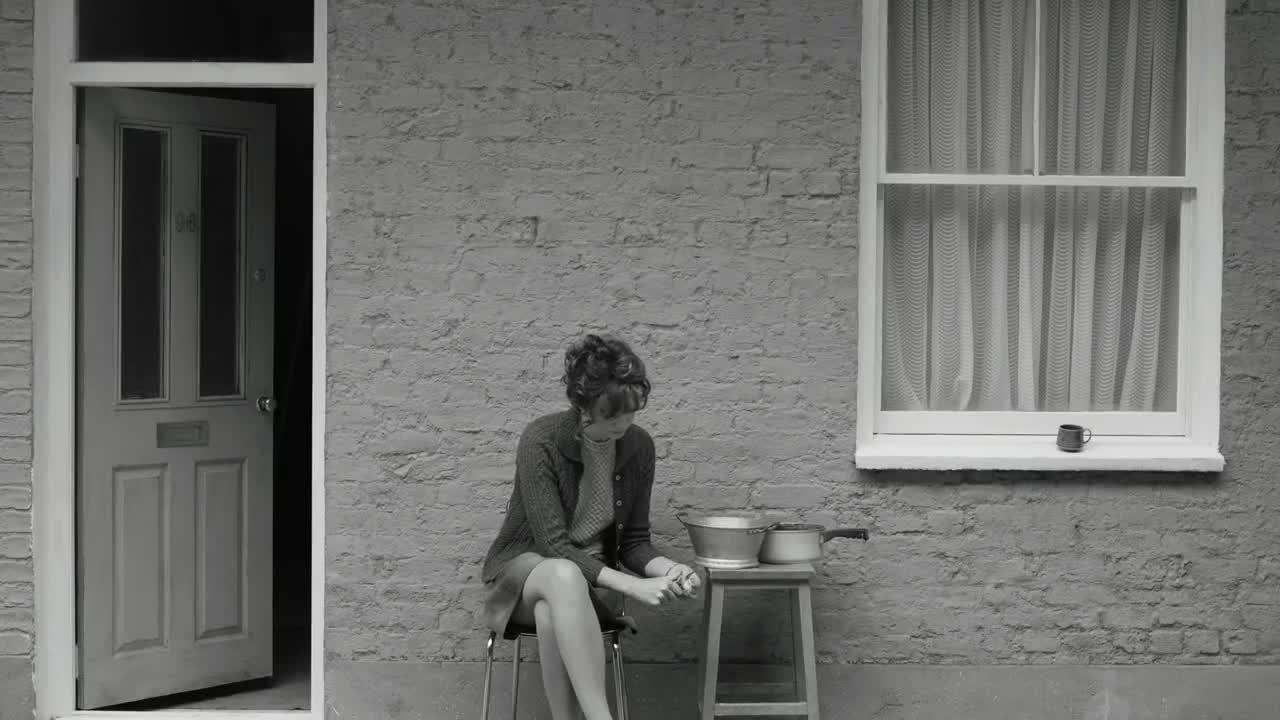
On the surface it's an ordinary evening: a rent collector at the door and Pop spinning a tall tale about robbing him. Underneath, Pop is answering the question Buddy is really asking — whether he'll still be himself if the family leaves Belfast. "You know who you are, don't you?"
❝ Monologue · 7 lines The rent scheme
He tells a story about a street robbing its own rent man as if it were civic duty.
❝ Monologue · 5 lines Pop: They're Just Not Listening
The rent man knocks, and Buddy answers with a flat "Nobody's here." Pop laughs and recalls the old neighbourhood trick: the collector did his rounds, then local men held him up and handed the money back to the street. Talk turns to the family maybe moving to England, and Pop tells Buddy the accent doesn't matter — being himself does.
The rent joke isn't really about crime; it's Pop's way of saying the street survived by looking after its own, even against the council. Buddy's worry is bigger than money. His parents are split over leaving for England, and he has just been told he would be an outsider there. Pop answers by refusing the premise: "they're not listening, and that's their problem." In Leicester he wore a new accent every day, partly to mock people who judged him. "But I did, and that's the only one who needs to know" — he knows himself regardless of how he is heard. Then he lists every relative who looks out for Buddy, turning family into a fixed point that travel cannot move. His last question, "What do you want?", hands the decision back to a child.
A1–C2 is the CEFR scale. Cards above the level you pick fade, and playback will not auto-pause on them.
“And if they can't understand you, then they're not listening, and that's their problem.”
He moves the blame off the boy and onto the listener, turning an insult into a shield.
Neutral
“You know, so I put on a different bloody accent every day just to annoy them.”
Instead of hiding his accent, he turns it into a daily prank aimed at the people who mocked him.
Informal
“But I did, and that's the only one who needs to know.”
After saying no one knew who he was, he claims the one opinion that matters: his own.
Neutral
“And wherever you go and whatever you become, that'll always be the truth.”
Two open clauses stretch the promise to every future place and self, so identity becomes a home you carry.
Neutral
And if they can't understand you, then they're not listening, and that's their problem. You know, when I was in Leicester, they said the same thing about me. You know, so I put on a different bloody accent every day just to annoy them. They never knew who I was. But I did, and that's the only one who needs to know.
Oh, that puts me in mind of a great wee system we had in the old days for paying the rent. The rent man would come round and collect the money for every house in the whole street, and once he had done and all the rent books were marked up to date, one of the boys would hold him up at gunpoint in the back entry and take all the money back off him, and then he'd hand it straight back to all the residents in the street, with a little commission for the service. Yeah, it was a very effective system. And the rent man was so good about it in the end that eventually they cut him in for a wee bit, too, and everybody was happy.
Up next · 13paving the way forThe scene: Buddy Gets Pulled Into the RiotIt's his way of saying the street looked after itself. The neighbours got their money back and even cut the collector in, so poverty became a shared joke instead of shame.
Buddy's mother worries the family won't be understood in England. Pop jokes that he has never understood his own wife either, and adds that if people cannot understand you, they simply are not listening.
It means to give someone a share of the money or the deal. In Pop's story the collector eventually gets his cut too, so everyone, even the rent man, goes along with the plan.
He never says so. Asked what he wants, he answers only that he wants Pop and Granny to come too — a child's way of saying he would go if the family stayed together.
The film doesn't judge them. Pop, notably, never argues that they should stay; he only insists the move must not cost Buddy his sense of who he is.